Monday, 17 January 2022

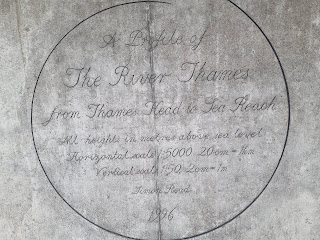
The Thames Path Part I:Thames Barrier to Tower Bridge (Wharves with Dwarves and Squeezers under Skyscrapers).

After completing both the London LOOP and the Capital Ring it was time for a new project and one that seemed very tempting was walking the Thames (from mouth, or as near as) to source in Gloucestershire. Shep had actually done it on his own about five years back but Pam and I hadn't - and we were up for it.

Adam, Bee, and Mo, it turns out, were too - and there was a special guest en route as well which I'll come to later. In fact, as the Thames flows through places like Reading and Oxford it seems highly likely there will be many special guests as this project, a 180 mile one, pans out.


But it started in quite inauspicious circumstances. With a cup of tea, a can of Coke, and a plate of beans on toast at The Valley Cafe in Charlton (it's even got views, just, of Charlton FC's mostly hidden stadium). I'd arrived first but soon Shep, Adam, Pam, Bee, and Mo joined us and once fed and watered we made our way down the A206/Woolwich Road, past a demolished old pub full of litter and holes in the floor called The Victoria which carried the graffiti legend #FINDTINA (which later research revealed was about the case of a missing pug), and through Moore Park to the Thames Barrier itself where the walk, proper, would begin.


Which meant, of course, a quick team photo, a look over to the Tate & Lyle sugar refinery (an old favourite from previous walks though this time we weren't downwind of its sugary smell), and a chance to consider the river, and the distance, ahead. Logistics will get tricky as this walk develops but it looks, to me, like that it will all be worthwhile.

I've written, before, many times, about the Thames and I'll include history in this blog as and when we pass it, discuss it, or just if I feel inclined to do so but, for now, the main aim was to get walking and, for me, to get to grips with the book, Thames Path in London by Phoebe Clapham, that would be our bible of sorts for the next few walks. Not that we can go too far wrong following the route of a river as large and wide as the Thames. Phoebe's written the book as if walking from source to mouth but because we're going the other way round, and also because there are sometimes north bank and south bank options, it's not always as easy to navigate the book as it is the river.

It's a fine tome though and one I was glad Shep, via Adam, remembered to present to me as soon as they arrived. It informed that the Thames Barrier started operating in 1982 and, at time of publication, had been raised more than 179 times to protect London from flooding. Its nine steel piers point inland while smaller 'keels' behind that look like yellow cranes provide the mechanism for raising the barrier that, when not needed, rests on concrete sills on the riverbed.


In an area that was predominantly, and aesthetically pleasingly, industrial/post-industrial it was a joy to spot a brace of Egyptian geese enjoying the brisk January day by the riverside. Most of us love waterfowl and Egyptian geese are among the finest examples available on these isles. Hopefully they, and other birds, will become a regular feature of these walks.

A rusty old pier festooned with cormorants confirmed these hopes almost immediately and though the Anchor & Hope pub looked quite pleasant it was nowhere near time for a pub stop yet. We do actually like to do some walking on these walks.


As we passed the Greenwich Yacht Club, some graffiti that confirmed the rumours that LAUREN BROWN LOVES MILWALL, the river began to curve north into the Greenwich Peninsula with the sight of the O2 and the Emirates Air Line ahead and the view of the river Lee, or Bow Creek, flowing into the Thames. Our first tributary of the trip. The northern trip of the Greenwich peninsula has become something of a destination for all manner of eating, drinking, and nights out now (far from the Millennium Dome's original reputation as a lame duck) and also, we discovered, a bit of an outdoor art park.

It's a far cry from the 17c when it was known as Blackwall Point and regularly could be seen the bodies of executed pirates in cages to deter would be imitators. Among the art there was some kind of bum crack in bronze by Gary Hume called Liberty Grip, something that looked like seamonsters out in the river a bit, and lots of other sculptures. 
 
My two favourite pieces were Richard Wilson's Slice of Reality, one eighth of an old sand dredger and Thomson & Craighead's Here, a sign to Here marked with a distance of 24,859. Which we soon read was the amount of miles it would take to walk round the world and return to, well, here. There's a future walking project for some very ambitious ramblers.


Elsewhere there were people climbing over the roof of the O2 (as I had done some years ago with my nephew Dan and his friend Sam) and others taking their energy out on golf balls on a pretty vast shooting range. We continued on in to Greenwich itself. The Cutty Sark pub (a former pub stop on one of our walks and one in which a friend of mine, another Dan, had a very pleasant stag day pint or two nearly ten years ago) looked pretty busy so, after taking in a rather pleasant row of terraced houses and a somewhat contentious monument to "ANIMALS WHO DIED NOT OF FOOT AND MOUTH BUT OF THE CURE FOR FOOT AND MOUTH", we continued on. We knew Greenwich was awash with pubs but we also knew Greenwich gets very busy at the weekend.

Visit midweek (as I have often have to attend Greenwich Skeptics in the Pub events) and it's surprisingly quiet. On the Greenwich riverfront we took in the juxtaposition between the large industrial Greenwich Power Station (it looks dilapidated but is still working, though now powered by gas rather than coal) and the more traditionally picturesque Trinity Hospital almshouse, founded in 1616.


The heart shaped pattern of 'brownery' looked inviting but The Yacht pub less so. I've nothing against standing in a pub screaming at men playing football on television (Man City were playing Chelsea, they beat them 1-0) but it wasn't the day for it. Truth be told, not many of my days now are the day for it. I don't hate football but I'm less interested in it than I have been for a long time.

The Trafalgar Tavern, a pub in which I celebrated (quite heavily) my 40th birthday, looked pretty busy but they didn't have football on and they found us a table. Pam became the first of us to buy a round on this Thames Path project (I had a Red Stripe though I plan to try more local ales as we get further out) and then, as if by magic - like the shopkeeper from Mr Benn, Eamon appeared.


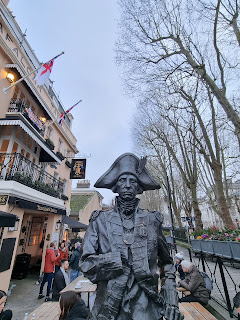
The 'international man of mystery' was dressed as if on his way to a jewel heist but it was really good to see him, for the first time since 2020. On departing the Trafalgar Tavern we bade a fond adieu to Nelson and took in the splendid architectural set piece of the Royal Naval College and Inigo Jones' Queen's House with the Observatory in Greenwich Park standing tall in the background.

A mean time was had (sorry!) when we straddled the international date line and, next, we were admiring, as you must do when you visit Greenwich, the Cutty Sark with Hawksmoor's St Alfege Church standing proud in the distance. The Cutty Sark was built in 1869 to carry tea from China to Britain  and was, in 2007 - you may recall, nearly destroyed by fire.


Now restored, we took some snaps and headed off to cross over our second tributary of the walk. The Ravensbourne is carried in to the Thames via a muddy waterway by the name of Deptford Creek. Just as you get to the other side of it, you're treated to the sight of what must be one of London's most peculiar statues.

A statue of Peter the Great with a small head but a big hat. Flanking him are an empty throne and a statue of his favourite court dwarf. Who doesn't have a favourite court dwarf? I found him so strange I've made him the cover image of this blog. The statue was a gift from Russia to mark the tercentenary of the Tsar's time in London. It's an odd gift but it's better than novichok or polonium.


We passed through the incongruously, but pleasantly, named Twinkle Park and managed to avoid being sucked into Deptford's delightful Dog & Bell pub. It's something of a real ale mecca and I've enjoyed trips there with my friends Tony, Dan, and Gareth in the past. There were plenty of people outside so one assumes the interior was even busier. It looked a lot like Xmas even though we were halfway into January.

Around about this point Adam realised he'd been enjoying his Beavertown Neck Oil (and our company) so much he'd left his rucksack in the Trafalgar Tavern. We'd walked half an hour from that pub by then but he decided to go back and meet us in whatever the next pub stop turned out to be. It added an hour, and several thousand steps - his least favourite unit of measurement, to his day's walking but at least when he got there his rucksack was on the floor by the table where he'd left it. Phew!

Still away from the river, it not being possible to hew too close to the banks here, and in a part of London I surprised myself by being completely unfamiliar with, we arrived next at Sayes Court Park. Named in honour of the writer John Evelyn who acquired it in 1653. Forty-five years later when our old friend Peter the Great came to London to study shipbuilding and planted the mulberry tree (below) that remains in the park to this day.


Peter the Great, then in his mid-twenties, and his entourage were no respecters of other's property. They used Evelyn's oil paintings as dartboards and wrecked the walls and hedges with their drunken shenanigans.

We soon followed a slightly prosaic section of tower blocks, flats, and standard arcades of shops. Livened up, some of us are very puerile, by seeing the below graffiti on a fingerpost. We'll eventually reach Oxford, 110 miles away, but for now we simply crossed from Deptford into Rotherhithe. On the shores of the Thames were the remnants of the once all powerful shipbuilding industry that was based here, on the streets we saw anti-vax bullshit written on signs informing people they must wear face coverings when boarding vessels, and odd sculptures and pretty bridges across the channels that lead to the former docks.


On sighting a duckhouse, we remarked upon the days of the expenses scandal and how innocent that all seems in light of our current government's wanton corruption and destruction of the country. Boris Johnson and the crooks and cronies that make up his administration would be enough to drive anyone to drink (they certainly seem to drive each other to drink) and luckily enough The Blacksmiths Arms looked very inviting as darkness began to fall.

It was lovely and toasty in there and though the selection of ales disappointed some, the staff were super friendly and allowed us to sit in the dining area as all the seats in the public bar were taken. We'd only been in there a few minutes when Adam, who must have been moving pretty fast, caught us up. 
 
Some drinks went down so well that a few of the thirsty walkers went back for 'squeezers'. A phrase coined, for the first time, right in this pub that very night but likely to be repeated often. A squeezer is a drink you squeeze in while waiting for someone else to polish off their pint. I'm a slow drinker, well - sometimes, so I am seen as an enabler of the squeezers. At one point the term 'squeezer' was used so much that Mo asked us to stop saying it!


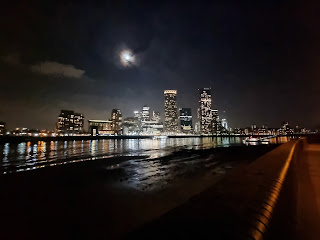
On exiting The Blacksmiths Arms it was properly dark and the skyline of the Isle of Dogs, with all its buildings lit up, impressed. It's changed so much in recent years that if I'd simply seen a photo of it I may have assumed it was some large city in China. The most famous building on the Isle of Dogs, Canary Wharf, was hidden behind the 234 metre tall Landmark Pinnacle, London's 4th tallest building.

Oddly enough Canary Wharf, or One Canada Square to give it its real name, is actually two metres taller (making it London's third tallest) but the perspective gives the illusion of the Landmark Pinnacle towering above it.

From here the river straightens itself out and we found ourselves in a part of Rotherhithe I was actually familiar with. A small gathering were enjoying festivities at a low key looking event near The Mayflower pub, a lovely little boozer with decking that sits atop the river itself and sometimes becomes engulfed with choppy Thames brine. The pub was enjoying a spillover of custom, rather than water, when we passed.

It's actually where, or very nearby, the Mayflower sailed from in 1620, taking a cargo of Puritans to the New World. So you can blame them for the American obsession with God. Not long after that, on Bermondsey Wall East, you meet with more curious statues. These are known, collectively, as Dr Salter's Daydream and they're some kind of tribute to Dr Alfred Salter and his wife Ada. Alfred played a major role in increasing conditions in this once notoriously impoverished area in in the early 20th century and Ada, Bermondsey's first female councillor, encouraged women working in local factories to join unions. The Salters sound like good people.


Behind the statues, and for the first time all day, Tower Bridge (our end point) came into view. I overheard a passing Italian, on seeing the view, exclaim to his friend "bello" and he wasn't wrong. We passed through the wharves, cobbled streets, and overhead bridges of Shad Thames and its surrounding roads and past where the old Design Museum used to be before it moved to Holland Park. It's an area I've always found both attractive and interesting.
 
On Horsleydown Lane, we stopped for one last drink before food in The Anchor Tap. Surprisingly, a Sam Smith's (they're usually found in the City and Fitzrovia). While I was in the toilet cubicle I heard a group of lads, quite refreshed lads, come in and while urinating discuss the size and odours of each other's 'members'.
 
Toilet etiquette has changed a bit since I was a lad but sadly I took this conversation with me back to the table and soon the differences in male and female public toilets were discussed in what was possibly far too much detail! More importantly, I looked into the local curry houses. Ruling out those that promised 'elegant' dining and, disappointingly, finding the Tower Tandoori booked I made a quick reservation (for six, Adam decided to chip off) at Shad, not far away on Tooley Street.
 
3.6/5 reviews on the Internet were probably a bit harsh as the Cobras were sharp, the poppadums crisp, and my veggie dansak (with cheese nan) a perfect level of spiciness. Staff were friendly, company remained convivial, and when it was all done and everyone else had departed Shep and I had a quick debrief in The Shipwrights Arms where he admired a large Turkish Kangal dog.

We headed back to London Bridge together and I took the train to Honor Oak Park and went home. It had been a good day, an absolute tonic in fact after a week in which I'd felt listless and fed up, and there will be, I'm sure, even better days to come on the Thames Path project as the river reveals its mysteries and secrets to us.


Thanks to Shep, Adam, Pam, Bee, Mo, and Eamon for joining me on this walk (and for some of the photos used in this blog). Next time we'll reconvene at Tower Bridge and aim for Hammersmith. A part of London I've always been fond of and one that just happens to have a rather lovely vegetarian Indian restaurant.


Thursday, 6 January 2022

Holy Guacamole:Impeachment - American Crime Story.

It was the affair that the whole world knew about it. The cigar, the stain on the dress, the blow-job, the confusion over the meaning of the word 'is', the impeachment of the President for the first time since Andrew Johnson in 1868. and, eventually, Bill Clinton's redemption in the eyes of his supporters but not his enemies.

But what of Monica Lewinsky and what of others, of which there were many, involved in the case? Impeachment:American Crime Story (BBC2/iPlayer) seeks to tell their story and it seeks to tell it in a thorough, often discursive, way. To be honest, it goes on a bit. Ten hour long episodes felt way too long and there was plenty of slack that could easily have been cut with some judicious editing.

It would have served the series well. Despite everyone involved putting in great performances, at times Impeachment dragged and, at times, I could barely muster the motivation to watch the next episode. Having invested in the series however, I lingered on but Impeachment could not, in any serious sense, be considered a binge watch.

The story it tells is well known, even if many of the details have since been forgotten or eroded by time, so I won't go into too much detail except to give a brief outline. The action begins in January 1998, just over a year into Bill Clinton's second term as US President, and with twenty-four year old Monica Lewinsky planning to move from Washington DC to a new life in New York.

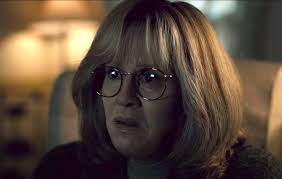
That's just as well as she appears to be being followed by shadowy men in suits in the capital city. These shady characters take a clearly terrified Lewinsky (played by Beanie Feldstein) into a room full of yet more men in suits. Lewinsky's confidante Linda Tripp (Sarah Paulson), it seems, has betrayed her trust.


It is Tripp, who died in April 2020 - possibly making this drama possible, who is the pivot this version of events revolves around. We jump back to 1993 when it is Tripp herself who believes she is the wronged party. Her boss has taken his own life and she only finds out when, as usual, sitting at home alone, watching telly, and microwaving a baked potato.

Linda Tripp's dreary diet is actually one of her more endearing traits. She was, or certainly she's portrayed as being, rude, entitled, self important, and manipulative. A noisy eater too. Even when it's a baked potato. Linda Tripp doesn't seem to like anybody, and nobody seems to like her.

Except Monica Lewinsky who is, of course, unaware that Tripp is taping their phone calls (in which Lewinsky gives intimate details of her affair with Clinton) and trying to sell the stories to 'larger than life' author and literary agent Lucianne Goldberg (played with scenery chewing glee by Margo Martindale) who's got an Ayn Rand poster on her wall in case you're wondering about her personal philosophy.


Lewinsky and Tripp first met at the Pentagon when both had been exiled from the White House. Tripp permanently. Lewinsky, who openly speaks about the crush she has on Clinton (played, surprisingly well - especially in terms of his vocal delivery, by Coventry's Clive Owen), is invited back and, of course, we all know what happens next. Clinton plies her with Diet Coke, she buys him ties, and he takes her in the Oval Office.

Which isn't a euphemism. It's also, we all know, not the first time Clinton has 'strayed'. Paula Jones (Annaleigh Ashford) is living in Long Beach, California when a magazine breaks a story about a 'relationship' she had with Clinton while he was governor of Arkansas. She says that Clinton got his 'business' out in front of her and asked her to kiss it.

Later she refers to the Presidential penis as an 'area'. Jones wants an apology from Clinton and a job for her husband Steve (Taran Killam) - a man it's hard to muster much sympathy for. When Jones gives a press conference she's laughed at and asked for prurient details that she, a good Christian gal, does not want to go into - and Steve certainly would not want to hear.

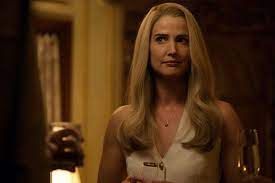
While most dismiss Jones as an attention seeker, trailer trash even, Ann Coulter (Cobie Smulders) and her conservative friends think they can help her. For which read they think she can help them in their campaign against Clinton. Make no mistake, Clinton did wrong. Make no mistake, Coulter and her right wing cronies weren't out to get him because of his lack of morality but because of their own ideological beliefs and because of their own desire for power.

Coulter is joined in her pursuit of Clinton by the sort of motley crew of assorted right wingers and opportunists that would, in the decades that followed, influence and then take over the Republican party to such an extent that Trump would one day end up becoming President. Clinton's affair was wrong and his lying about it was even more wrong, lacking the dignity of his office and probably deserving of impeachment, but compare his record to that of Trump. The biggest scandal of Clinton's entire tenure would not even dent the top one thousand of Trump's four year reign.

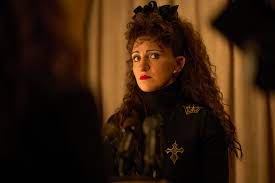
As determined to bring down Clinton as Coulter, we're introduced to Susan Carpenter-McMillan (Judith Light) - a Conservative feminist power dresser with big hair that belongs a whole decade earlier, to old school journo Michael Isikoff (Danny Jacobs), to Matt Drudge (Billy Eichner) - an eccentric but one who at least seems to understand that the Internet will be the future when it comes to breaking news stories - or replacing them with scandal, to a young Brett Kavanaugh (Alan Starzinski), and, most of all, to the permanently angry and aggressive Kenneth Starr (Dan Bakkedahl) who would go on to compile a report in his own name of Clinton's many wrongdoings, both real and perceived.

Mostly, these people have their own personal agendas and the likes of Lewinsky and Jones are used as tools, or pawns, in a game they barely understand. Carpenter-McMillan is kind to Jones to her face but calls her "dumb as a rock" behind her back but because characters like Carpenter-McMillan and Coulter, as well as Paula and Steve Jones, are painted in such broad strokes the series loses both nuance and credibility.

It's pretty schlocky in places and, often, it luxuriates in and celebrates the very prurience it pretends to be satirising. Impeachment is good at showing how scary it all must have been at the time, specifically for Lewinsky herself, and how people like her and Jones are at the mercy of a structural patriarchy. The unnecessarily large team of four directors (Ryan Murphy, Michael Uppendahl, Laure de Clermont-Tonnerre, and Rachel Morrison) and four writers (Sarah Burgess, Flora Birnbaum, Halley Feiffer, and Daniel Pearle) do a good job of excoriating a world where high ranking men slap young women's bottoms, have affairs with them, and then throw them to a pack of press dogs while continuing upwards in their career with barely a scratch to their reputation but it would have been better if that had been done in a more emotionally engaging way.

It's interesting but the way the story was played out was so prolonged that it felt draining rather than exciting. That's probably how it felt in real life but maybe not best for a ten hour drama. One can enjoy the retro computers, phones, Rolodex file devices, ready meals, and power dressing (as well as a soundtrack that features Snoop Dogg, Mark Morrison's Return of the Mack, Jose Feliciano's Feliz Navidad, and that schmaltzy duet between Natalie Cole and her dead dad) and one can marvel at the nice overhead shots of DC that take in the Capitol Building, the Pentagon, and the White House while simultaneously being angered at a world where men in power abuse that power freely and with no serious consequences.
It's notable that Clinton's wife Hillary (Edie Falco) is sidelined until about halfway through the series and is then played as some kind of ballbreaker - as if sanity would expect anything else of a woman wronged on such an epic scale. Exterior shots of the Watergate complex neatly tie Impeachment to an earlier American political scandal but, for me, the more prescient political statement that Impeachment makes is the one about the then future, the now now.

Placards about jailing and impeaching Clinton double down on conspiracy theories in some kind of precursor to the batshit world of QAnon that nearly one in ten Americans believe in today and Coulter tells a Vietnam veteran with no legs he's the reason America lost the war (reminiscent of Trump's disgusting attacks on John McCain). Most tellingly of all, one tirade by Coulter suggests that letting Clinton get away with lying would open the door of the White House to all manner of liars and con men.

She was right about that. Not only that, she held that door wide open as Donald Trump walked in. Possibly the reason Impeachment didn't work as well as it might have done is that real life, right now, is far weirder, far more corrupt, and far more dangerous than it was in the now seemingly innocent nineties. How can you make a drama about a man getting his dick sucked at work by a young woman in a world that's just survived four years of a President that boasted about grabbing women by the pussy.

The one thing that remains the same is that the young women who fall prey to these men's impulses are portrayed not as victims, often not as humans, but as stalkers, attention seekers, and fantasists. Beanie Feldstein excellently plays Monica Lewinsky as a young woman caught in a world of obsession, angst, unrequited love, and despair punctuated with occasional moments of ecstasy when the object of her affection deigns to acknowledge her existence.

She's so innocent the first time she sees Bill Clinton's semen stain on her dress she assumes she must have spilled some guacamole on it. Which raises the question of Clinton ejaculating green lizard spunk. 

More seriously though, Lewinsky's situation is not an uncommon one for young women, and young men, all around the world and all through time. The only difference was she made the mistake of falling for the President of the United States of America. His weakness in giving in to his impulses should have been a warning to all future holders of that office. If you think it was, maybe you should check a Wikipedia page titled 'Donald Trump sexual misconduct allegations' and ask yourself why so many of those who were angered about Clinton's behaviour were so happy to not only forgive Trump but to celebrate him.


Wednesday, 5 January 2022

Kakistocracy XXVII:The Garden of Unearthly Shites.

"He lied about his Brexit deal, he lied on the side of the bus. He lied to his wife, he lied to the Queen, he lies to all of us. His government tried to change the law that meant if you protested they could do what the fuck they want while you would get arrested. The mess he caused with his Brexit deal he passes off as corona. If you dare to mention empty shelves you're branded a remoaner. The decorating bill for his flat was paid by Tory donors. He doesn't know how many kids he's got. He can't control his boner. Boris Johnson is still a fucking cunt". - Boris Johnson Is Still A Fucking Cunt, The Kunts (No.5 in the UK charts on Xmas Day)

"Boris Johnson is a cunt" - Leeds Utd fans in their home game against Arsenal

"Stand up if you hate Boris" - darts fan at the 2022 PDC World Darts Championship in Alexandra Palace, London

"Thank you for submitting your audition for the next series of #LineofDuty but we’re looking for a character with at least one redeeming moral principle and a performance that places even just a scintilla of doubt in the audience’s mind that he might not be totally bent." - Line of Duty creator Jed Mercurio on seeing Boris Johnson dressed up as a police officer

Has the tide finally turned against the most accomplished, and most deadly, liar in British history? Are the scales slipping from the eyes of the 'Boris' faithful after years, decades, of corruption, negligence, incompetence, cruelty, racism, threats of violence, and complete and utter bullshit? To support the cosplay copper cunt right now you would need to be one of three things:- a brainwashed dupe, a fucking imbecile of the highest order, or someone with something to gain by supporting him - a cabinet member or a party donor.

Unless you're one of those things, there's no excuse and, to be honest, there never was. Boris Johnson hasn't recently become unfit for office. He was never fit for office in the first place and many of the members of his party who recently voted against him knew that all along. He was the blunt instrument they used to achieve power and now, it seems, he's served his purpose.

Except, as we all know, he is one slippery bastard and will be looking to throw a few people under the bus, as he did Allegra Stratton, to cling on to power as tank jockey Liz Truss, little Rishi Sunak, and rave gimp Michael Gove swarm like vultures over what they hope will soon be his bloated corpse.


If he survives much longer, who knows. In some ways it doesn't matter. Every candidate lined up to take over from him comes from the Johnsonian wing of the Tory party where lying and adherence to a bad idea (Brexit) are not just not problems but positive advantages. Johnson, if he stays in power or not, has cheapened UK politics and the UK as a nation for at least a decade and possibly for generations or longer.

Most likely he has exacerbated the break up of the UK too. So, for now, we take our small pleasures where we get them and the place we got the best of them, before Christmas, was in North Shropshire. In 2019 the now disgraced Owen Paterson won North Shropshire, for the Tories, with 62.7% of the vote. North Shropshire has been a Tory seat since the beginning of the 19th century. One of the safest Tory seats in the country.

On 16th December 2021 the Tory party, with Neil Shastri-Hunt as their candidate, received just 31.6% of the vote. They came second and lost the seat to the Liberal Democrats whose candidate Helen Morgan won 47.2% of the vote. It was a 31.1% swing against the Tories, one of the biggest swings in British electoral history. If the result was repeated nationally not only would the Tories be out of power but Boris Johnson would not longer be an MP, let alone the PM.

Of course, the circumstances were specific to the region (Owen Paterson's corruption and Boris Johnson's attempts to ignore his corruption, as well as Neil Shastri-Hunt being seen as an outsider from Birmingham) but they also reflected national concerns. The concern, primarily, being that Boris Johnson is still a fucking cunt and he heads up a government packed full of fucking cunts.

Former culture war secretary, and one of Johnson's most loyal lickspittles, Oliver Dowden talked of being given a "kicking" and warned Johnson that "one more strike and he's out". It'd be nothing more than he deserves. The ignominy of being known as Britain's worst Prime Minister ever is now all but certain but .... still he clings on.

A floater in the lavatory of British politics, surrounded by unsightly skidmarks that need washing away quickly. It's odd that the straw that broke the camel's back when it comes to the country's opinion of the liar formerly known as Alexander Boris de Pfeffel Johnson is the drip drip revelation of all those Downing Street Christmas parties at the time we were being told, by the very people having those parties, we must be very careful. Or prepare to pay the price not for being so.

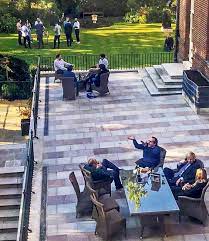
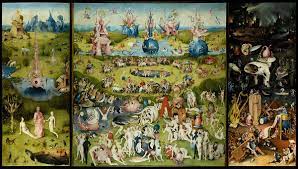
There's Shaun Bailey, clearly not social distancing, as he poses with bowls of food, men in Christmas jumpers, and some prick in braces who looks like an extra from Wall Street. Then there's Johnson himself at the legendary works meeting in which you could both bring your baby and drink wine. I'd probably rather attend one of Hieronymus Bosch's get togethers than either of these sordid little soirees.


The garden, or kitchen, of earthly delights they most definitely are not. Even now Johnson's backbenchers are saying masks are a socialist threat to our freedom while, paradoxically you'd think, trying to pass laws to ban protest. It's almost as if the only freedoms they genuinely care about are their own.

In Johnson's mixed up world, one he has to retrofit to accommodate his latest malfeasance, we were left with a situation this Christmas in which if you wanted to go to the office you had to take cheese and wine with you and pretend it's a party. As you were allowed in for them but not for work. This from the party of business. Or as Johnson once had it, the party of "fuck business".

For me, I couldn't go in to the party either. Because I only went and got, late as ever, Covid. Most likely the Omicron variant. It certainly had the same sort of symptoms. I'm double jabbed and was even boosted five days before I got any symptoms so for me it was like a bad cold, a mild flu. Without the jabs I guess it would have been worse. I'm glad I didn't need to find out.

It didn't ruin my Christmas completely, far from it, but it did mean it was a pretty quiet one this year. In fact, since I last wrote one of these Kakistocracy blogs, life (personally) has been alright. I've chatted on the phone with Ben, Shep, Michelle, Simon, Adam, and both my parents. I've done several Kahoot quizzes (Ian set one on Xmas Eve - Sharon won but I felt very much the Lewis Hamilton to her Max Verstappen, Sharon set a double quiz - I won one and Mike the other, Matt set a NYE one - won by his wife Nat, and my Dad did an 81 question quiz to mark his 81st birthday on the 2nd January this year).


I even set a quiz for Evie and she got every single question right. She's just too clever for me now. The highlight of my festive break was spending time with her and her mum, Michelle, in Wales over New Year which involved walks in Erddig and Hafod, vegan Chinese food, and lots of fart jokes.

It was great, too, to meet Shep for a nice long walk from Battersea to Camden via Chelsea which, of course, ended in a curry. I caught up with my mate Jim for some drinks in Brixton and then, two days later, was back in Brixton for the first UXD in two years (which was great fun). I've even done some culture (Heather Phillipson at Tate Britain and Poussin at the National Gallery).


It was while taking in the Poussin exhibition that the cough started to get raspy and repetitive so I sacked off my plan for a pint and a film and headed home to bed. The next day I walked to Catford and took a PCR test which proved positive. It was a disappointment to have to cancel my works Xmas meal at ASK in Basingstoke and a meal with my parents in that town's Spruce Goose pub the next day but, of course, I couldn't go.

My isolation period (which I have written about in more detail elsewhere) was made bearable by the kindness of friends but special thanks must go to Kathy for some lovely Monty Bojangles truffles and Michelle for her 'care package' of Snowdonia cheese (the Red Thunder is amazing). I should also thank Mum and Dad for the Christmas gift of some quite unusual t-shirts that will, all being well, aired on appropriate, or possibly inappropriate occasions, during 2022.

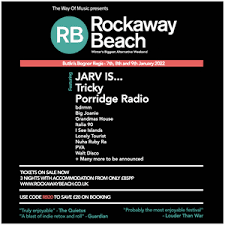
A year I am actually looking forward to (though, of course, I have some trepidation). I would love to complete a full series of both TADS and LbF walks as well as make some headway on the Thames path project. I hope, also, to continue blogging about art, televsion, and film and, who knows, maybe even start up some live music and theatre blogs again soon (it's been a long time but the music ones, at least, should start soon - I'm off to the Rockaway Beach festival in Butlin's, Bognor Regis, in two days).

I'll also, as long as Johnson stays in power, keep blogging about his criminality and unsuitability for office. When Johnson's own cabinet secretary, Simon Case, has to resign due to being complicit in the crimes he's investigating and when David Frost, Frosty the No Man, steps down as he can't agree with the direction he himself has enabled Johnson to take the country in it feels like the walls are closing in on Johnson's reign of chaos.

But don't rule this bastard regaining his popularity out and don't think any other high ranking Tory right now is much better. There were good and honest people in the Tory party. They either left or were kicked out when Johnson gained power. There is no honesty, no common decency, and no truth whatsoever left in that party now. The only reasonable direction is a move away from them as soon as possible.

Happy new year everyone. Don't let the bastards grind you down. Grind the bastards down instead.


Tuesday, 4 January 2022

Fleapit revisited:The Deer Hunter.

"From the mountains to the prairies to the oceans white with foam. God bless America, my home sweet home. God bless America, my home sweet home" - God Bless America, Irving Berlin.

It seems only right that Irving Berlin's God Bless America should feature, in a most bittersweet way, in Michael Cimino's 1978 film The Deer Hunter (shown on BBC1 and iPlayer recently). Because, as with Apocalypse Now - the film it is most often compared to, it is a film about the American experience. The backdrop may be Vietnam and, specifically, the Vietnam War but, again like Apocalypse Now, Vietnamese people do not feature heavily, are not fully realised characters, and exist purely as dressing to tell the story of America in the sixties and seventies.

An America, as now, in some kind of existential crisis. The Deer Hunter is set between 1968 and 1970, roughly ten years before it was made, in Clairton on the outskirts of Western Pennsylvania and, of course, Vietnam. Clairton is textbook rust belt Americana. Steel mills pump out smoke all day and all night, juggernauts and white Cadillacs with fins cruise its streets, and men play pool, drink beer (always Rolling Rock, in Apocalypse Now it was Budweiser, this is surely product placement), eat KFC, wear plaid shirts and trucker caps, and live in a world where macho banter always looks likely to cross over into actual violence.

When redemption isn't found in beer, it is found in religion (specifically the Russian Orthodox Church) and, for the first hour of the film, most of the action takes places in and around a large church, in the steel mill, in the bar, and in the beautiful hills and lakes where the men go to shoot deer. These men are Mike Vronsky (Robert De Niro), Nikanor 'Nick' Chevotarevich (Christopher Walken), Steven Pushkov (John Savage), Stanley (John Cazale), John (George Dzundza), and Axel (Chuck Aspegren).


Mike, Nick, and Steven have been conscripted to fight in Vietnam. So once Steve has married Angela (Rutanya Alda), and Linda (Meryl Streep) has accepted a proposal from Nick (even though Mike clearly has his own interest in Linda) after catching the bouquet at the wedding, it's time to drink more beer, shoot some more deer, and head off to South East Asia. As with Vietnamese people, the women in The Deer Hunter only exist as blank pages for men to write their own scripts on. This is not a film about women. This is a film about men. American men.

After an hour or so in Pennsylvania, Vietnam could hardly look more different. It's sunnier and more verdant but, other than that, it's a land of low flying helicopters, pigs, dead bodies, and burning villages. The horrors of war are writ large when we see a Vietnamese woman clutching a baby machine gunned to death and an American soldier nonchalantly lob a grenade into an underground shelter, terminating the lives of an entire family, perhaps an entire village.

Contrast rural Vietnam with a Saigon of bars, strip clubs, gambling dens, and streets thronged with masses of people and cars blasting their horns. But Saigon is not, initially, where Mike, Nick, and Steven find themselves. They find themselves, instead, imprisoned, alongside other POWs, in a cage on a muddy river. 


Captured by a particularly sadistic brigade of Viet-Cong soldiers who force their American prisoners to play, infamously, Russian roulette while their jailers place bets on the outcome. When an outrageous attempt to escape their fate actually works their hellish experience of war is far from over. But is their experience of 'peace', on returning to Pennsylvania, really that much better?

The post-war world is one of difficulty reintegrating, PTSD, and trying to engage with people, former friends and partners, who simply have no idea what they've been through - having been drip fed a steady diet of misinformation about the war for years. Worse still, all the problems that already plagued these now veteran's lives are still there.

But have now been thrown into even sharper relief. There are disturbing scenes of prostitutes with crying children in their rooms, claustrophobic moments on jungle rivers where terror and death could be lurking anywhere, there are multiple plays of Stanley Myers' Cavatina and drunken singalongs of Frankie Valli's Can't Take My Eyes Off Of You, and there is, of course, the terribly tense and uncomfortable images of soldiers being forced to play Russian roulette (perhaps what the film is best remembered for). But, most of all, there is an overwhelming sadness in seeing young men's lives destroyed before they ever really had a chance to begin. Even when the bullet doesn't pierce your skull, it still pierces your mind.


Sunday, 2 January 2022

Fleapit revisited:The Lost Daughter.

Perhaps because I watched it on New Year's Day, I ended Maggie Gyllenhaal's directorial debut The Lost Daughter (Netflix) feeling a bit disappointed that there wasn't more resolution. I was thoroughly enjoying the film and waiting for a big reveal, a major twist, something to happen. But it never really did.

With the best part of a day now to ponder that, I'm starting to see it as one of the film's bonuses. So much in life is left unexplored, swept under the carpet, hinted at, alluded to, or revealed to us in dreams it seems only appropriate that cinema should reflect this - and The Lost Daughter did pretty impressively.

Leda Caruso (Olivia Colman, excellent as usual but that's hardly a surprise) is a middle aged professor who's taking a working holiday (one, it must be said, that doesn't seem to involve any actual work) on an idyllic Greek island where her plan seems to be to sit on the beach, read books, eat ice creams, watch films, and try to avoid getting eaten by insects.

Of course, it's not that easy. She encounters a large group from Queens in New York who wish her to move along the beach so they can spread out to celebrate a birthday. She refuses and the tension this causes is only finally resolved, and even then not conclusively, when Leda finds one of the party's children after she goes missing on the beach.

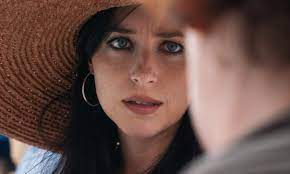
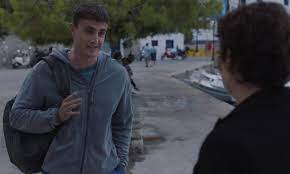
The mother of the child, Nina (Dakota Johnson), and her sister Callie (Dagmara Dominczyk), strike an uneasy, and awkward, friendship with Leda but Leda is warned by summer worker Will (Paul Mescal) that Callie, Nina, and the ominous men they appear to be in relationships with, are "bad people".

That certainly seems likely but Will himself appears to not have revealed his full hand. Even during a flirty lunch with Leda, a woman twice his age. Leda's getting attention from the other end of the age range too. Taciturn janitor Lyle (played by Ed Harris as a kind of skeletal Beach Boy) seems somewhat smitten by her and, interestingly, she neither closes the door entirely to him nor opens it up.


It remains ajar, allowing in some kind of half-light, and in that it seems to reflect much of what we know, and what we learn, about Leda's life, specifically her own experience of motherhood. Something, it soon becomes apparent, she did not take naturally too.

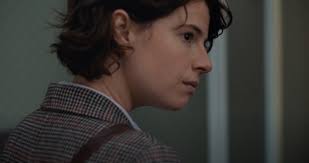
During regular flashback scenes, we see the young Leda (Jessie Buckley) struggling to bring up her two young daughters Bianca (Robyn Elwell) and Martha (Ellie Blake), we see her haunted by the demons of her own upbringing, we see her begrudge the life she has had taken away from her and the man, her husband Joe (Jack Farthing), she believes, not entirely incorrectly, who refuses to acknowledge how difficult it all is for her.


We see her, too, throw herself into the arms of the pretentious and beardy fellow Yeats translator Hardy (Peter Sarsgaard). When we cut back to the elder Leda she is often staring into space, haunted or transfixed both by her memories and the relationship between Nina and her daughter Elena (Athena Martin). A relationship Leda seems to see, rightly or wrongly, as one that echoes that of her own experience of motherhood.

When Leda presents Nina with a hatpin it seems likely that the rule of Chekhov's gun will be applied but we're never sure in exactly which way and when Elena is distraught following the disappearance of her somewhat spooky, aren't they all?, favourite doll that, too, seems a key to understanding the story of both Leda's past and Nina's present.

But not in quite the way I imagined. To find out what does happen, you'll have to watch yourself and I recommend you do. It's chilling, it's pensive, it's meditative, and it's thoughtful, and if the bomb that seemed to be waiting to explode all through its two hour length never quite did that can only mean it's still ticking.