Saturday, 19 December 2020

Kakistocracy VI:How The Grinch Saved Christmas.

"The Grinch loved Christmas! The whole Christmas season! Now, please don't ask why. No-one quite knows the reason. It could be, perhaps, that his shoes were too tight. It could be his head wasn't screwed on just right. But I think that the most likely reason of all may have been that his heart was two sizes too small".

It's six days now until many of us celebrate a Christmas like no other we've ever celebrated. There will be no big Xmas meals with colleagues and friends and there will be no boozy nights down the pub (for most of the country, those parts still in tiers two and one can enjoy them as long as they include a Scotch egg) but there will be a five day window in which three different households can mix together.

The decision to cancel Christmas is not one any Prime Minister would want to take but a Prime Minister who has already presided over the globe's sixth highest Covid death toll (Italy have briefly pulled ahead of us in that grisly league but their strictly enforced and widely observed national Christmas lockdown should ensure we soon retake them) and has sewn confusion, division, and hatred in the country he's supposed to be in charge of?

Well, what do you think? Instead of ordering an unpopular lockdown (populists don't get where they are by making unpopular decisions) he has, instead, suggested we use good old fashioned common sense when visiting relations and try not to spread the virus. Which surely almost everybody was doing anyway and what they intended to continue doing?

A plea for common sense to the citizens of a country that voted for Brexit and returned Boris Johnson to Number Ten with an eighty seat majority! If enough British people had common sense these events wouldn't have happened. Regarding Christmas, I appreciate the confusion but with 489 extra Covid deaths yesterday (and a yearly total, so far, of 66,541) I'd have erred on the side of caution.

With Rishi Sunak extending the furlough scheme until April, it doesn't sound like the few brighter minds in this administration think this virus is going away anytime soon despite the wonderful news of people receiving the Pfizer vaccine and the Oxford vaccine looking very likely to be given a green light in the next few weeks.


Confusion was inevitable in such unusual circumstances but this government thrives on confusion. The tier system is patently not working in preventing the spread of the virus (pubs and restaurants closed makes sense but why are gyms, schools, and shops open? Why is professional sport being played?) but it is working very well in shifting the blame from the government to the people. 

It's doing a great job of getting us to argue with each other. Either behind the back gossip ("you'll never guess how many people Lisa's having round for Christmas?"), online bitching ("look at these morons. You'd think the virus had gone away"), or the outright hostility of people shouting at each other for breaches or perceived breaches of Covid etiquette.

I choose the word 'etiquette' because it's no longer about rules and, to be honest, it hasn't been for a very long time. There are certain things you're not allowed to do but, mostly, the police and the authorities will turn a blind eye and, anyway, what if you really want to do those things? You can't simply not do something you really want to do? 

Whether it's having a birthday party in a Notting Hill restaurant when you're supposed to be self-isolating (Rita Ora), going on a restaurant crawl (Kay Burley), or driving to Barnard Castle with your child in the back of your car to test your eyesight. Which I'm sure I heard about somebody doing.


While endless Tory cruelties are enacted (Jacob Rees-Mogg admonishing UNICEF for feeding children that were going without food due to his own governement's policies is a predictably nasty example) and Brexit uncertainty goes down to the wire (while all the time informing the populace we should get ready for Brexit - we will do when you tell us what it is) I'm not going to do their dirty work for them.

I'm not going to call out friends or family members who are making different decisions about the festive season to me. I'm just going to do what I think is right and leave others to make their own decisions. All the blame, for me, will lay at the foot of a government who have encouraged people not to trust experts, not to believe facts, and to break the law when and if it suits them.

Normally on Xmas Eve I take the train from London to Basingstoke and then get a bus, or a lift, to Tadley where I spend the Christmas period (normally until the 27th) with my parents. On Christmas Day I'll go round my brother and sister-in-law's house (she does a great veggie Xmas dinner) and celebrate with them, my parents, and my nephews Daniel and Alex.


On Boxing Day I'll usually meet with Shep and Adam in The Fox and Hounds in Tadley. The likes of Ian, Mike, and Tina have joined us on multiple occasions over the years and, until his untimely passing last year, Bugsy was a regular fixture at Foxing Day.

They sometimes got messy. This year the only thing that will get messy is my flat (which, to most people's eyes, already is - perhaps I'll tidy it). On Xmas Eve my journey will take me in the opposite direction. From Tadley to Basingstoke to London. Where I will spend Christmas, for the first time ever in my life, completely alone.

Don't feel sorry for me. I'm quite happy about it. I've always wanted to try it one year and this accursed Covid year seems like the perfect opportunity. I could stay in Tadley with my brother and his family, the invite is an open and eternal one it seems, but my parents have already decided to self-isolate (Dad is 80 on 2nd January and is, presumably, near the front of the queue for the vaccine, Mum's not far behind, why take precautions all year and then risk it when the end may be in sight?) and that, in part, spurred my decision to do so.

At least I'll avoid any uncomfortable discussions about Brexit and Boris Johnson and being away from Tadley should mean I won't get to hear such old fashioned racist epithets as chink, wop, jigaboo, paki, and nigger. All of which I've heard casually bandied around in the last few weeks I've spent working back in the area.

It reminds me, in absolute certainty, why I moved away and why I intend to never move back. I like being in a multicultural city with curious, artistic, creative people and I like being part of a global, or European, mindset and many in Tadley, and similar places, don't share that feeling or hold that belief. Sadly.

So, as I wrote in my most recent Kakistocracy blog, Christmas this year will be spent at home, listening to music, watching television, having a beer or three (San Miguel has been the biggest riser in sales in Britain this year and I'm hoping I'm not personally responsible for that - I have bought rather a lot of it) and maybe a bottle of wine as a special treat (I've hardly touched the stuff this year), eating some nice comforting food, and maybe having a Zoom or two.

It's no sacrifice for me whatsoever to do that but even if it was a sacrifice it'd be one I'd make without complaining. Those that are meeting in groups of two or three households this Christmas, I wish them the compliments of the season. Those that are not, I extend the exact same courtesy. I don't want to spend Christmas arguing although, depressingly, I think that's exactly what this government want us to do this year.

"Welcome, welcome, fahoo ramus. Welcome, welcome, dahoo damus. Christmas Day is in our grasp so long as we have hands to clasp".


Friday, 18 December 2020

Crushed By The Wheels Of:Industry.

There are very few work environments that seem as toxic, as competitive, as unpleasant, and as prone to bullying as investment banking so do we, as a society, do anything to try and end that unpleasantness, that bullying, or that toxicity? Of course we don't. We make all the right noises, send people on the right courses, talk about corporate responsibility, and brandish our Investors in People mugs as if they hold totemic powers but, behind all that, we do absolutely nothing.

In fact, we celebrate the culture of the city by making the people who work there, often pushing abstracted sums of money around on computer screens while wearing identikit suits in mostly identikit offices furnished in chrome and glass, some of the very richest people in the world. They bring nothing to society, they improve no lives, and often they make some lives a misery. So, yes, of course they are celebrated.

We live in a capitalist society and investment banking is capitalism writ large. With that in mind the recent eight part series Industry (BBC2/iPlayer), set in London's square mile and in a resolutely pre-Covid environment - social distancing is not a phrase you'll hear, could have been as depressing, as soulless, and as unedifying as a two hour business meeting with people you'd happily never speak to once again in your life.

The fact it was anything but that was down to the fantastic writing of Mickey Down and Konrad Kay and the terrific performances of all the leading players in a drama that simply can't be described without the word ensemble in front of it. The premise of the series is that five young graduates have arrived at Pierpoint & Co and that they are competing for an unspecified number of permanent positions within this supposedly respected firm.

Harper (Myha'la Harold), a young black woman from New York, seems cool under pressure but also appears to hide a secret and one that may be far more devastating for her career than any revelation that she enjoys Zoom sex with an on/off boyfriend over the Atlantic. She's made friends with Yasmin (Marisa Abela), a beautiful Arabic and Spanish speaking lady whose relationship with the hapless hippy Seb (Jonathan Barnwell) seems to be floundering as their lives take different directions and their moral curves bend away from each other.


Robert (Harry Lawtey) isn't the type to let morality hinder his progress. Decked out like an aggressive Foxtons estate agent his penchant for late nights, booze, bugle, and shagging seems far more likely to be his downfall while his friend and flatmate Gus (David Jonsson) seems to be moving in the right direction by impressing his colleagues with his ability and quiet confidence. The fact that he regularly fellates Pierpoint's research analyst Will (Theo Tuck) doesn't look likely to hold him back either.

The fifth of these Apprentice like contestants is the bodywarmer clad, sleeping in the office, Pro-Plus popping Hari (Nabhaan Rizwan) who immediately struggles with the environment and soon finds himself in a very bad way indeed. How Pierpoint handle Hari's situation is predictable - arse covering essentially - but how Harper, Yasmin, Robert, and, most of all, Gus handle it feeds into the very heart of the drama. 


In liminal spaces like corridors, lifts, and, most of all, spotlessly bland toilets we see these five young graduates interact with older hands like Daria (Freya Greenock), Sara (Priyanga Burford), Rishi (Sagar Radia), and Greg (Ben Lloyd-Hughes, a cross between Roger Federer and Ezra Koenig). The older hands, variously, mentor the young starters. They flirt with them, they date them, they take credit for their work, and in the case of Kenny (Conor MacNeill) they do all of that and more.

Kenny's the Vice President of Foreign Exchange Sales and he's an easily loathed pint sized pot of insecurity, resentment, and frustration. The way he treats Yasmin leads him ever closer to a disciplinary but he always manages to save face by trotting out the old excuses that he's just having a laugh and it's just good old fashioned office banter.


Conor MacNeill's brilliantly realised Kenny is, sadly, an all too believable character to anyone who has worked in any office job at any level anywhere. Derek Riddell's Clement Cowan, on the other hand, is trickier to get your head round. An old school banker who still reads the newspaper in print form, refuses to speak to new starters until they've been there for a year or two, and pisses with his pants round his ankles like Pepe the fucking Frog or something.

Clement, however, is not all he seems and neither is Eric (Ken Leung). Eric's a big manager at Pierpoint and it's constantly suggested and tacitly stated, though never really explained why, he has the power to make and break a career. He takes Harper under his wing but an incident when he locks her in an office during a meeting causes ructions within the working environment and Eric's true character, or so we think, comes to the surface.


The dynamics between the new breed and the old guard create interesting moral dilemmas and more than a few tricky situations at the parties and drinks evenings that soon become the social life of a young investment banker. But it's the dynamics between the younger players, and the sex between some of them too, that's had the programme compared, not unreasonably, to nineties sensation This Life.

Much like This Life, Industry will probably look dated very quickly and most of the main characters are morally reprehensible personality vacuums who'd sell their grandmother for an office on a higher floor and a bag of Bolivian marching powder. Yet, that aside, you can't help rooting for them. Or at least some of them. I hope it just wasn't her looks that swayed it for me but I found myself on the side of Yasmin even when she treated her, admittedly dopey, boyfriend Seb abysmally.

As with The Apprentice (a programme, let's not forget, that launched the media career of Katie Hopkins and helped propel Donald Trump into the White House) I couldn't care less which of the graduates got jobs in the end and I didn't even care who got sucked off or licked out by who but I did, for some reason, care about what happened in the drama.

That can only be testament to great writing and great acting. I'm glad I watched this series. I really enjoyed it. I'm even more glad that I don't live in the same world as these people. I'd fucking hate it.


Fleapit Revisited:Small Axe - Education.

An ordinary working class family in north London are going through their morning routine. Getting changed, brushing their teeth, hurrying each other out of the bathroom, and rushing, or even completely missing, their breakfasts before heading out into a familiar world of grey skies and green grass and trying to get on with their lives with minimum fuss.

But this is Britain in the seventies and this is a West Indian family. This is racist Britain in the seventies and this family is black. Steve McQueen's brilliant five part series Small Axe (BBC1/iPlayer) drew to a close on Sunday night with Education, probably the most important (if not the best - Lovers Rock was sublime) and most hard hitting chapter of the pentalogy.

It told the tale of Kingsley Smith (an excellent Kenyah Sandy) and his journey into the world of the 'educationally subnormal' school. What we would now call SEN (Special educational needs) and what we would now, we hope, treat with diligence and care was then, Education shows us, seen more like a prison or borstal. A place where problematic children could be kept away from others and fast tracked into a life of misery.

In the seventies being put into one of these schools was something of a life sentence. 'Graduates' of these establishments would rarely find jobs, certainly not interesting or well paid ones, they'd be unlikely to attract partners or marry, and they'd be labelled thickos for the rest of their, often quite short, lives.

The number of black children sent to these schools was disproportionately high and that was a result of something that all except the most disingenuous of us would now recognise as a form of institutionalised racism. We see one teacher, Miss Gill (Kate Dickie from Robert Eggers' The Witch) tell Kingsley that, should he wish, he can spend his break period swinging from the trees like he's "back in the jungle" - as long as he doesn't hurt himself and get her in trouble.

Another teacher treats the class to a doleful, and dire, acoustic guitar rendition of House of the Rising Sun and others simply leave the class unattended. Resulting in paper aeroplane fights, blackboards graffitied with "SHIT", "BUM", and "POO", and an absolute chaos beyond even organised lessons. Which are often punctuated by a young girl who communicates solely by making the sound of animal noises.

It's, quite clearly, not the best background for young Kingsley, an intelligent child with a keen interest in astronomy but who struggles with reading, or for his fellow pupil Nina (Aiyana Goodfellow) who rolls her eyes with disdain at being asked to read words as simple as 'ambulance' and 'exit'.

Kingsley's struggles with the written word are shown in a 'normal' school where he stutters when asked to read a section of John Steinbeck's Of Mice And Men out loud in class and where we see nasty, and certainly racist, teachers tell him he's a "blockhead" and a "lying little bugger".

While Kingsley prays to God before bedtime to grant him his wish that he grows up to become an astronaut (and play for Tottenham - though at time of writing no Tottenham player, not even Glenn Hoddle or David Ginola, have departed Earth's orbit) his mother Agnes (Sharlene Whyte) and mostly disinterested father Esmond (Daniel Francis) have more realistic and grounded hopes for Kingsley's future and, at first, despite some very obvious disappointment, accept that's he's destined for a 'special school' in Barnet.

Even if it's a bus ride away. Agnes is sold on the idea that the "smaller classes, more focused teaching" approach will work better after she's been softened up by being told that Kingsley has registered a low score in an IQ test. An IQ test that the school are unable, or unwilling, to run for a second time.

It's only the arrival of Hazel (Naomi Ackie), a psychologist from British Guyana, and campaigner Lydia (Josette Simon) that first alert Agnes to how this system (one that was diagnosed and exposed by Grenadian autor Bernard Coard in a 1971 pamphlet How the West Indian Child is Made Educationally Sub-Normal in the British School System) was failing her son and many many others like him.


When Kingsley's sister, Stephanie (Tamara Lawrance), starts to take an interest, Agnes comes to see that Lydia's firm belief that the Inner London Educational Authority were operating a particularly racist policy is true. A group meeting with other parents of children from West Indian backgrounds brings home to her, and us, just how widespread the problem is.

Education, as with all four other Small Axe episodes, dripped with attention to period detail. From the clothes, buses, and lightswitches to the ornaments, radio broadcasts, and the huge numbers of cigarettes smoked (even in small classrooms) and on to the health and safety nightmare that was a 70s British school playground and the distant sound of the Roobarb theme tune on a small television it was something of a McQueen masterclass in mixing the prosaic with the poetic.

Lengthy shots of shoes and mirrors gave an artistic sheen to a story about very ordinary, for which read extraordinary, lives and allowed McQueen to map out a narrative of intersectionality and institutionalised racism while being neither hectoring, po-faced, nor frivolous. As with all Small Axes, McQueen skillfully weaved the humdrum elements that make up a person's life into a rich diorama of the lived black British experience of his youth and how so much of that experience was taken up with facing one seemingly insurmountable problem. That of overcoming a system that is stacked, from the word go, against anybody who stands out and, most of all, against anyone of colour.

That many of the episodes of Small Axe ended on an uncertain note was, I think, intentional. Because the story of British state racism is by no means one that has ended and in the election as Prime Minister of a man who not only uses words like "piccaninnies" and talks of "watermelon smiles" but is celebrated, and promoted, for doing so we can see that the story of the fight against racism in the United Kingdom has embarked on a very ugly new chapter. One which, with Covid-19 still raging throughout the country (a death toll of roughly five hundred per day still) and a potential no deal Brexit looming, looks likely to be juiced by our far right government in an attempt to distract the populace into endless culture wars and add to further uncertainty.

As for Kingsley, Education ends with the hope the announcement of a new Secretary of State for Education and Science may see things improve for him and those in similar situations. Not least because that person is a woman:- Margaret Thatcher. Baby milk snatcher. It's a proposition that leaves us, like young Kingsley, wanting to leave Earth's orbit.


Sunday, 13 December 2020

Kakistocracy V:I Love Slough.

"Why does the prime minister hate Slough?" - Tanmanjeet Singh Dhesi, MP for Slough

"I love Slough" - Boris Johnson

Boris Johnson is Britain's most famous and accomplished liar. As the brilliant writer Marina Hyde observed in a recent column "for Boris Johnson, lying is not second nature:it is nature". He lies to his wives, he lies to his lovers, he lies to his colleagues, he lies to his opponents, he lies to parliament, he lies to the country, and he lies to the world.

He lies on the sides of buses, he lies in newspaper columns, he lies about laying in front of bulldozers at Heathrow Airport, he lies about building garden bridges, he lies about building airports, he lies about how many children he's got, he lies about coronavirus testing capabilities, and he lies that he'd rather be found dead in a ditch than extend a Brexit deadline.

But when he lied about loving Slough even his most hardcore supporters, a curious mixture of educationally subnormal buffoons and greedy capitalist scumbags, can't have believed him. As the former MP of the nearby London Borough of Hillingdon, Johnson would, of course, have had some knowledge of the town so it's possible that he's a fan of the former Slough Trading Estate, Station Jim (the stuffed dog on platform five of Slough station), and the fictional Wernham Hogg stationery office from the sitcom The Office.


It's almost certain that Johnson will have enjoyed Slough's most famous culinary export, the Mars bar, on occasions and he's roughly the right age to have attended, like me, the 1990 Slough festival to see Ride, Curve, Slowdive, The Mock Turtles, Thousand Yard Stare, and Soul Family Sensation. It's just that shoegazing doesn't really seem his kind of thing. It seems more likely that the man who once dreamed of being "world king" would have been far more taken with the castle of nearby Windsor than the more prosaic edifices of Slough.

Like David Brent from The Office, Johnson is more of a "chilled out entertainer" than he is a prime minister. But unlike David Brent from The Office who is a mostly harmless fictional character on television, Boris Johnson is a harmful real life character in charge of an actual real country of over sixty six million people at a time of the worst global pandemic in over a century. When he tells a racist joke or does a stupid dance we don't just cringe, we suffer.

As with Brent, Johnson loves toadies and the more slavering and inept they are the better. Johnson's cabinet has no time for Tim Canterbury types (Martin Freeman's character in The Office) and is populated exclusively by Gareth Keenans (Mackenzie Crook) and Keith Bishops (Ewen MacIntosh, seen enjoying a substantial meal) with the odd Finchy (Ralph Ineson) thrown in to keep things nasty. 


You can see a bit of Finchy's nasty boastfulness in the failed Secretary of State for Education Gavin Williamson who treated the undoubtedly brilliant news that a vaccine would soon be rolled out by announcing that the UK is a "better country" than France, Belgium, or the US (despite the vaccine being created by a Turkish-German team) but for the most direct comparison look no further than Home Secretary Priti Patel

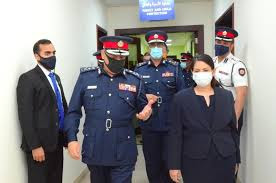
The proven and acknowledged bully (who can neither count nor tell the difference between terrorism and counter terrorism) has recently visited a police station in Bahrain where human rights activisits have been tortured. Your guess is as good as mine as to why she may have made that visit but I can't help thinking that she's probably thinking once we get rid of those pesky EU do-gooders we could learn a thing or two from barbaric states like Bahrain. 

For the role of Keenan or even Bishop look no further than Health Secretary Matt Hancock whose willingness to shill for any of Johnson's ludicrous initiatives (Operation Moonshot anybody?) remains as keen and unabated as ever despite a summer in which, Dominic Cummings aside, he became possibly Britain's most hated man. Hated even more than his boss.

When Hancock pretended to cry in front of Piers Morgan and Susanna Reid on Good Morning Britain it was perhaps the most embarrassing performance seen on television since Mick Fleetwood and Sam Fox presented the Brit Awards in 1989 and the most dishonest once since, well since Boris Johnson claimed he loved Slough.


Johnson's latest wheeze, his most recent fit of bluster, bravado, and dangerous bullshit is to threaten to guard fishing boats around the coast of the UK with gunboats. Actual gunboat diplomacy - but without much diplomacy behind it. Even many of Johnson's backbenchers are not happy about this bellicose language. It was foolhardy enough when the washed up old has been Michael Howard suggested we could go to war with Spain over Gibraltar but it's lunatic behaviour to threaten twenty-seven allied countries with what amounts to threats of violence for acts they haven't even performed yet.

Less than two weeks away from a now likely no deal Brexit it's borderline suicidal - and for what? Fish. Fish and the abstract concept of sovereignty. The sovereignty that, five years ago, nobody but a small cabal of hard right Tory backbenchers and Eurosceptics, even knew we didn't have. As observed by many brighter than me, how come when a fish strays into British waters it automatically becomes a British fish but when a human being does, particularly a brown human being, they most resolutely do not automatically become a British person.

I don't even eat fish anyway so I don't give a fuck but even if I did I'd think fishing rights would be a strange choice of hill to die on when so many other sectors and industries will suffer hugely as the result of any kind of Brexit. Another thing I don't eat is Scotch eggs which is more of a pity as if I did I'm sure I'd have been out for more substantial meals than I have in the last ten days.

With the end of what amounted to nothing more than a social lockdown all of England, bar Cornwall, the Isle of Wight, and the Scilly Isles, was placed under either tier two or tier three regulations. Here in London we're in tier two (with talk rampant of being moved into tier three very soon) so we can meet only with household members or those in our bubble indoors and we can only go to the pub if we have a substantial meal.

I met Pam for a walk around Dulwich Park and Sanda for an outdoor coffee and a walk around Covent Garden, Soho, Fitzrovia, and Bloomsbury to look at the Christmas decorations but the only indoor meet I've had has been with Vicki. We went into The Ring pub near Southwark station and I had spring rolls and chips which were very tasty indeed.


Our server told us, beneath his mask, how the new system works. We could order a drink while we decided what we wanted to eat, then there may be a bit of a wait for food (lots of people were ordering it for some reason) so we might need another drink, and then after we'd eaten we could stay and have a drink or two to wash it down. Basically, as long as we ordered food (and we did, Vicki had calamari) we could stay there as long as we liked.

A breaking of the rules, a 'flouting' of them or a bending of them? I don't think so. We were seated a fair distance from the next nearest diners/drinkers and it didn't get silly. A Covid spore doesn't back away because you've got food on your table but, equally, massive drunkenness does clearly make social distancing difficult. Nothing's 100% safe and we all have to make our own decisions and I was happy with this one.

Whatever you do someone will accuse you of doing something wrong. If you stay at home you'll be accused of 'cowering', if you go out you'll be accused of spreading the virus. Everyone's going to find a different balance and I'm trying hard not to critique people for coming to different decisions to me. I was invited out for a meal this weekend that, in normal times, I'd have attended with glee. But I thought better of it. That decision was right for me. Those that went out and had that meal made the right decision for themselves too.

This government have foisted division upon us as a tactic and I'm no more inclined to do their dirty work for them than I am to spread baseless conspiracy theories about Bill Gates (if he wanted to track people's movements why start at care homes? My nan was in one for the last few years of her life and her movements were very limited and very predictable), George Soros, or 5G. Although it's tempting to share the rather weird and excellent one my hairdresser told me about Matt Hancock.


That haircut, as well as those catch ups with Vicki, Pam, and Sanda and the regular Kahoot quizzes have been the social highlights for me since I last wrote one of these Kakistocracy blogs. The rest of the time I've been working, walking, writing, watching television (both Small Axe and Industry have been excellent and The Last Leg remains a hilarious tonic), and sleeping a lot.

If we're (us Londoners) not placed in tier three on Wednesday I have plans to catch up with Valia for a Christmas gift exchange and vague plans to hopefully catch up with Ian and Simon over the festive season too. Possibly Shep and Adam when I'm back in Tadley. Other than that, this year, I'll be spending Christmas Day on my own for the first time ever.

Which is fine. It's what I've chosen. I'll be alone but I don't think I'll be lonely. There will be Zoom catch ups with family and with Sanda, I'll go for a walk, listen to music, have some nice food and drink, and the guy who works at my local shop told me he'll be open for a few hours and if I pop down for more booze he'll slip me one. A drink I hope.

I'm quite looking forward to it. I've always wanted to spend at least one Christmas alone and this year seems a very suitable one to do so. My parents will be at home alone too - just the two of them. I won't be needing presents, gifts, or a feast this year at all. The fact that all of my family and all of my friends have survived 2020 and are still alive and well brings me more joy than any material object ever could. Chill out, shall we, please?


Friday, 11 December 2020

Albums of the Year 2020.

At the end of 2005 I was working in an office and most people had finished for Xmas. I was pretty bored to be honest. So I decided to put together some kind of metacritic list of the albums of the year.

I chose five publications and/or websites that had listed 50 (or more) of their best albums of the year. Selecting the top 50 I awarded 50 points for 1st, 49 for 2nd, and so on down to 1 point for 50th. I then crunched the numbers and made a list of the top 30 scoring.

This silly piece of time wasting proved to be quite popular so I continued and have done every year since. I used to send the e-mails round a few mates who've either expressed an interest or I'm trying to impress in some way. Since leaving my old job I've lost all the lists from 2005-2015. If anyone has them saved please get in touch.

Now I have a blog I'm gonna use this to disseminate the data. So, here we are, no photos, just a list of 2020's Top 30. Enjoy (or not)....

1 Bob Dylan - Rough And Rowdy Ways

2 Fiona Apple - Fetch The Bolt Cutters

3 Phoebe Bridgers - Punisher

4 Fleet Foxes - Shore

5 Moses Sumney - grae

6 Sault - Untitled (Black Is)

7 Bill Callahan - Gold Record

8 Beatrice Dillon - Workaround

9 The Soft Pink Truth - Shall We Go On Sinning So That Grace May Increase?

10 Special Interest - The Passion Of

11 Waxahatchee - Saint Cloud

12 JARV IS - Beyond The Pale

13 Fontaines D.C. - A Hero's Death

14 Nubya Garcia - Source

15 Shirley Collins - Heart's Ease

16 Duma - Duma

17 Run The Jewels - RTJ4

18 Thundercat - It Is What It Is

19 Perfume Genius - Set My Heart On Fire Immediately

20 Laura Marling - Song For Our Daughter

20 Frazey Ford - U Kin B The Sun

21 Jeff Parker And The New Breed - Suite For Max Brown

22 Paul Weller - On Sunset

23 Moses Boyd - Dark Matter

24 Cornershop - England Is A Garden

25 Drive-By Truckers - The Unraveling

26 Destroyer - Have We Met

27 Autechre - SIGN

28 The Flaming Lips - American Head

29 Stephen Malkmus - Traditional Techniques

30 Duval Timothy - Help

View the 2019 list here
View the 2018 list here.
View the 2017 list here.
View the 2016 list here.

sources:-

Pitchfork
the Quietus
The Wire
Uncut
Mojo 


Monday, 7 December 2020

Fleapit Revisited:Small Axe - Alex Wheatle.

"If you don't know your past you don't know your future" - Simeon.

Brixton in the late seventies and early eighties had a bit of a reputation. Atlantic Road and Coldharbour Lane were judged, sometimes correctly, often harshly, to have a bit of edge. For a young well spoken black lad like Alex Wheatle from Shirley Oaks in Surrey you'd have imagined it might have been a culture shock and in many ways, as we see in Steve McQueen's fourth film of his Small Axe series (BBC1/iPlayer), it was.

But Wheatle (Sheyi Cole), despite his accent, despite his uncool PVC jacket, despite asking where Babylon is on a map, despite nodding genially at passing policeman, and despite walking like that "scarecrow on TV" (presumably Worzel Gummidge), is made of tougher stuff than many of his peers realise.

Wheatle went on to become an award winning writer of young adult fiction and even an MBE but Small Axe goes back to a much earlier part of his life than that. We see him growing up in care homes after being abandoned by his mother at birth, we see him physically assaulted and verbally abused by a carer, we see him taunted with monkey impressions at school, and we see him coming of age in a lovingly recreated Brixton at the dawn of Thatcherism and at a time when the National Front were a serious threat.

Wheatle already loves reggae (the soundtrack features both Eek-A-Mouse and Bob Marley and there are Jah Shaka and Coxsone Dodd posters in the background of Brixton's record shops) and we see his eyes light up when he first visits SW9. It's more than a shared sense of affinity, it's almost a revelation.

Taken under the wing of new friends Dennis (Jonathan Jules) and Badger (Khali Best), young Alex is taught streetwise ways, given a crash course in patois (he didn't know corn meant money), and soon enough becomes a founder member of the Special Brew swigging Crucial Rocker sound system under the DJ name Yardman Irie.


To see Wheatle's discovery of himself is enjoyable in a rites of passage kind of way but it's juxtaposed with a much darker story which Wheatle relates, later in life, from his prison cell to his devoutly Rastafarian cellmate Simeon (Robbie Gee). Himself incarcerated for arriving at Westminster Abbey with a pickaxe and trying to attack the tomb of Edward the Confessor.

Not as clunkily expositional as these scenes tend to be, we're shown Wheatle's introduction to police brutality (something of a leitmotif in the Small Axe series and, indeed, in stories of black British lives of the time), we see black and white photos of the New Cross house fire of 1981 that killed thirteen young black people between the ages of 14 and 22 and the Black People's Day of Action that protested police and media inaction over the tragedy (both accompanied by Linton Kwesi Johnson's powerful 'New Crass Massakah'), we hear about the death of the white New Zealand anti-racist campaigner at the suspected hands of the Special Patrol Group of the Metropolitan Police in 1979, and we see how these toxic events fed into the anger that eventually created the Brixton Riots.

The Brixton Riots that Wheatle was sent to prison for his involvement in, and it's suggested this spell in prison, and Simeon's recommendation of CLR James' The Black Jacobins (its second appearance in Small Axe following Darcus Howe's recommendation of it in Mangrove), as the event that awakened Wheatle's dormant love of writing (an earlier scene sees the young Wheatle (Asad-Shareef Muhammad) inspired by listening to Roald Dahl on Desert Island Discs) and the catalyst for a change of direction in his life.

Much of the story is suggested rather than shown and though that's worked incredibly well in other Small Axe films this one, perhaps, needed a stricter narrative device to really hit home with the power it deserved. Alex Wheatle's story is certainly fascinating but Alex Wheatle, the film, very good though it was, was the least compelling of the four Small Axe stories so far. But then it does find itself in incredibly exalted company.


Saturday, 5 December 2020

Fleapit Revisited:Small Axe - Red, White and Blue.

"We're not your truncheon meat, punchbags or statistics to keep the arrest rate ticking over. Just another bloodstain in the back of your Rover" - VHF (Knife Amnesty), Cloth.

The early eighties London of Leroy Logan is a world of grey suburban streets, careworn red brick industrial units, unremarkable cars, drizzle, burger vans, racist graffiti daubed on Asian owned store fronts, and police kicking the shit out of an innocent black man for a perceived minor traffic infraction in broad daylight and in full views of passers by.

It is not, you will have surmised already, the sort of environment in which a young second generation Jamaican lad joins the police but Steve McQueen's Red, White and Blue (the third of five films in his excellent Small Axe compendium, on BBC1 and the iPlayer) isn't some figment of the director's imagination. It's based on the true story of Leroy Logan who joined the Metropolitan Police in 1983, after witnessing police brutality dished out to his own father, and eventually rose to become the chair of the Black Police Association and, in 2000, was awarded an MBE for his role in advancing policing in Britain.

Red, White and Blue isn't about Logan's later years and, except for a brief scene where he's stopped and searched outside a school while still a small boy - to be rescued by his 70s leather jacketed dad, it all takes place over the brief period of time which saw Logan leave his well paid, and "solid", job as white coated lab technician, sign up for the police, attend training college in Hendon, and, eventually, start to walk the beat of his local Islington manor.

He's called a coconut, an Oreo, and a Judas by his peers ("that's Constable Judas to you" he quips back) but the abuse he receives from his fellow officers, and seniors, is far worse and cuts much deeper. Logan's got a steely resolve, for sure, but will it be enough? 

On top of the difficulty in getting on in a famously vicious and racist work environment, Logan (played brilliantly by John Boyega) has to contend with the hornet's nest of tension and resentment his joining up has let loose upon his family. His father Ken (Steve Toussaint) is of the 'police and thieves' persuasion ("all the peace officers turn war makers") and doesn't want his son inside the belly of a beast and not least at a time he's in the process of taking two police officers to court for "wrongful arrest".

For which you can read a solid beating. Logan's mother (Joy Richardson) is quietly supportive and his aunt Jesse (Nadine Marshall), a former police liaison officer, provides regular, and vocal, encouragement to Logan (much to his father's chagrin) as does his running friend Ed (Mark Stanley) who implores Logan to "sign up".

Against a musical backdrop of Al Green, Billy Joel, Marvin Gaye, and Melle Mel's White Lines (Don't Don't Do It), as well as regular hits of Logan's father's string drenched lachrymose country and western music - which seems to be on in the car just as much as it is in the background as they play Scrabble in their flock wallpapered front room, we see Logan move into a new home with his pregnant girlfriend Gretl (Antonia Thomas), excel as the only black face in the boot camp atmosphere of Hendon Police College, and become the face of recruitment for 'coloured' officers and something of a minor celebrity in the police mess.


But not in a good way. His locker is daubed with vile racist graffiti, he's blanked by his colleagues, and, most dangerously of all, he's left to apprehend a violent criminal alone when those supposed colleagues leave him high and dry and in lethal peril. We see all of this cuts Logan to the core but it hurts him even more to see black people who have been arrested being beaten and racially abused (using very similar language to that which John Terry directed towards Anton Ferdinand).

The drama never truly resolves and that's quite correct because racism within the police, and our other institutions, is still a serious and ongoing problem. Though McQueen makes this point abundantly clear he is still, at heart, an artist and he allows a few of his trademark whimsical quirks to sometimes give the film a hazy, dream like, quality.

There are occasional lengthy brooding silences, there are lopsided camera angles, and there is one extended scene of a flock of birds in flight that seems to suggest Logan feels trapped in his environment and would like to free himself of it. Logan's best friend was, and is, Leee John from the band Imagination. Played brilliantly by Tyrone Huntley, it gives McQueen a chance to drop that band's So Good, So Right into the proceedings and he also can't resist a joke about joining "the force" that will no doubt please fans of Boyega's Star Wars character Finn.

But the Star Wars nods, the arty add-ons, the well mined seam of historical family tension, and even the slinky post-disco funk of the Body Talk hitmakers, all make up a wonderfully realistically captured background to the foreground story of a man trying to do the right thing in an environment, in a world, where there are many people out there who will take offence at that.

Logan's only real ally in his local Islington cop shop is the Asian PC Asif Kamali (Assad Zaman) who we see being told by his superior to not speak Urdu to a local shopkeeper who has become the victim of an all too predictable crime. Kamali is excellent and so is everyone else in this brilliant piece of historical drama but it is Boyega at all times you can't keep your eyes from. Logan's pensive and kind nature is underpinned by an almost messianic drive to do the right thing and make life better for everyone in his community and Boyega captures that perfectly and without showing off. It's hardly a wonder he's become such a big star.

The message Red, White, and Blue delivers, feintly portrayed but clearly felt, is that racism in the police force isn't a case of 'a few bad apples' but a wholly rotten tree. It is, and there can be no doubt about this in the wake of the last thirty years and the death of Stephen Lawrence, institutional. A culture of racism permeated the Metropolitan Police from top to bottom and, as with any culture, when that was threatened it closed ranks, protected itself, and sought to attack those that threatened it.

White officers who may or may not have been racist felt that using crude racial epithets enhanced their job prospects and eased them in to the social milieu of the police and anybody who spoke out against it was made to feel uneasy, unwelcome, and even unsafe. It would be nice to say that this was a drama set in a dim and distant past but it wasn't. This was less than forty years and now, in 2020, we have a government so obsessed with division as a means to power and the endless creation of culture wars that, to my mind, the only thing that's changed in relation to racism in the important institutions of the United Kingdom is the optics. They just hide the racism better now.