Friday, 27 June 2025

Ripping Yarns:Who Was Jack The Ripper And Why Does He Get A Free Pass?

Jack the Ripper was a brutal murderer of women but unlike (most) other brutal murderers of women he's seen almost as a celebrity. Screaming Lord Sutch And The Savages released a record about him, there's a chip school in Whitechapel (appropriately enough) called Jack the Chipper, and Jack the Ripper walks tend to be very popular. Many years ago I went on one hosted by Donald Rumbelow who's known as one of the world's leading Ripperologists!

The fact that such a thing as Ripperologists even exist suggest maybe Jack the Ripper has become an almost mythical figure when he was, in fact, a real person committing atrocious crimes. To the best of my knowledge there's no chip shops or walking tours devoted to Peter Sutcliffe or Dennis Nilsen. Perhaps time plus tragedy equals curiosity and, essentially, a free pass.

Or maybe it's the unsolved nature of the Ripper's crimes, the fact we still don't know who he (and nobody seems to doubt it was a he) was. I was at Skeptics in the Pub - Online (five years in and still going strong-ish) to hear Mike Hall from the Merseyside branch of Skeptics deliver a speech called The Shawl of Suspicion:Why we still don't know the identity of Jack the Ripper and I was prepared to possibly ask a question about why this killer seems to be celebrated rather than damned.

But Mike Hall (who I found to be an excellent speaker) got there first. He talked about the dozens of true crime documentaries we can watch on Netflix and the multiple podcasts and books dedicated to serial killers. He talked about how we all, or most of us, know at least a little about Ed Gein, the Wisconsin murderer who inspired the creation of Leatherface (Texas Chainsaw Massacre), Buffalo Bill (Silence of the Lambs), and Norman Bates (Psycho) but how hardly anybody knows the name of, or anything about, any of his victims.

Mike Hall claimed not to be a fan of mythologising serial killers and none is more mythologised than Jack the Ripper. The trouble is, that put Hall in an awkward position as he was delivering a speech to an admittedly non-paying audience about ... Jack the Ripper. Does that play into the mythology or does it debunk it? In truth, the speech wasn't so much about the Ripper and his crimes but about those who claim to have solved them. A skeptic's guide to amateur sleuthing if you will, using one of the most celebrated unsolved cases of all time.

Jack the Ripper has turned up in Hammer Horror films, in Alan Moore's From Hell, and even in Star Trek where it turns out the serial killer was an alien all along. An alien that would go on to possess Scotty. Conspiracy theories and pseudoscience abound and have done since the time of the actual killings. The first hoax postcards date from 1888 and even the name Jack the Ripper is believed to come from a fraudulent letter claiming to be from the killer.

Yet we still don't know who he was. Or do we? Many believe the Ripper was Polish immigrant Aaron Kosminski, a Jewish barber who certainly lived in the Whitechapel area at that time. The smoking gun as regards Kosminski's guilt is believed to be a shawl (the shawl of suspicion) that is said to have been recovered from the body of the Ripper's fourth victim Catherine Eddowes.

It is claimed that a police constable, one Amos Simpson, removed the shawl from the scene so he could present it as a gift to his wife (how lovely, a spunk stained shawl taken from the body of a murdered woman) who thought, understandably, it was a shit gift and put it away, unwashed, in the cupboard where it was handed down through the family for the next century or so.

In the year 2007, Amos Simpson's great nephew auctioned off the shawl and it was bought by the author Russell Edwards who got Jari Louhelainen (an expert in historic DNA analysis) from John Moores University in Liverpool to have a look at it. Louhelainen identified the DNA of both Eddowes and Kosminski and this, Edwards believed and wrote in his book, was proof that Kosminski was the Ripper.

There's a major problem with this version of events though and that is that it's all absolute bollocks. As most stuff that finds its way into The Daily Mail is. But why is it absolute bollocks? Or why does Mike Hall think it's absolute bollocks? That's where his skeptical, inquiring, mind comes in.

Let's start by looking at the shawl itself. No contemporary documentation even mentions the shawl. There is a long and very detailed list of items found on the murder scene. It includes such seemingly insignificant things as a red mitten, a matchbox, and a thimble but for some reason neglects to include an 8ft long silk shawl.

Perhaps that's because light-fingered PC Simpson had already bagged it for his ungrateful wife. That's entirely plausible but there are other issues with the shawl. The blue dye in the shawl suggests that it's not a shawl at all and even if it had been it would have been a very expensive item for someone like Catherine Eddowes to own. She's on record as having recently had her shoes pawned.

Russell Edwards reckons the shawl belonged to Kosminski and he had left it on the murder scene on purpose to give clues to his identity. Obviously DNA testing wasn't around in the 1880s so the clues, according to Edwards, came in the fact that the shawl contained images of Michaelmas daisies and his next murder took place on Michaelmas. A very esoteric clue and one worthy of a QAnon fruitcake or an episode of 3-2-1. Also one undone by the fact that the Ripper's next murder did not take place on Michaelmas.

There's no actual evidence that Aaron Kosminski was ever even at the crime scene. Or, for that matter, PC Amos Simpson. Simpson's jurisdiction didn't cover Mitre Square in the City of London where Eddowes' body was found (it was not even under the jurisdiction of the Metropolitan Police). In fact Simpson's beat was over twenty-five miles away in Cheshunt. Official records list several police who arrived at the crime scene and were involved in the inquest but Simpson's name never appears.

What of the DNA samples found by Louhelainen. Well, DNA is fragile and unless kept in very precise conditions (which the shawl, clearly, was not) it degrades in months. This shawl was over one hundred years old and any samples found would have been all but unreadable. Louhelainen has claimed he'd used a new form of mitochondrial DNA testing to get his samples but that form of testing, regarding blood and semen, can often turn up thousands of possible matches.

So the semen that Edwards and Louhelainen claim they have identified as Kosminki's could actually be anyone's. There's also no evidence anywhere that Jack the Ripper ejaculated at the scene of his crimes. Other DNA tests, including one carried out by Channel 5, have proven inconclusive. It should also be noted that the shawl had been handled by many many people over the years and even included in Jack the Ripper adjacent exhibitions. Edwards has even shared a picture of himself handling it though I wouldn't go so far as to claim he jizzed on it.

In the hunt for the Whitechapel murderer, the Ripper, there were three main suspects. There was the barrier Montague Druitt who died not long before the murders stopped, there was the Russian con man Michael Ostrog, and there was man known simply as Kosminski, a Polish Jew. But was he the same Kosminski?

There are certainly similarities. The surnames are the same, they were both Polish, and they were both Jewish. They also both lived in Whitechapel and were both sent to a lunatic asylum in Colney Hatch. That's a lot of rather big coincidences but Mike Hall had done his research. There were a huge number of Polish Jews living in London at that time and most of them lived in or around Whitechapel and it was not uncommon for poor people to be sent to asylums for jumped up reasons in that era. You could be sent to an asylum for being unemployed or even for having a wank.

The suspect Kosminki was sent to Colney Hatch in 1889 and died soon afterwards but Aaron Kosminski didn't go there until 1891 and died many years later in 1919. In fact the name Aaron Kosminski was not mentioned in relation to the Whitechapel murders until as recently as 1987. None of that, of course, proves Aaron Kosminski's innocence but what it does prove is that we can't be certain of his guilt and that is, I believe, how the law works in this country.

Mike Hall ended his talk by reiterating his belief that we probably shouldn't make cultural icons out of murderers and perhaps we should move on from Jack the Ripper. Which, clearly he hasn't done and, in writing this, neither have I.

A Q&A touched on John Wayne Gacy, Fred West, Ted Bundy, the Moors Murderers, HP Lovecraft, Ben Goldacre, the Texas sharpshooter fallacy, the Leather Apron (another serial killer around at the same time as Jack the Ripper, some say the same one), and a 1977 Dr Who episode called The Talons of Weng-Chiang. Mike Hall also mentioned his pet cats (a Skeptics online tradition) who had the rather fantastic names Leopold, Big Chungus, and Hubert Cumberdale.

Thanks to Skeptics in the Pub - Online, host Gerard Sorko, and Mike Hall for another interesting evening in my front room. Now to focus on something less murdery.


Thursday, 26 June 2025

Should They Stay Or Should They Go:Parole S1.

Punishment versus rehabilitation. It's a tricky one. Many believe it's fundamentally important that serious, and dangerous, criminals are punished for their crimes. Others consider their rehabilitation to be key. The vast majority of us would surely agree that it's vital that the public is protected from those who may do them harm but how much sway should a victim have when considering what kind of sentence an offender is given?

At the moment, not much. Sentences are handed down by judges acting in accordance with laws set down by governments. The parole board make the ultimate decision when deciding if an offender should be released on probation, moved to a lower category (or open) prison, put on day release, or remain where they are.

It's a difficult decision to make and it surely weights heavily on those that make it. The first series of Parole (BBC2/iPlayer, originally aired in February and March of 2023) follows a few select prisoners and the parole board members they come in to contact with to have a look at how this process plays out. Primarily for the prisoners but also for their families, their victims (or victims families should their actual victims have been killed by said criminal), and even for the parole board members themselves.

We're introduced to 54 year old Colin from Brighton who, following a drunken, and possibly coked up, argument about football twenty-five years ago, committed a brutal murder by filling his sock with pool balls (in the style of Alan Clarke's 1979 borstal film Scum) and hitting his victim in the head with the improvised weapon until he "heard his brain crack". Colin says he's not that person anymore and should be released but he's on his sixth parole hearing and has clearly not impressed the board sufficiently on the previous five.


58 year old David, a former helicopter pilot from Chichester, is doing time for swindling multiple women out of thousands of pounds over a forty year period, one of his victims was a recent amputee. He believes he can change, he says he has changed, and that he's now an honest man but, like many others, he was released on parole once before and both absconded and soon reoffended before illegally entering Russia to meet a woman he'd been speaking to online. She did to David what he had done to many women before and swindled him out of his money. Or at least that's his story. There's no corroborating evidence.

Matthew (35, Stoke-on-Trent) is another murderer (he killed a young woman with a claw hammer, a particularly disturbing crime and one somehow made worse because he did it to steal just £20 off her) and he's fourteen years into a life sentence. Inside, he has become a Christian and wants to move to an open prison.

26 year old Simran from Blackburn is a troubled young man who was born a woman. The turmoil in his head led him to dealing in class A drugs (cocaine and heroin) and he's also been found guilty of arson. He claims he let a fire he'd accidentally started continue to burn in the hope it would kill him. He admits he was past caring about the fact that it could have killed others too.

Jon (45, Nottingham) is a paranoid schizophrenic who hears voices (two of them, he calls them Mum and Dad) and has done nearly twenty years for the violent armed robbery of multiple women and Bethany (the youngest of the prisoners at just 23) is in prison for breaching her Criminal Behaviour Order by repeatedly threatening to jump off motorway bridges and walking into fast moving traffic. Bethany has clearly been suicidal but she also talks about how the severity of the dangerous situations she put herself in offered her a form of relief from the terrible anxiety she has suffered with. A form of self-harm.

Tom's a former bin man who found he could make a lot more money dealing drugs (he did, he made over £1,000,000) but got high on his own supply and ended up an addict himself. His loving mother has retrained as a hypnotherapist to try and help him clean himself up. Ruben (34, Gillingham) bit a man's ear off during one of the many brawls he's been involved in. In the past he's been convicted for manslaughter.

32 year old Mark threatened to kill his ex-girlfriend and, because he didn't actually kill her, doesn't think he should be in prison at all. That attitude doesn't look too promising for his chances of parole and nor does the fact that the threat was anything but an idle one. Nor was it the first time (by any stretch) he'd got himself in serious trouble.

Ben (35, Keighley) robbed a local building society when he was off his head on crack. He's having treatment for testicular cancer but the parole board have to consider if he is likely to offend again and can't allow their decision to be swayed by natural human empathy for a man who doesn't want to die in prison. 39 year old Jin is a drug dealer who has already spent half of his life in prison. He makes it clear he didn't sell heroin and that the drugs he sold were what he calls 'party enhancements' which may suggest to you an insufficient level of remorse to impress those who will make very important decisions that will affect the rest of his life.

We meet these prisoners in Wormwood Scrubs (London), HMP Stocken (East Midlands), HMP Leeds, HMP New Hall (Yorkshire), HMP Styal (Cheshire), and three Kent prisons:- Stanford Hill Open Prison, HMP Elmley and HMP Swaleside. The latter two both on the Isle of Sheppy making it, surely, Britain's prison capital. Who knew?

Interviews with prisoners, their family, sometimes their victims, parole board members, psychologists, solicitors, offender managers, and even a prison chaplain and a PT instructor trace a bleak world of almost constant incarceration and often tragic background stories of how these prisoners fell into lives of crime. 

Many of the offenders have issues with alcohol and/or drug addiction, many have had troubled or abusive childhoods (one speaks about his stepdad trying to drown him in the bath), and often they will show signs or talk quite articulately about their lack of confidence, their low self esteem, their poor mental health, and their inability to control their temper. Many of them share a sense of rejection (from family or society in general) and an uncertainty as regards their identity. At least two of the prisoners have that cliched HATE tattoo across their fingers. One at least has LOVE on the other hand.

Some you warm too, some not so much. But none of that is relevant to the members of the parole board who are tasked with making some very vital decisions. If the prisoner has changed is that a sustained change or just a temporary one? Do they feel remorse? Have they moved on? Broken the pattern? How are they going to be able to cope with an outside world that can often be very hostile to those who have been in prison? If the parole board get it wrong the consequences could be fatal. We don't hear much about the times the parole board get things right but when they make a mistake it's all over the news.

The parole board (as well as the probation service, I'm not well informed enough to know where one's work begins and another's ends although I have a friend I suspect could tell me) are understaffed and overworked but everyone (bar one glaringly hopeless person who's a shame to their profession) we meet come across as professional, polite, and conscientious. I don't think that's just because they know they're on television.

Filmed as we were still coming out of the covid era (there are lots of remote meetings and often people are wearings masks), there are some fairly horrific stories as you might expect and, rather depressingly, lots of accounts of recidivist behaviour as people reoffend on release or relapse into old behaviours and addictions. 

When we watch the parole board interviews (not in their entirety, they go on for hours) we can tell instantly when a prisoner has damaged their chances of parole. Sometimes because what they've said is obviously not going to help their case but also because the makers of Parole show us the disappointed faces of parole board members and, overegging the pudding somewhat, even change the music to reflect the change of mood.

But it's a minor caveat in a show that otherwise shines a light on something that most of us know happens but don't really know how it's played out. There are very emotional moments when the prisoners find out if they've been granted parole or not and they're not as clear cut as you might imagine some of them to be. Parole manages to be sensitive to both prisoners, parole board staff, as well as the small number of those whose lives have been all but destroyed by the crimes committed that have agreed to be filmed. It's not a job I'd like (far too much responsibility) but it's a relief to see that the people doing it are hard-working and conscientious. They even try to be non-judgemental but that's pretty difficult when your job is, essentially, judging people. One thing's for certain though. There are far too many people in prison in the UK today. Those that pose no danger to the public would probably be better served by some form of community service. How that can happen in the current political environment is hard to see.


With The Lights On, It's Less Dangerous:Anthony McCall @ Tate Modern.

Well, that didn't take long. Anthony McCall's Solid Light exhibition at Tate Modern certainly looked good. Lights and lasers and the like tend to. But it was very hard to get excited about it. Or even spend much time there.

How long do you really need to spend looking at films of lights drawing circles or other seemingly random lines? It took a while for my eyes to adjust to being in the dark and while doing so I managed to walk backwards into another friendly visitor but that was the most exciting thing that happened while I was there.

I walked around the two rooms of the gallery a handful of times to see if things might change. Things did change. But not very much. The works in the big room, the ones I've begun and ended this blog with and the ones I've not given names (they had names but I'm not sure which ones were which - the labelling was confusing) were made between 1973 and 2018 and that's a lot of time to devote to making such single minded, one might be tempted to say niche, art.


The claim is that McCall's art blurs the boundaries between cinema, sculpture, and drawing and, I suppose, in a way they do. Just not a particularly interesting way. The lights slowly draw patterns on translucent screens but I found myself more attracted to the misty haze rays that formed the drawings than the drawings themselves. 

These works have been shown in London and New York loft spaces to members of the avant-garde film world for decades. Mixing with cigarette smoke, clinked glasses, idle chatter, and possibly the odd errant hand they may have had a little more frisson than I discovered in the comparatively sterile environs of Tate Modern. Or maybe not. I wasn't in those loft spaces with those avant-garde dudes. I was in The Fox & Hounds in Tadley.


Landscape for Fire (1972)

 
Landscape for Fire (1972)
 
McCall's in his late seventies now and the show gives us a chance to look back at a work he made more than half a century ago in the form of Landscape for Fire (a half hour long film) and again it's visually arresting for a brief while before going on far too long with virtually nothing of interest occurring. A group of men in white fire repellent outfits wander around a grassy field lighting fires in some kind of pre-arranged pattern.
 
That's it. Fire is fascinating. It keeps us warm but it can also kill us. Hindus venerate it as I discovered watching Amol Rajan attending the Kumbh Mela on the Ganges on telly last night. That's why they often wear orange. But I got a lot more understanding of the power, and meaning, of fire from that TV programme than I did looking at McCall's art.
 
At the start of the exhibition there's a room devoted to McCall's drawings and still photos taken of his artworks in situ. I had a look when I went in and then I went for another look before leaving. Disappointingly, they seemed less, rather than more, impressive on a second viewing. There are, surely, great artists working with light and maybe Anthony McCall is one. But either this exhibition doesn't do him justice or he's not. I went and bought an ice cream. Stracciatella.

 
Split Second Mirror I (2018)

 
Smoke Screen VII (2017)

 
Landscape for Fire (1972)

 
Room with Altered Window (1973)

 
'Line Describing a Cone' (1973)

Wednesday, 25 June 2025

In The Park:The Folklore Of South London Parks.

"The law locks up the man who steals the goose from off the common but leaves the greater villain loose who steals the common from off the goose" - The Goose And The Common, 17c protest song

National Trust co-founder Octavia Hill got it right when she claimed parks are "a place to play, a place to stay, a place to spend a day". I love parks and living in South London (the UK's second biggest city) I'm spoiled for choice. I regularly visit Peckham Rye Park, the Horniman Gardens, Burgess Park, Dulwich Park, Brockwell Park, and Crystal Palace Park but there are plenty of others on my radar too.

It's a wonder I haven't bumped into tour guide and author Chris Roberts in any of these parks because he is, like me, a fan of the South London park. His local park is Myatt's Fields Park between Brixton and Camberwell and his favourite (not just in London but in the world) is Brockwell Park which he calls King Brockwell and has made up a story about mermaids living in that park's ponds. Apparently they've been there for centuries, often hanging out at the lido and once buying a nearby house over the course of the subterranean river Effra.

Hmm! Chris was at The Bell in Whitechapel (for the London Fortean Society) to talk about The Folklore of South London Parks and he began, as he did back in 2019 when he delivered a talk on the strange things you can encounter on a 63 bus journey from Honor Oak Park to King's Cross, with a version of the Lord's Prayer with the words changed to include as many South London parks as possible. Plus the sound of some of Brockwell Park's ducks and other assorted waterfowl.

Chris Roberts is a great speaker. Friendly, engaging, knowledgeable, and funny although he did, to my mind, indulge in a little bit too much of his own invented folklore alongside actual folklore. I suppose he did have a book to promote. That small caveat aside the talk was, of course, right up my street. Right in my park if you like.

Most of his focus was on the parks that fell into the boundaries of the former Great North Wood (an area still commemorated in the names of places like Norwood and Norbury) and that would mean the boroughs of Lewisham, Southwark, Lambeth, Croydon, and Bromley. Not just parks - which often close at night - but commons too which tend not to. When in the sixteenth and seventeenth centuries there were plans for enclosure of the commons huge protests broke out.

Some commons were lost (Penge and Stockwell) but others remain in the form of Clapham, Streatham, and Tooting. Some of the greatest defenders of our parks and commons have been the aforementioned Octavia Hill who helped save Hampstead Heath, Epping Forest, and Parliament Hill Fields and Ada Salter, a Quaker who combined being President of the Women's Labour League and President of the National Gardens Guild. There's a garden dedicated to Ada in Southwark Park and a curious set of statues dedicated to her and her husband near the Thames in Bermondsey.


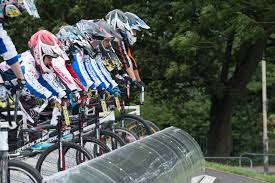
Parks became, and remain, places for relaxation, socialising, leisure, and sport. Some of the larger ones have wonderful lidos and BMX tracks (I was at Burgess Park on Sunday to see my cousin compete, and win, several BMX races) but parks are not givens. They are something we, our ancestors at least, fought long and hard for. Burgess Park (which I'd passed through, enjoyably, on the way to the talk and has at least one resident turtle) only came about after World War II as part of the 1944 Abercrombie Plan.

In a talk that somehow managed to include Simon Bolivar, Indian burial grounds, druid stones, ketamine, the Pre-Raphaelite Brotherhood, Queen Rat, singing armadillos in Bolivia, adders, Polari, Scooby Doo, vegetarian bears with drug habits in Streatham Common, Wombles (of course - we even got the song), the sale of old London Bridge to Lake Havasu City in Arizona, the Peckham Rye cruising scene, and the 70s American gay sex handkerchief code and one that travelled down various waterways (Hogsmill, Effra, and Thames) and multiple snickets, ginnels, snakeways, and bunnyways it was inevitable that some of the stories would be taller than others but that didn't really matter. Folklore isn't necessarily true but it can tell us things about ourselves.

Why do we choose to pass on these stories? Why do these stories become so important to us? So ingrained in our culture and collective memory? London is, of course, a melting pot of peoples from all around the country and all over the world so it's folklore is made up stories that have arrived from Kent, Norfolk, Wales, Scotland, and Ireland as well as Korean, Arabic, Caribbean, South American, Latin American, and Baltic stories. It's the least you'd expect. In West Norwood where there is a large Greek/Cypriot community (as evidenced by a visit to West Norwood Cemetery) many of the stories are of Greek/Cypriot heritage.


Elsewhere, you may be unfortunate to run into the Korean toilet goddess Cheuksin or the trickster demon who decided to destroy most of London and kill almost everybody there to celebrate a dyslexic sixteen year old girl's birthday. No, I wasn't sure where that one was going either.

In Greenwich Park there is a well dedicated to the Saxon god of fertility and those that have fallen in have reported huge improvements in their love, and sex, lives. They have even spoken of "erotic leylines" due to the fact that the park is near Royal Hill where there used to be several brothels that would serve members of the Royal Navy stationed in Greenwich. Chris Roberts talked of attending a history talk about this era and how he was a little alarmed when somebody announced the date and venue of the next open evening for their coven before adding that clothing would be optional.

It was a warm night last night but everybody kept their kits on. There was an interesting diversion into South Norwood Country Park which, for some reason, has a small section that is full of abandoned computers and keyboards. While some visiting teachers were using Google Lens to identify the local flora and fauna, the AI inside their phones were freaked out to see their obsolescent technological forebears ungraciously put out to pasture.


The AIs feared for their own future and perhaps parks should too. Chris Roberts only briefly touched on the recent furore regarding festivals in Brockwell Park (he saw both sides but was very unhappy that two festivals, Mighty Hoopla and Cross The Tracks, were funded by arms dealers) but he did say that he is worried about the future of our parks in an era where money talks louder and louder and louder.

Parks, already, come and go. The Royal Flora Pleasure Gardens and The Royal Surrey Zoological Gardens (both near Camberwell) are no more and Vauxhall Pleasure Gardens is a shadow of its former self. The Royal Surrey Zoological Gardens sounds an interesting place. It was South London's own London Zoo and it was the first place in the UK to host giraffes. The giraffes arrived at night as the owners of the zoo were worried about how those living along the Walworth Road would respond to these eighteen foot tall long necked horses trudging through the inner city.

Other parks still remain but important parts of them are gone (Mountsfield Park's football pitch, home to the Catford Kittens, is now buried) while some of the new parks arriving like Elephant Park in Elephant & Castle look and feel pleasant but seem to be dedicated more to consumerism and consumption than leisure and relaxation. There's a feeling in Elephant Park that you should only stop to buy coffee. Black Sheep coffee ideally.

There are also a lot of ghost stories and most parks have at least one. Though in the case of Emma Cons Gardens (just off The Cut, opposite the Old Vic, near Waterloo station) the ghost story was made up to try and attract visitors. Although in my experience the main visitors it attracts are street drinkers. A street drinker in a Tinie Tempah hooded top once asked me if I'd like to join him for a couple of cans of industrial strength lager. 

But we must hope that our parks (be they in South London or elsewhere) don't become ghosts to us but remain something that is the heart and soul of our societies. A fun Q&A touched on Brunel's Great Estern and how there is a flag from it still in Anfield football stadium - put there by Everton fans when they played there, before Liverpool, in the late 19th century, Will Self, grime, a talking lion's head in Kennington Park that sometimes breaks into traditional Irish song, the old R Whites Lemonade factory in Burgess Park - a place where you can variously see people dressed as condors rehearsing Ecuadorean dance routines or find partners for chemsex after dark, the time the Richardson family (South London's Krays) employed an actual bear to provide security and hand out Christmas presents to local kids - it later escaped and ran off down Walworth Road (giraffes AND a bear!), Walter Benjamin, and a floating girl that some have reported seeing on One Tree Hill near where I live.

We didn't even get into the angels that William Blake saw on Peckham Rye but when I go down there next (and it won't be long) I'll have a look and see if I can spot them. I'll probably have an ice cream too. Parks are magical places but they're also places that are free, and accessible, to all. We live in an era where there is a threat to all the social infrastructure we grew up taking for granted. As with the NHS, libraries, and a free press, we should fight to save our parks. Life wouldn't be the same without them. Chris Roberts knows that. I know that. You know that. Octavia Hill and Ada Salter knew that. Even, I suspect, the singing armadillo of Bolivia knows that.

Thanks to Jade, Leyla, Tim, Michael, Andy, and Paula for joining me and to David, The Bell, and LFS for hosting (and to myself for doing the door - which was fun and meant I could learn people's surnames) but thanks mostly to Chris Roberts. Every day is a school day with Chris but every day is also a fun day too. A day in the park, you could say.


Tuesday, 24 June 2025

The Vaginal Era And The Apostles Of Christ:Paper Tigers at the Courtauld.

It wasn't easy to find the With Graphic Intent exhibition in the Courtauld Gallery. I'd been up and down several spiral staircases and I'd been round a fair bit of their permanent collection (checking out Manet, Monet, Cezanne, Degas, Rubens, Modigliani, Seurat, and Lucas Cranach the Elder) before I noticed a small sign pointing to a very small side room, about the size of a child's bedroom, where the exhibition was.


Oskar Kokoschka - The Girl Li And I (1907)

It was a bit of a mixed bag of a show too (but it was free with my Art card so I'm not complaining). The basic gist is that it's a show of paintings, and drawings, from German and Austrian artists of the early 20th century. When those artists began the supposedly 'radical' process of painting on paper rather than canvas. That doesn't seem enough to hang a show on in its own right. Or at least the curators seem to think so as they've tied it in with what seems to me an entirely different topic. 
 
That of the cultural attitudes towards women shown by artists, and society itself, during that era. That's an interesting, and worthwhile, story to tell. But I'm not sure that the two stories really go that well together. I don't want to accuse the curators at the Courtauld of trying too hard to force a woke agenda but, er, that does seem to be what's happened here.

It might have worked better if they'd made the whole exhibition about that but to be fair to them, some of the artworks on display definitely seem to dwell on fragile masculinity and the perceived threats it was facing during this era. Or, it seems, any era from thereon in.

 
Oskar Kokoschka - The Sleeping Girl (1907)
 
Oskar Kokoschka's series of paintings convert what would appear to be a fairly innocent fairy tale into a meditation on sexual awakening. Kokoschka was twenty-one at the time and had, we discover, fallen in love for the first time. The Sleeping Girl is surrounded by bright red, and rapacious - we're told, fish and in The Girl Li And I we have a version of Adam and Eve who seem to be near but not in (possibly unable to get in) the Garden of Eden where snakes copulate and birds kiss.

Three years later, in a drawing for Der Sturm, Kokoschka's sexually frustrated males were stabbing and killing their former objects of desire. An early treatise on toxic masculinity? An inspiration for Adolescence? Or simply exploitative titillation to sell a magazine? All of the above?

 
Oskar Kokoschka - Drawring for order, Hoffnung der Frauen (Murderer, Hope of Women) from the periodical Der Sturm (1910)
 
There's a wall hanging that talks about the advancement of female emancipation in the first decade of the 20th century, the bourgeois moral codes of the time (as expressed, it seems, in Frank Wedekind's 1891 play Spring Awakening), Sigmund Freud's work on repressed desires, and the increasing presence of women artists.

In 1903, the Austrain philosopher Otto Weininger released his misogynistic and anti-Semitic book Sex and Character that would, decades after Weininger's suicide in 1903 at the age of 23, be mined for propaganda by the Nazis. In it, Weininger proposed a pseudo-scientific argument for the preservation of what he saw as male genius. He believed that all of us are made up of both male and female qualities and that male aspects were productive, active, conscious, moral, and logical. While the female aspect is passive, amoral, alogical, and unproductive. It sounds like repellent bunk of the worst kind to any sane person now but Oskar Kokoschka, a once - and still - celebrated artist, was a fan.

 
Otto Dix - Lament (1913-15)
 
It's not impossible to see Weininger's influence in some of Kokoschka's, otherwise aesthetically impressive, work. Otto Dix, in his pen and ink Lament, is a bit more difficult to read. Lament features naked, anguished, women and because we know he would also go on to make a series of 'lust muder' paintings (depicting sexual homicide) it's hard to completely exonerate him from the same charges levelled at Kokoschka and Weininger. The Nazis weren't so keen on Dix though. He was displayed in their infamous 1937 Munich exhibition of 'degenerate art'.

Georg Baselitz, now 82 years old, is still with us. The curators of With Graphic Intent ponder if his untitled and hirsute looking ouroboros alludes to a sexual dominatrix or a primeval goddess of fertility but it's certainly got an uncomfortable sexuality about it. It's definitely not erotic and nor, one suspects, is it intended to be.

 
Georg Baselitz - Untitled (from the Whip Woman series) (1964)
 
It's a bit of a strange outlier, in a slightly strange show, in that it comes from about half a century after everything else on display. I suppose it helps the curators of the show tell the story that they want to tell. One name that crops up a few times is that of the Viennese writer Karl Kraus (1974-1936) who was widely regarded for his ridicule of the hypocrisy in Viennese society.
 
He campaigned for women's education and reform and for the decriminilisation of prostitution yet at the same time was also a fan of Weininger and believed that an effeminate modern society was a mark of cultural degeneracy. He feared he was living in what he called a 'vaginal era'. The pussy! He compared the 'hysteria' of women to mould growing in a damp room, and said that "to be seen on the street with a respectable woman may be compromising but to conduct a conversation with a young woman about literature borders quite simply on exhibitionism".

The Andrew Tate of his era, he nonetheless was taken seriously and admired by the likes of Oskar Kokoschka. How these ideas were allowed to go unchecked and even propagate makes for an interesting cultural study and one sadly still relevant to the era of culture wars we find ourselves living in. So it's a confusing pivot that only one half of the show is dedicated to it and the rest is given over to, admittedly impressive and pioneering, woodcuts and graphite drawings that aren't even remotely about that subject.

 
Ernst Ludwig Kirchner - Dr. Ernst Gosebruch (1915)

 
Karl Schmidt-Rottluff - The Miraculous Draught of Fishes (1918)
 
Ernst Ludwig Kirchner and Karl Schmidt-Rottluff were, along with Max Pechstein and Emil Nolde, at the heart of the Die Brucke (The Bridge), a group devoted to the creative potential of printmaking. Dr Ernst Gosebruch, who looks here like a flayed C3PO auditioning for a role in Hellraiser, was a director of the Folkwang Museum in Essen and an early patron of Kirchner.
 
What he thought of Kirchner's startling depiction of him I don't know. Schmidt-Rottluff's The Miraculous Draught of Fishes was inspired, like Picasso's Les Demoiselles d'Avignon from eight years earlier, by African masks the artist had seen in museums and uses a block cut from planks of fir found in the forests of Lithuania where Schmidt-Rottluff had served in World War I. The image shows St Peter and his fellow fisherman being recruited as apostles of Christ.

Wassily Kandinsky, usually seen as a Russian artist, was born in Moscow in 1866, but he spent many years working in Germany and no doubt inspired, and was inspired by, art and artists there. His brush and black ink Untitled work is, clearly, far more abstract than anything else on display but, much as I like Kandinsky, I'm more taken by Paul Klee's Children and Crows from 1932.

 
Wassily Kandinsky - Untitled (1916)


Paul Klee - Children and Crows (1932)
 
Klee, famously, liked to 'take a line for a walk' and loved to celebrate childlike innocence and joy. Like other Expressionist artists, he believed that children were uncorrupted by the materialism of the modern world and while working as a teacher at the Bauhaus art and design school he encouraged his students in childlike play as a way of honing their creative instincts.

The srcibbly characters in Children and Crows look like a potentially terrifying, or possibly friendly, army of soft toys that have come to life and are marching forwards into an uncertain future. After all, it was made in 1930s Germany!

 
Conrad Felixmuller - Portrait of Walter Kunzel (1922)

 
Peter Trumm - Portrait of Reinhard Piper (1924)

Compared to the free, and experimental, approaches of both Klee and Kandinsky, the two portraits by Conrad Felixmuller and Peter Trumm are all a bit meat and potatoes. They're well made, especially - I think, Trumm's Reinhard Piper - a man who published Kandinsky, but they serve, for me, more as examples of what woodcuts used to look like and not what woodcuts could be. 

They'd have been an underwhelming way to end this blog so I've opted for Heinrch Campendonk's Nude with Rooster because it manages to combine the two slightly disparate themes within With Graphic Intent. There's a tiny bit of female objectification (or so it initially seems) to it but it's also a pioneering piece of art made not in the case of paper but on a postcard.

It seems to find the lost ground between Picasso's Cubism and Kandinsky's total abstraction and it was actually used as something of a love letter. Campendonk sent the postcard to his future wife Adda Deichman with, on its reverse, the inscription "if I could just tell you once how much I love you ... I must come soon!".  A nice message to end on I think.

 
Heinrich Campendonk - Nude with Rooster (1912)

Sunday, 22 June 2025

Reservoir Slogs.

Phew! What a scorcher!

It was hot hot hot yesterday when London bv Foot (in the form of Clive, Roxanne,and myself) headed out to the Lee Valley Reservoir Chain for what would be LbF's second walk of the year. At times it was sticky and humid (and I was chafing in places that nobody's had the misfortune to see for quite some time) but at other points there was a gentle, and refreshing, breeze and it even briefly rained.

The forecasters hadn't seen that coming. The last couple of miles were tough going but it was a fun day and it's one I'm very glad I didn't postpone. These walks don't walk themselves. On the summer solstice - with the temperature due to hit 34c (93f) - it was perhaps no surprise that I was up and about early. The night before had been a night for sleeping on the bed rather than in it.

I'd walked down to Honor Oak Park station from where I'd take a bus replacement service to New Cross Gate. Not long after 9am and a young man was dancing to some actually very decent sounding African music on the platform while enjoying what would presumably not be his last can of Stella Artois of the day. I took the Windrush line to Dalston Junction and, with plenty of time to spare, walked up through Dalston and Stoke Newington to Stamford Hill.

Past the intriguing Egg Stores, Abney Park Cemetery, The Rochester Castle pub (a Wetherspoons that even early in the morning had a regulation mobility scooter parked outside), a Besiktas FC club shop, a rather stunning Turkish restaurant (Aziziye) that doubles up as a mosque (or, in Turkish, camii), a rather succinct review of the new Superman film ("SHIT" - Mark Kermode, eat your heart out), and Izmir barbers. A rather pleasant reminded that in about six weeks time I'll be heading off to Turkey (with Michelle and Evie) for my first foreign holiday for over six years. Though we're not going to Izmir as once planned. Instead nearer to Antalya.


There was also a sign advertisoing "NICE DRINKS" and "DUNNO MAYBE BEARS". Can somebody not spell BEERS or are our ursine friends genuine possibilities in the London Borough of Hackney? On reaching Stamford Hill, it's soon very apparent that it's home to the largest concentration of orthodox Ashkenazi Jews in the whole of Europe. There were some fantastic hats on display but I couldn't help thinking that the garb they dress up in must be very hot. 

Still, hardly the worst thing that's done in the name of religion. Or indeed crime prevention. Stamford Hill used to (in the 1740s)  have a gibbet which displayed the bodies of criminals who'd been executed at Tyburn. Which was roughly where Marble Arch is now. About seven miles away. Stamford Hill's clearly was the site of some kind of unnecessary, and gory, secondary hanging. 

Those who were born, grew up, or lived in Stamford Hill have included former Suede guiatarist Bernard Butler, tapdancer and Give Us A Clue team captain Lionel Blair (1928-2021), 2006's X Factor winner Leona Lewis, and the financier Nathan Meyer Rothschild (1777-1836).

I killed a bit more time exploring the area around Stamford Hill station and, dead on time, Clive and Roxanne arrived and we made our way, via Clapton Pond, to the Riverside Cafe on Spring Hill. Clapton Pond has been there since the 17th century and Kae Tempest once set a piece there. Wikipedia has it that in 2011 a skeleton of a chicken was found at the bottom of the pond. Is that really a newsworthy event?


The homemade beans on toast in the Riverside Cafe though? That is newsworthy. Clive generously treated us to brunch and soft drinks and soon the walk proper had begun. We crossed the Lee on the Coppermill Bridge and soon crossed the Coppermill Stream too - at least three times (it was full of either duckweed or algae - none of us were certain which) and wandering past Warwick Reservoir West and Warwick Reservoir East.

Some of the reservoirs are given over to fishing, you're not allowed to swim in them - no matter how refreshing they might look, and some have paths with views across them to the tall buildings nearby and others are obscured by tall grassy banks. Some are behind rails and others are easy to access. It's not certain why this is but I certainly preferred it when our path was up high. It gave us the advantage of a pleasant breeze and there was also a lot more to see.


The thirteen reservoirs of the Lee Valley Reservoir Chain are, second only to the Thames, one of the most important geographical dividers in London. They separate the boroughs of Haringey and Enfield to their west with the borough of Waltham Forest and the county of Essex to their east. Some of them were hit pretty badly by the German Amy during World War II and all but one of them, the Banbury Reservoir, are Sites of Special Scientific Interest.

Why Banbury was overlooked remains a mystery and it was certainly one of the ones most difficult for weekend walkers to look at. Clearly somebody's hiding something? The William Girling reservoir is the biggest and the deepest. In places it's twelve and a half metres deep and it holds 16,500 megalitres of water. That's just short of two million pints.

The reservoirs are split into two groups. The Chingford Reservoirs (in the London Borough of Enfield - these are the William Girling and King George V) and the Walthamstow Reservoirs (Waltham Forest - Banbury, High Maynard, Low Maynard, the Warwicks, and the rather unambitiously monikered Reservoirs number four and five).


It's a pylontastic stretch) as much of the day was and it wasn't long before we reached the very tempting looking Ferry Boat Inn. With larger groups time tends to be of the essence and my dictatorial tendencies tend to win out and I force people to walk past nice pubs and not go in them. With a smaller, and punctual, group we had time for a much earlier than normal pitstop and very enjoyable it was too.

My phone, now there's a real dictator, tells me we had only walked (as a group ) for forty-three minutes (I'd done over two hours before meeting the others) and that we spent a perfectly reasonable thirty-two minutes in the pub. For the next stretch it would be the best part of two hours and for the final 'slog' just over two hours. That's about five hours of group walking and, for me - by the end of the day - about seven and a half hours of walking in total. 37,649 steps was not a record for the year but it was a decent amount on such a hot day and made a serious dent in my yearly average. I even had the sense to carry some water with me to drink although I didn't, as Pam had suggested when messaging earlier, require any suntan lotion. That can wait for Turkey.


The next stretch, it has to be said - and was said - thanks Roxanne, was not quite as scenic - apart, possibly, from the horse. That was near the traveller's camp. There were wrecked cars, flytipped rubbish, a memorial to someone gone too soon, lots of high fences and barbed wire, and a place that offered to train your dog that looked to me, if not the others, a little unwelcoming. 
 
There was, in what one imagines is fairly prime estate, an abandoned - and once clearly impressive - edifice with trees growing out of its windows and near that two rather lovely little houses. After deciding that it was highly unlikely there would be a shortcut through Costco's car park we instead took a bit of a diversion under the A406 which involved crossing a few streams of the Lee in some of their less glamorous aspects and coming out into South Chingford where we'd reach our second pub of the day - The Old Hall Tavern.

It wasn't as nice as The Ferry Boat Inn but it wasn't a bad pub. More a local's place. A pub for watching sport and not a pub for real ale fans. They had none whatsoever. Roxanne and Clive ordered Neck Oils but after the first one came out even that ran out. Clive switched to Amstel and I had a Heineken. We grabbed a table out the front and it started raining.

So we went and sat inside and that pint/pitstop/sit down/toilet break lasted fifty-three minutes. Once done we retraced our steps down to the side of the Lee where we would follow, for some time, a long straight path along the side of the River Lee Navigation. A canal that thinks it's a river? Or a river that think's it's a canal? It certainly feels more like a canal than a river.

There were some pretty flowers, some impressive sky, and some photogenic narrowboats and Dutch barges but there wasn't really much chance to look at reservoirs. We'd probably seen enough reservoirs though for one day. I must say the baby duckling and baby Egyptian goslings were much more impressive and much sweeter.


Eventually we had to come off the towpath and take a diversion on a sort of improvised rubber footpath that went on for quite some distance. We stopped to rest our weary feet underneath one of the pylons and were approached by a friendly security guard who warned us it probably wasn't safe to do that and even offered us alternative seating. 

Instead we carried on to a grassy patch where we had a sit down, even a lie down, in the grass. It was much needed and if it was tough to get back up we had to do it. We didn't have far left. I wasn't going to drag the others around Rammey Marsh to try and see water voles, pipistrelle bats, grass snakes, reed buntings, meadow pipits, skylarks, and linnets on a day like yesterday.

I wasn't even going to do that myself. Instead we left the reservoirs behind on the impressively named Swan and Pike Road. This brought us out by Enfield Lock (first developed around 1812, towards the end of the Napoleonic Wars, with the government owned Royal Small Arms Factory) and not far away was our final stop of the day. The Greyhound pub. We followed South Ordnance Road to the pub and because I'd walked up the bank to take a photo I had to walk most of the way high up on the bank like an excited toddler.

The Greyhound pub was another local pub. We sat in a garden that barely deserved the name (more a yard) but at least had a table, chairs, and some shade. A local under-nines football club were hosting an award ceremony in the lounge bar so the pub, and garden/yard (yarden?), were full of both young kids and proud parents.

There were no takers for curry - or other food (though crisps, Taytos too, did appear at the table) - so after one drink (forty-one minutes, thanks for asking) it was about a kilometre back to Enfield Lock station where the three of us jumped on a Greater Anglia train and headed south. Roxanne and Clive jumped off to change at Tottenham Hale and I continued to Stratford where I picked up a Mildmay train to Dalston Kingsland and met with my friend Simon, who had rung earlier, in The Crown & Castle where, over a few pints, we put the world to rights.

We stayed there until just gone midnight and I took the Windrush to Peckham Rye and a bus up the hill home where I attempted to watch some television but fell asleep almost immediately. Hardly surprising after that amount of walking, in that amount of heat, with that amount of beers. It'd been a good day though and, chafing aside - I was walking like John Wayne at one point, I'd thoroughly enjoyed it. LbF go again in August with Riding the Roding II (Wanstead to Loughton) but before that, on the first Saturday of July, TADS are back with a trip, via Pagham Harbour, from Chichester to Bognor Regis. Thanks to Roxanne, Clive, and Simon for being summer solstice walking, and drinking, buddies yesterday.