Friday, 7 June 2019

The Logic of Colour:Pierre Bonnard at Tate Modern.

"Draw your pleasure, paint your pleasure, and express your pleasure strongly".

Pierre Bonnard appears to have lived something of a charmed life. A life of naked women, red wine, dining in front of panoramic views of the south of France, and, most of all, colour. Greens, blues, oranges, reds, purples, any colour you want as long as it's not black. As long as it's bright, bold, and, at the same time, both redolent of nature and, yet, almost completely full of unnatural light. For Pierre Bonnard, it seems, colour was a substitute for light. Perhaps it's why so many paintings, instead of being traditional landscapes, feature windows  open to reveal landscapes.

While Tate Modern's concurrent exhibition of Dorothea Tanning paintings drills down deep on her fascination with doors, the Bonnard show features a remarkable amount of windows. In fact there's nearly as many windows as there are paintings of naked women - and there are a lot of paintings of naked women. They don't seem to me, a man, as prurient as the wank fantasies of Edgar Degas or even as titillating as the high end grot of Louis-Leopold Boilly and they certainly aren't as problematic as Gauguin's latent, sometimes blatant, celebrations of paedophilia.


Open Window Towards the Seine (Vernon) (c.1911)


Man and Woman (1900)

Sometimes there's a naked man in them too so it all looks very consensual, sensual even. 1900's Man and Woman shows Bonnard and his girlfriend Marthe de Meligny. Girlfriend, not wife - they were bohemians and this painting shows it. They met in 1893 and did not marry for another thirty-two years. 

It's gorgeous too. Saturated with dimmed lights and warm reds. It looks quite a blissful scene. In Young Women in the Garden, de Meligny has been relegated to a vague profile on the right and the centre space of the dazzling orange and candy striped painting features Renee Monchaty whom Bonnard had been having an affair with. It's not clear if de Meligny was aware of Bonnard's involvement with Monchaty but. again, bohemianism!


Young Women in the Garden (1921-3/1945-6)


In the Bathroom (1907)

Sometimes it's all boobs, legs, and bums - quite often women washing and dressing which is both more natural than the contrived forms other artists would use and also a bit more erotic. At the same time the occasional work can give Bonnard the air of a peeping Tom. The curators of Tate Modern's retrospective claim these casual non-poses reflect Bonnard's interest in photography which they may well do but they also suggest a full and open appreciation of the unclothed female form.

At the same time he imbues the painting of jugs (not those ones) and bowls with all the gravitas and patience of a Chardin or a Morandi. A simple cup of coffee on a red and white checked tablecloth can be as heavy with sexual tension as a woman towelling herself off in her boudoir.


Mirror above a Washstand (1908)


Coffee (1915)


Dining Room in the Country (1913)

Dining Room in the Country shows Bonnard's appreciation of the landscape around his house in Normandy, The Mantelpiece manages to get two nudes in for the price of one (one admittedly a reflection) and was so important to Bonnard he chose to show at two prestigious international exhibitions (in Pittsburgh and Venice), while Lane at Vernonnet and Town in South France are perhaps more typical of earlier Impressionist painters like Pissarro and Sisley than Bonnard's own generation.

All, however, are bathed in trademark Bonnard light. Suffused in oranges, reds, purples, pinks and greens. Breasts, doors, trees, paths, a church, and the sea all viewed through the same watchful eye and painted with the same inventive palette. They're all wonderful paintings. Almost everything in the show is.


The Mantelpiece (1916)


Lane at Vernonnet (1912-14)


Town in South of France (Saint-Tropez) (1914)


View from Uhlenhorst Ferry House on the Outer Alster Lake with St.Johannis (1913)

Bonnard liked to capture bustling crowds as much as he did intimate moments. His brushwork had an energy that gave those crowds that bustle. He travelled to Hamburg with his friend, and fellow painter, Vuillard at the invitation of Alfred Lichtwark, the Director of the Kunsthalle,and infused northern Germany with the light he'd filled his native France with. 

More even. The Pont de la Concorde in Paris looks positively gris in comparison to his Hamburg work, the pedestrians crossing it hunched and beaten down. It's quite an outlier. More typical is the loving Donkey in the Garden; Le Grand Lemps showing the family home in the Dauphine. Each summer Bonnard would revisit for family holidays and, of course, a bit of painting. The tranquility seems incongruent when you consider that the horrors of World War I were taking place only a few hundred miles away at the time.


Pont de la Concorde (1913-15)


Donkey in the Gardens; Le Grand-Lemps (c.1917)


A Village in Ruins near Ham (1917)

That's not to say Bonnard was ignorant of, our chose to ignore, events at the time. A Village in Ruins near Ham could be by a completely different painter. Gone are the life affirming colours, replaced by rust browns and muted pale blues. An overcast sky possibly the strongest hint of all that all was not well in Europe. 

For sure, it's another outlier. As soon as Bonnard had visited the war zone near Ham he started work on Summer which is either an expression of his longing for peace and safety or informed by a simple relief to be away from death and destruction and back in the comfort of nature.


Summer (1917)


The Checkered Tablecloth (1916)


The Fourteenth of July (1918)

The Fourteenth of July was painted during a parade celebrating the national day of France during World War I and it's a rare example of Bonnard setting a scene at night. It's unsure if it's a celebration of the end of the war or not but he's certainly allowing his usual colours to slowly move back in to the frame so that suggests so. Soon he would back to painting nude ladies in their powder rooms, light streaming through windows, and gardens.


Bathing Woman, Seen from the Back (c.1919)


Nude Crouching in the Tub (1918)


The Bowl of Milk (c.1919)


House among the Trees (1918)


Piazza del Popolo, Rome (1922)

He even travelled to Rome where he painted a very pinkish picture of the Piazza del Popolo. His passion for nature, and for colour, was back and it didn't matter if it was something as humble as a basket of bananas or as awesome as a Mediterranean landscape. Even a fence. 1923's The Violet Fence certainly lives up to its name. The uneven fence posts are a joy but so is everything else in the painting. The medley of leaves, the yellowing sky, and even the brown of the wood on the trees.


Basket of Bananas (1926)


Landscape in the South of France (1920-1)


The Violet Fence (1923)


Terrace in the South of France (c.1925)


The Window (1925)

Terrace in the South of France gives so much of the canvas over to a sun bleached wall that it borders on abstract expressionism, The Window looks out at an unnamed city and seems to have something of the Cezanne or the Van Gogh about it, the blocky houses almost stepping stones towards Cubism, whereas 1925's The Bath seems harsher, more mortal, and more corporeal than many of Bonnard's nudes. It's almost a precursor to the portrait paintings of later British artists like Lucian Freud, Euan Uglow, and William Coldstream.


The Bath (1925)


Landscape at Le Cannet (1928)


Standing Nude (1928)

The show repeats itself with yet more lovely landscapes and nubile nudes yet it never becomes boring. Each painting is a pleasure in its own right, it's hardly a surprise that the curators at Tate Modern were encouraging 'slow viewing' of the show. 1931's The Boxer is a rare self-portrait and odder still when you consider that Bonnard seems to have defined himself much more a lover than a fighter. 

Equally peculiar, Bonnard looks uneasy. Quite a different image, a changed perspective, from the younger, carefree, man we thought we knew earlier. Now in his sixties, Bonnard was getting old and finding more time for self-reflection. He'd been called "a painter of happiness" but had replied that "he who sings is not always happy".

Yet his art continued to inch forward. The irregular composition suggests the sexagenerian sex addict was keeping abreast of new developments in the art world. Note how the model is offset to the right of the painting as the flowers and the mantelpiece take centre stage. Bonnard, it seems, clearly was one who DID look at the mantelpiece when he was stoking the fire.


The Boxer (1931)


Nude in the Mirror (1931)


Flowers on a Mantelpiece in Le Cannet (1927)


Nude in an Interior (c.1935)

A similar trick was repeated, and improved upon, in 1935's Nude in an Interior - and now Bonnard was bringing mirrors into the equation to add unusual angles and perspectives. The colour continued to intensify and become ever less realistic (see Large Dining Room Overlooking the Garden) in some paintings while in others, like In the Bathroom, he'd pared down both the brightness, the contrast, and even the components of the painting. It's just a few cupboards, an old unvarnished wooden door, and some fading paint and yet Bonnard makes this as beguiling to the eye as an ultramarine dining room looking out to a deep blue sea.


Large Dining Room Overlooking the Garden (1934-5)


In the Bathroom (c.1940)

Marthe de Meligny died in 1942, Renee Monchaty had taken her own life in 1925, leaving Bonnard without his long term companion(s), World War II had broken out, and Bonnard was reaching the end of his life. He would die in the French Riviera in 1947 aged 79 but even in his final years he was still consumed by, and still had daily encounters with, nature. 

The steps in his garden gave him solace and provided him with subject matter and in the last year of his life he made his final painting, Almond Tree in Blossom (which is also the final painting of this exhibition), of the view from his bedroom window. Too weak to change the colour of a patch of ground he got his nephew, Charles Terrasse, to do it for him. 

It's a frail, skeletal painting by Bonnard's standards. In that it possibly reflects his own physical deterioration but in its love of nature and its passion for colour it is wholly typical of his work. Pierre Bonnard had lived, loved, travelled, and seen two world wars in his lifetime but in his dying days it was the nature that he came from and the nature he was soon to return to that remained, as ever, his over-riding passion. What a wonderful artist. What a gorgeous show.


Steps in the Artist's Garden (1942-4)


View of Le Cannet (1927)


Almond Tree in Blossom (1946-7)


The Virtues:An everyday exorcism.

"Man's enemies are not demons, but human beings like himself" - Lao Tzu.

"What we are reluctant to touch often seems the very fabric of our salvation" - Don Delillo.

Shane Meadows' recent Channel 4 four parter The Virtues was set in a world (Ireland mainly) of twilit train platforms, municipal parks, greasy spoons, and petty jobsworths. On the surface, a life of ferries, council estate pubs, hopper buses, vaping, and building sites, but one underwritten by a dark netherworld of hospital beds, panic attacks, flashbacks, demons, and repressed memories.


It was also one of the most brilliant, tender, moving, and, at all times, completely real pieces of television I have ever seen. Every single episode had me in floods of tears and that's as much down to the wonderful performances of Stephen Graham (who, it turns out, does alcoholic just as authentically as he does toxic masculinity) and, as the series develops, Niamh Algar as feisty but broken hearted Dinah as it was Meadows story of profound redemption.

Graham plays Joseph, a manual worker living alone in Sheffield. His flat is averagely messy and none too homely looking and his ex, Debbie (Juliet Ellis), and her new partner (David, played by Vauxhall Jermaine) are taking his young son, Shea (Shea Michael-Shaw), off to start a new life in Australia. The four of them have a nice dynamic, they have a goodbye meal together and Joseph suggests that Shea calls David Dad to make life easier down under, but this is a Meadows drama so we know something's going to go wrong - and it very soon does.

Clearly, something has already gone wrong - and not just because Debbie is with David and not Joseph now. Joseph's got a problem with the booze and, following a suggested period of abstinence, losing his son appears to be the cataclysmic event that may just cause him, or give him the excuse to, fall off the wagon.

Sure enough it's not long before we see Joseph sat alone in a pub with a pint. It's not long before he's trading up to vodka. It's not long before he's ingratiating himself with a table full of strangers and buying them drinks. Trays of shots and lines of coke in the bogs follow. He falls over. He's helped home but finds himself tempted by another bar where he's kicked out by bouncers.

Despite my friend Darren saying the scenes of drunkenness reminded him of Sir Digby Chicken Caesar in That Mitchell and Webb Look they felt, to me, terrifyingly real. Familiar even. Watching this pathetic, paralytic man block out his demons with industrial quantities of booze and transitory friendships before waking up on the floor, fully dressed naturally, caked in puke and piss and covered in cuts and bruises.


Ignoring knocks on the door, Joseph has a wash, he has a cry (thankfully Meadows spares us the inevitable guilt laden hangover wank), and then refuses to take a call from his own child because he's so riddled with shame. When asked about his bruises he lies that he fell off a ladder at work and it's not long before he's sat on a park bench contemplating a plastic bottle of strong cider.

That he overcomes the temptation of yet another trip to oblivion is an indication that Joseph's alcoholism is more symptom than cause of his problems. It's not long before he's on a ferry from Birkenhead to Belfast and, following a failed attempt to hitch hike (in these days?) to the Republic, he walks through the night in the pouring rain to a small Irish village and falls asleep by the side of the road.


Good job there's still a frictionless border between the two parts of Ireland, eh? The house he's chosen to sleep outside is that of his long lost sister Anna (Helen Behan) and, at first, she doesn't recognise him and her husband Michael (Frank Laverty) is outright hostile towards him but, soon enough, their true colours are revealed and their kindness shines through.

Michael and Anna have three children and, following twenty four hours of feverish sleep, Joseph wakes in one of their beds. Michael and Anna house Joseph, they feed him, and Michael even gets him some work for his building firm. There he meets Craigy (Mark O'Halloran) who's recently been in trouble for exposing himself to an elderly couple out walking their dogs and quite evidently has his own demons buried away in the back of his mind.


Dinah, Michael's problematic sister, crops up too. Described, memorably, by Anna as a "hot mess", we first see Dinah clouting some guy, presumably some kind of ex-boyfriend, who's hassling her but she's soon revealed to be, as all are in Meadows productions - none are given the discourtesy of being rendered two dimensional, a far more rounded character, and a much more empathetic person.

A person with her own skeletons in the cupboard too, and as the drama develops she becomes as much the key protagonist as Joseph. We're gently introduced to her back story and find out the reasons why she no longer has any contact with the child she gave up for adoption when she was a teenager.


A friend of mine, Richard, commented on just how much space there was in The Virtues. The story was allowed room to breathe, the character development was free of laden exposition and instead allowed for lingering glances, seemingly throwaway comments, and painfully quiet car journeys to let us build up our own vivid pictures in our heads and work things out for ourselves.

As in life itself, we always knew roughly the destination we were travelling towards but we had no idea what we were going to find when we got there. Lots of close ups of cobwebs and spiders suggested we were mere flies with no chance whatsoever of avoiding the traps that life sets for us. Catholic imagery, in the form of crucifixes mainly but even the show's title, peppered the whole experience but never completely dominated.

Catholic guilt and improper behaviour by the custodians of the church was hinted at, rather than shouted about. There was little impassioned speechifying. Instead there were flashbacks to youth that got increasingly less fuzzy and there was a trip back to an abandoned and ruined ex-children's home that brought back some predictably disturbing memories for Joseph.


As The Virtues nears its denouement the tension, already almost unbearable, and the sadness that's been there from the very start are ramped up. PJ Harvey's excellent score moves away from songs into the realm of urgent and atmospheric strings and missed phone calls carry the weight of the world and the possibility of potentially shattering any chance of salvation that Joseph and Dinah may have had.

But, at all times, the action feels utterly believable. These are people you can imagine meeting, imagine caring about, imagine being friends with and it tears your heart out to watch what they have to go through. The industrial language (Meadows is generous when dishing out fucks and cunts) is exactly the way people speak in these moments and even in slightly happier times there are classic lines to marvel at. A drunken Joseph tells Dinah she has "little youth club tits" and the next morning Anna says of Joseph:- "turns out my brother's a massive fucking dickhead".

In Lucy Mangan's five star Guardian review of The Virtues she wrote, and I paraphrase only slightly, about a "desperate attempt by a suffering soul to escape by any means necessary, without fully realising how or why the experiences corrode from within" and she's hit the nail on the head there. We can run from our demons if we like but we''ll be running forever. One day we'll have to look them in the face and the strange thing is that our demons, like us, may prove to be equally human and equally fallible.


This was exemplary television making of the sort that rarely comes out of Britain anymore. Working class people not portrayed as heroic strivers or feckless shirkers but complicated human beings with hopes, fears, and desires not just for themselves but for those they love and care about. It's vital we see lives like this reflected on the screen and it's vital that directors like Shane Meadows continue to shine a torch into those dark corners of society, and those dark corners of our soul, so we can confront our own anxieties. I found it sad beyond belief but I also found in it a catharsis that is woefully lacking in so much else.

Praise and props to Meadows for making The Virtues, likewise to all the cast (including a shout out to Michael Starke, Sinbad from Brookside, for his brief cameo). Not a single line, not a single shot, not a single moment felt wasted. Stephen Graham and Niamh Algar, the stars of the piece, are due particular credit for bringing to life these truly three dimensional characters.

It's said we're all only one or two wrong decisions away from being in penury and despair and to imbue such warmth and humanity on people at a time when many in the country, and the world, are looking to hate preachers and demagogues to solve their problems takes a very strong heart. But it takes a tender one too. It's easy to judge. It's a lot harder to empathise. The Virtues, even deep into its toughest moments, always remembered that true strength comes in kindness, not in cruelty. A masterpiece.


Thursday, 6 June 2019

Quackers International:It Shouldn't Happen to a Vet.

Have you ever inserted a live trout into the stomach of a cow that's been pumped full of gas? Have you put cannabis oil in a dog's ear? Performed reiki on a tortoise? Teabagged a dog's eye? Or, perhaps, you've used holly in an attempt to prevent ringworm or you've cut a lock of hair from a horse's mane to send to a lady in Wales who'll put it in a black box so she can diagnose an equine illness?

All of these, and more, fantastical stories cropped up in last night's interesting, if sparsely attended, Greenwich Skeptics in the Pub talk, ...Quack quack here:Pseudoscience in veterinary practice, with Dr Danny Chambers, a passionate advocate of real, as opposed to alternative, medicine who grew up on a farm in Devon, graduated from Liverpool veterinary school, writes for the New Scientist, and is now standing for the Liberal Democrats in northern Cornwall.


Don't hold that against him. Not in this day and age! It was a muggy night, I'd had my regulation pie'n'mash in Goddard's and, following a boozy weekend, I was clutching a lemonade nearly as tightly as my notebook. To begin with, I'd doubted the wisdom in even venturing out to hear a talk on a subject I had no specific or particular interest in.

Chris French and these Greenwich Skeptics rarely, if ever, disappoint though (and they cost you a mere £3, which is optional anyway) and last night proved to be no exception. Dr Chambers (sometimes known as 'the veterinary Ben Goldacre' which our host joked was a compliment - of sorts) kicked off with a story about a dog owner who'd related a tale about their dog being scared to go in to the kitchen because there was a ghost in there and remarked on why this particular person had gone to the vet to ask about that.


Ghosts not being a subject that tends to get covered in veterinary school. He said he heard bizarre stories and encountered fake remedies and quackery on a daily basis. Add to the list in the first paragraph a story about a rabbit that was "fucked in the head", someone who claimed they could use dowsing to determine the sex of parrots (and boasted a roughly 50% rate of success!), crystal healing for pets, and a belief held in some parts of Ireland that the seventh son of a seventh son can cure internal bleeding in livestock just by accessing their ear tag numbers and you soon begin to see that there's as much woo, misinformation, and straight out bullshit in the world of animal health care as there is in the human one.

Possibly more, and much of it is dangerous. Pet owners who choose homeopathy over vaccination are, if not directly killing their pets, shortening their lives. Dr Chambers works mainly with horses now (the smaller ones are the most dangerous, apparently) and equine operating theatres are much like human ones, except more expensive. The NHS doesn't extend to animals and that's not likely to change. If Nigel Farage and his chum Donald Trump get their way it soon won't exist at all.


As Dr Chambers, metaphorically - not literally, took up his stethoscope and talked he explained that the animals were the easiest part of the job. It was the owners that created the problems. The wealthy ones particularly felt they knew better than trained vets so often resorted to spiritual healers, psychics, chiropractors, and acupuncture.

One horse psychic refused to share what the horse had 'told' them because it would have been a breach of 'client confidentiality' and another felt the need to pass on the information that one horse had said he was planning to rape another horse. You can contact dead horses via Facebook Messenger.

Using supposed psychics of course. It's very common that people do. It's also very expensive for people to do so. There are so many online conspiracy theories about vets now that some animal owners simply don't trust them. Others go further. There are over 50,000 members of a Facebook  group that claims vets give animals cancer on purpose (via vaccinations) so they can make more money out of them.

There are other websites full of dangerous advice. Dogs Naturally is pretty much a GOOP for animals, selling overpriced and useless gadgets to the rich and easily fooled. Raw Feeding UK (33,000+ followers) promotes a conspiracy theory that pet food manufacturers design their products with the express intention of making animals sick and try to persuade people to get their pets to switch to a paleo diet.


But dogs are not wolves. They've been domesticated for something like 20,000 - 25,000 years and, when it comes to E. coli and salmonella, they're just as susceptible as humans. Try letting a pet dog wild in a park full of wolves and see how long it survives. Try letting a dog with E.coli or salmonella lick your child's face.

People have been putting dogs on gluten free diets which can kill them (dogs can be vegetarian but cats have to eat meat to survive) and in most cases people are doing this with the best intentions. Traditional vets don't, generally, get much time to speak to owners while homeopathic vets (many of whom have trained as vets so have the right to practice but have since moved over to the dark side) can devote, at great cost to the pet owner, much more time to chat to people and put them at ease.


Something of great importance when you consider how much people love their pets, how strong the bonds are. A friend of Dr Chambers once told him, when talking about this, "people don't care how much you know. They want to know how much you care".

Which is often true. But it doesn't change the fact many of the people selling these remedies are simply crooks giving false hope to desperate people. Facebook are starting to crack down on anti-vax and pseudoscience groups but still pages like the Barefoot Horse Owners Group (23,000+) exist.

They're anti-horseshoe which, to me, initially seemed like not such a bad thing, possibly even an admirable one. But much as dogs are not wolves, the horses we've domesticated and bred for thousands of years aren't Shetland ponies any more. A Shetland pony doesn't have a lot of weight to carry around, the gigantic thoroughbreds we've created need shoes to support their own weight. People have no doubt run marathons barefoot but it's generally not advised. Same for horses.


Ainsworths homeopathy website, thanks to the patronage of renowned crackpot Prince Charles, contains the Royal Warrant of Appointment so you can see how people are fooled into parting with their money for 'magic water but how do you explain the success of other, nameless due to their very litigious nature, 'ventures'?

There's a guy sells silent CDs (nearly £100) for you to play to your pets, £50 canisters of 'aerobic oxygen' that are supposed to cure lung cancer, and Russian healing blankets that seem to be able to cure pretty much everything. ASA have upheld complaints about this fellow but he's still at large and blaming 'big pharma' for trying to suppress his alternative (for which:read sham) ideas.

Elsewhere, online, anti-homeopathy vets are decried as being 'demonic illuminatists' and the 'reincarnation of Hitler'. It's the same techniques that racists and climate change deniers use. Shout down, using the most unpleasant language possible, anyone who disagrees with you, anyone who's done any research into a topic, and anyone who cares about anyone else other than themselves.

While some were charging £80 for blank CDs and his defenders were abusing people on the Internet with no censure whatsoever, Dr Chambers was out in Jaipur, India trying to make the world a better place. No doubt earning himself the right to be belittled as both a 'virtue signaller' an a 'social justice warrior'!


There's been no rabies in the UK for over one hundred years but in India and many other countries it still exists. Many Indian children still die of rabies and one approach has been to simply kill rabid, or suspected rabid, dogs. Dr Chambers volunteered for an ongoing initiative that was involved in vaccinating dogs instead.

It's cheaper to vaccinate dogs than people plus killing dogs merely leaves a void in to which move new wild, often rabid, dogs resulting in more children catching rabies and more children dying. With 85% of dogs in Jaipur now vaccinated (and the males neutered) there has not been a single case of human rabies since 2005.

Actual medicine works. Alternative medicine doesn't. When alternative medicine does start working they start calling it, quite simply, medicine. What sort of person, in a supposed nation of animal lovers, attacks a vet even if it's just online? I'd wager there are two distinct types. The misguided who need educating and the crooks and con men who need investigating by the law and their websites and businesses closing down.

A great start for anyone's education in health care and its current concerns (not just for animals, but humans too) would be to attend one of Dr Chambers' talks (and I've not even mentioned the Q&A which got into the influence of Mumsnet, homeopathy on farms, a naughty fat horse, and lots of animal diseases I've never heard of). A big thank you to him and, once again, Greenwich Skeptics in the Pub for another brilliant evening. Yet again they pulled another rabbit out of the hat - and this one didn't even have myxomatosis.


Wednesday, 5 June 2019

Read it in Books:The Kingdom of This World.

"In overthrowing me, you have cut only the trunk of the tree of liberty. It will spring again from the roots, for they are numerous and deep" - Toussaint L'Ouverture.

"Koupe tet, boule kay" ("Cut heads. Burn houses") - Jean-Jacques Dessalines.

I'm always embarking on harebrained schemes. Some work out (TADS, the London LOOP, Offa's Dyke, starting this blog even). Others, usually those relating to making money or affairs of the heart, prove less successful . Then there's a third category:- plans that have been shelved - but not permanently.

I eventually did listen to every album David Bowie ever recorded and I was most fastidious when it came to compiling my list of my 100 favourite Fall songs but I've certainly dragged my heels with two other projects, both of a literary nature and both of which came to me when perusing the many bookstores of Hay-on-Wye during that Offa's Dyke adventure.

I'd decided that I'd make two thorough studies into two different genres that interested me. To start my journey into the world of Southern Gothic I'd purchased two William Faulkner novels (which, to my shame, I've barely looked at. I didn't actually get round to even purchasing my first book in my planned investigation of Magic (or Magical) Realism until at least three years later. In fact I finally bought Alejo Carpentier's The Kingdom of This World, written 1949, on my 48th birthday. From the City Lights bookshop in San Francisco.

I have great memories of that day but, until now, I'd not made much headway with the book. To be frank, brief glances had scared me off. It looks pretty bloody tricky. I'm no expert on the Haitian revolution of 1803 or the following reign of King Henri Christophe and I wasn't sure if reading an account through the eyes of a fictional elderly slave, Ti Noel, that took in Vodou ceremonies, snake gods, and animal magic (nothing to do with Johnny Morris) would make events much clearer for me.


The promise of "an orgy of voodoo, race hatred, madness, and erotomania", however, coaxed me back in. Carpentier was born, of a Russian mother and a French father, in Cuba 1904 and, after a spell living in Europe, moved back there following the revolution. He died in Paris in 1980. Although my Spanish is passable it's not good enough to attempt a book like this so I was reading a translation by the fantastically named Edwidge Danticat.

Danticat's forerword took in Haitian history from a 2004 perspective. The year Haiti observed two hundred years of independence and the year Haitians battled over whether or not controversial president Jean-Bertrand Aristide should remain in power. This foreword alone takes in Toussaint L'Ouverture, chimeras, jets to the Central African Republic, the Haitian Act of Independence being written on a parchment made from a former white master's skin (and using his skull as an inkwell), and a one armed slave who turns into an insect in order to escape execution. I was entering a very different world.


A world that began with an account of twenty stallions being imported into Cap Francais (now Cap-Haitien) from Normandy. Ti Noel was unable, like most slaves, to read but he had a gift for 'judging horse flesh'. Fellow slave, Macandal (from Sierra Leone) had an even more remarkable talent. He could metamorphosise into a dog, a lizard, a gannet, a centipede, a tarantula, or a moth. His strange powers caused a 'negress' to give birth to a child with a wild boar's face which, when one considers that he had "testicles like rocks", is quite an achievement.


Carpentier paints a picture of Haiti that is all tripe shops, plantations, French newspapers, carob trees, fandangos danced to the rhythm of castanets, and monkeys in Spanish dress. That, of course, is just the backdrop. Not just to this tale of a slave rebellion but Carpentier's wonderful flights of fancy and literary inventiveness. Poisons brewed in caves and bulls having their throats slit so their blood can be added to mortar to make a fortress impregnable will paint a vivid enough picture for you/

There are political and racial aspects underpinning the story, at one point it is decreed that any person with even one eighth negro descent should be put to death, but they are highly camouflaged beneath Carpentier's phantasmagorical visions and literary flights of fancy. I certainly struggled to ascertain what he was trying to say on that score.


There is often quietly considered gore and horror. Macandal's arm is rudimentally amputated following an accident at an upturned trough, women are raped by large felines, escaped slaves are tortured as an example to others, and entire families are decimated by a mysterious poison.

Elsewhere a cargo of venomous snakes is loosed upon peasants that aid runaway slaves, a man carries a red phallus on a crutch to summon his God, and yet another converts himself into a wasp but soon tires of "the monotonous geometry of wax constructions".


If the horror doesn't have you turning away from the book you may have to do so anyway. To consult a dictionary. There were so many words in this book I had to look up that I made a list:- alexandrine, antiphony, asafetida, buskin, caladium, canebrake, carboy, ceiba, crupper, culverin, dentelated, esparto, galloon, girandole, glaucous, griffe, haymow, hemistich, houmfort, houngan, immure, ipecac, jalousie, lazzaroni, loge, louver, monstrance, octoroon, ogival, orgeat, percheron, porgy, quadroon, quebracho, rapine, rigadoon, rogation, sacatra, scapular, shako, socle, subchanter, thurible, and tuberose.

So, some of the words I had to look up but did I understand the book? Apart from the bits that were in Latin? On many occasions I wasn't quite certain what was going or who was who but I got the general feel. It seemed like a book in which you immersed yourself in the author's world rather than one in which you follow a strict narrative. Even for what I imagine magic(al) realism to be it seemed very loose, if very short.

I can't say I totally enjoyed it - but, at the same time it wasn't an unpleasant experience (despite all the bloodletting). It felt good to finally dip my toes into the water of this genre and hopefully, all being well, I'll be back for a proper swim in it soon.

In the meantime I suppose I am, like all men, guilty of hoping for too much reward for too little investment. As Carpentier writes towards the end of The Kingdom of This World:- "A man always seeks a happiness far beyond that which is meted out to him".


Tuesday, 4 June 2019

Race to the Bottom: A Superior Evening with Angela Saini and Alom Shaha

In an infamous edition of Family Fortunes a contestant was once asked "Name a dangerous race". The question setters meant the Indy 500, the Kentucky Derby, or the Paris-Dakar rally so were probably a little alarmed when it was misunderstood and the answer that came back was "the Arabs"!

But, it's not true. The Arabs are not a dangerous race. No race is any more dangerous than any other. Or cleverer. Or kinder. Or more stupid. Or less human. It's all a construct and factors like education, diet, class, and background, to give just four examples, have far more impact on the way we behave.

It was a warm Monday in June and I was back in Camden for another fantastic evening with London Skeptics in the Pub. This time, instead of one solitary speaker I clutched my veggie hot dog and pint of Red Stripe as Alom Shaha broke with protocol and interviewed Angela Saini on a comfy old sofa about her recent book Superior:The Return of Race Science (also the title of the evening) and the theories, ideas, research, and hard lived experience that inspired her to write it.


It was pretty emotional in places. Angela grew up in South East London in the eighties and the nineties at a time of fascist marches and the 1993 racist murder of Stephen Lawrence in Eltham. There was a BNP bookshop not far from her house - which may come as a surprise to those who assumed BNP members couldn't read - and this climate of fear, which she'd hoped was fading away, is, of course, now rearing its ugly head once again.

Very prominently. In the last twenty years many liberals have assumed that racism was on the wane but with the rise of neo-Nazism and the alt-right we've all become disabused, quite shockingly and depressingly so, of that notion. Angela Saini has devoted much of her life to using science to help improve how we understand the world and that's been, massive understatement here, testing at a time where racist ideas are back in the public sphere and given the air to breathe and when Michael Gove can claim we've had enough of 'experts'.

At university, Angela Saini joined the SU anti-racist committee and this introduced her to and got her involved in both activism and journalism. In 2017 she released the book Inferior:How Science Got Women Wrong and the New Research That's Rewriting the Story and she's followed it now with Superior:The Return of Race Science.


She may have been in Camden to, nominally, speak about racism in science but, you'll only be too aware, that those who spread racist ideas and lies are very often the self same people who perpetuate unpleasant and sexist falsehoods too. It's hardly news that people who seek to hold down people from other races also seek to hold back people from other sexes.

Some white male scientists justify both colonialism and slavery because they believe, or pretend to believe, that women and people they would term minorities (but aren't) are somehow inferior. Much closer to animals than to themselves. Othering, basically.

If you've been discriminated against as a group and you have to fight for your right (not just to party, but to be given a fair chance in life) then it's understandable that it makes a lot of sense to fight for them in a group with those who have been similarly discriminated against. Critics call it 'identity politics' but, really, it's accepting that several voices are louder, and more difficult to silence, than just one - which can often seem like an impotent yelp into a forest of despair.

Everything so far should, you'd hope, read like common sense (whatever that is) but it was when Angela and Alom started drilling down on to the very notion of race itself that things became more interesting. I'd say cloudier but such was the articulacy of Saini's answers and the lucidity of her thinking and explanations that she actually clarified some ideas that others may have struggled with. The crowd hung on her every, softly spoken but impassioned, word.

She proposed that race was not even a set thing. A black person in America would have a very different idea of what the black lived experience is to a black person growing up in South Africa or Australia. We all have internalised societal ideas about race. So much so that Angela Saini mentioned that in different parts of the world she could be described as either white, brown, or black.

We are defined not so much by the skin we live in but the way the society we live in judges that skin. This was the crux of the evening's talk and the later, equally insightful, Q&A. Questions were asked about India's caste system, "pakibashing" (a word that's cringe inducing just to type), Gene Rodenberry, the acceptability of the word 'hybrid' when describing fellow human beings, colourism, and why (despite the huge difference in skin tones across India) the Miss India finalists all looked very much the same.


We learned that old European 'race scientists' were fascinated by India's caste system and wanted to bring in something not dissimilar in the West. They craved rigidity, they yearned for hierarchical structures that placed themselves at the top, and many of them believed eugenics was a good way to enforce this.

Yet some still say politics should be kept out of science. Science IS political. Many of the enlightenment philosophers who did so much to popularise science and move scientific ideas forward were inherently political. Eugenics is a political idea. Some scientists may be in denial of the racist scientific ideas that they propagate but that doesn't mean those ideas aren't there.

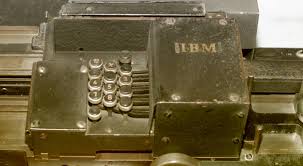
Even the 'good guys'. Charles Darwin believed women to be inferior to men and IBM provided the technology that was used in concentration camps. Many of the ideas we associate with the Nazis started in the UK (eugenics for example) but because 'we' won the war we've not had a good hard look at ourselves since it, like the Germans have had to do.


Instead a myth of British exceptionalism has taken pernicious and destructive hold (culminating, at least so far, in the current Brexit shitshow) that says simply because we were on the right side once (even though most of us weren't even born) that we can never be on the wrong side of history - and, in fact, never have been.

Following the Nazi defeat in World War II there was something of a global consensus that there were definitively bad ideas (concentration camps, eugenics, holocausts, genocide, etc;) but there were always race scientists who didn't buy into this and even struck out against it. They wore the clothes of science, they spoke the language of science but, funded by wealthy industrialists and hitting out against civil rights and in favour of segregation, they were not scientists.

Peer reviewing each other's papers to give a false, and thin, veneer of respectability, these people are now in the ascendancy - using social media and the public's distrust of career politicians to advance their agenda. As a remainer, Angela Saini spoke about just how popular, powerful, and persuasive the far right are in Britain right now and how if a second referendum (or people's vote) on Brexit was called they would juice it for all its worth. She felt the following riots and the recruiting that would take place by the neo-Nazis would cause more damage than even a very very damaging no deal Brexit.

Sounds like we're fucked either way. The right have turned almost everything into a free speech issue and they've been allowed to by the infighting of those who seek to oppose them. You only need to read the Twitter accounts of pompous oafs like Piers Morgan and the present POTUS to see that. I'd suggest you don't though. Life's too short - and if you're black in America at the moment it's shorter still than if you're white there.


Geneticists have looked for a genetic reason for this while, for the most part, ignoring the overwhelming evidence that being poorer and having less opportunity to do anything about that leads to shorter life spans. There's not a genetic disposition to dying early in any race. There are other reasons.

Sickle cell is one thing that is particularly prominent in African-Americans and there are one or two other examples across the globe. These are held up as proof by race scientists that our race is the thing that primarily defines us but that's just lazy thinking. We have more in common with each other than not. We always have had. We always will.

Biological determinism finds favour even among liberals and self-described anti-racists (see the current Labour antisemitism row for an example if you like) but there's not a gene for everything (traits like intelligence are polygenetic and use thousands of genes) and though our genes may affect us, the very very tiny amount that reflect our racial identity has such a minimal affect as to be completely negligible.

We live in a world where John Cleese can tweet shit to David Lammy (who he called Davis Lammy)  about DNA (and then get 'schooled' by former London Fortean Society speaker Dr Adam Rutherford about it) after complaining (from the Caribbean) that he doesn't recognise London anymore and where, in India, the PM Narendra Modi can create a fake myth of Indian (specifically Hindu) history that is so nationalist (and so untrue) that it looks rather a lot like the one Adolf Hitler created for Deutschland.


So it's important that people like Angela Saini are listened to when they speak calmly and rationally but with no little fear for the future about where these ideas come from, who's come up with them, and what damage they could do to the entire planet. It's time the quiet thoughtful voices drowned out the loud, ill-informed, shouty ones because, let's be honest that's not working very well for anyone, is it?

Racists used to begin their racist statements with the line "I'm not being racist but...." and I'd always joked it would be fun to begin a hopefully non-racist assertion with the line "I am being racist". So,when I say "I am being racist but I think we'll all do better to try and get along a bit better and stop screaming in each other's faces" I hope you'll realise I'm both being flippant, and a bit smug, but also trying to make a serious point.

Alom Shaha and Angela Saini made a far more serious one than I've managed and if it's one we keep having to remind ourselves of then so be it, that's for the best. A hostile environment isn't just hostile for the people you want to make it hostile for. It's hostile for everyone. With that I supped up and wandered up to Chalk Farm tube station with the sounds of Roxy Music's On the Radio ringing in my ears. Another cracking, thoughtful, evening from London Skeptics in the Pub. Looking forward to watching Angela's upcoming BBC4 documentary on the history of eugenics. Thanks to all involved. As ever.


Sunday, 2 June 2019

A Eulogy for Bugsy/a playlist.

Bugsy wasn't much of one for goodbyes. He'd regularly just disappear without a word to anyone. Maureen and Ron tell stories of him going missing on family outings to look at trains, Carole tells me he'd quite often go back to the car feeling tired during their shopping trips, and he'd even take a lucky dip into thin air when we were out at gigs. One time at the Caribbean Club in Basingstoke I'd assumed he'd done this but he'd just fallen asleep in the toilet and woke up surrounded by cleaning staff. That must have been confusing but I think he'd love having so many friends and family around him now. In the words of one of his favourites Bruce Forsyth - didn't he do well?


I have so many memories of Bugsy I could talk all night, and maybe will - but the ones I'd like to share with you aren't just mine - some are, others come from friends. He had a unique take on life and he's certainly the only man I ever met who spent his entire dole cheque on a horse mask, whipped the Purple Turtle crowd up with a rendition of the Terry & June theme while lobbing tomatoes at the audience, spent an entire party riding an exercise bike, kept his coat on for an entire weekend - mostly spent sleeping with five other blokes (myself, Shep, Adam, Rob, and Damon) in a Ford Transit van in Manchester, delivered a lengthy ode to a brown paper bag, tried to escape a fruitless game of dominoes at my parents house by climbing through the windows so as not to wake anyone, took Pritt Sticks down the pub, shaved in a wing mirror at festivals, balanced pint glasses on his head, and shoved pebbles in his belly button every time we visited the beach.

I'm not a believer in the afterlife - but Bugsy is wearing his jogging bottoms now just in case. He didn't want to risk eternity in a suit. If it does exist I'd like to think he's making music with Warren, doing Gazza impressions with Stuart, and laughing at Pat Still's ridiculous anecdotes. I just hope he doesn't have to cross a road to get there. I don't think I'll ever forget Bugsy's unique, and let's face it - ludicrous, road crossing technique.


Away from the important funny stuff Bugsy was a brilliant father to Dylan (imbuing in him a passion for quizzes, football, roller coasters, and darts) and the most caring friend you could wish to have. The most caring friend I could wish to have. He didn't waste a lot of time with small talk but he'd always have an anecdote from the old days, he loved nostalgia. Often it'd be about something seemingly innocent like a Grand Prix or a game of football but it soon became clear it was about much deeper stuff. Conversationally, according to Rob, I was Roy Keane to his Matt Le Tissier, grafting away in midfield to often little effect while he popped up with a jinking overhead kick that won Goal of the Season. We'd split people into categories of Ayrton Sennas and Riccardo Patreses and in hospital in April he said to me that I was the Senna to his Patrese. The loudmouth essentially to his quiet but mercurial genius. He wrote the scripts and I read them out, sometimes that seemed the dynamic but the truth was quite different.


He'd sometimes refer to himself as a background character but he was anything but that. You had to make an effort to get to know him - but that effort was always rewarded. I'd spent my entire youth wanting to be in a band and without Bugsy, and of course Ian and Shep, it wouldn't have happened. He was by far the most talented musician in the band and sometimes he'd be frustrated by mine and Ian's shenanigans. Doing gigs drunk, wearing nappies, not taking interviews seriously - but he's the one who insisted on coming on stage to the It's a Knockout theme tune and decorated his guitar with photos of Brian Clough.

They were fun times. We were young. We opened our friendship group up to new and lasting influences and we had adventures. Looking back the band seems like a social club but it was a matter of great passion for all of us. But it wasn't just the band Bugsy had passion for. That carried through into everything he did. He could be passionate talking about old Beezer annuals, Celebrity Squares, the Vic 20 computer, or even something as simple as a game of Guess Who? He loved his time in Australia with Ian, Stuart, and Laura and his trip to Pakistan with Ben from which he brought me back a rather dubious bottle of vodka. At Ben and Tracy's wedding his best man speech had people in tears. It was hardly a one off performance.


Much as Bugsy was loved and we're here today to celebrate him and his life I'd like to say thanks to a few people who made his life much easier. Friends and family. Shep and Laura, Tony and Alex, Darren and Cheryl, Natalie, Margaret, Jim, Natalie, Tina and Neil, Rob and Naomi, Damon, Ian, Debs, Caroline, Angela, Ed, Elaine, Adam and Teresa, Ben and Tracy - all absolute stars. To Neil and David, his brothers and to his mum and dad Maureen and Ron too. Most of all to Carole whose arrival in Bugsy's life provided him with the love and affection he deserved. She never wanted to go on any of Bugsy's bloody rollercoasters but had to go on quite a harem-scarem journey in the end and to Dylan who loved rollercoasters and whose kind and sweet nature will be a far better and longer lasting testament than anything I can say here today


Even more, I'd like to thank Bugsy himself. A man who once claimed, unironically, he wished he had a nickname. Not only did he provide a language for understanding life, he articulated it with a dark surreal humour that appealed to me and many others who loved him. Sometimes you'd barely get a grunt out of him. Other times he could wax lyrical for hours on end about any subject under the sun and have tears streaming down our cheeks. Behind all those jokes, all that silliness, struck a heart of gold. A man so kind that even in his final days his first concerns were about the welfare of his visitors. Not only did Bugsy show us how to live in our own unique way, unchecked by conventions or norms (take a look what he ate and how he dressed at Adam and Teresa's MM parties) he also showed us how to face the ultimate adversity with an almost superhuman, but actually very very human, dignity. I'm sure I'm not the only one but he coloured, shaded, and influenced my life in so many different ways that by the time I join him, I still won't have been able to count them all.


I said earlier he wasn't big on goodbyes and he preferred to slope off into the distance, often totally unaware of the impact he'd had on any given situation, but (and this feels like a breach of protocol) he's getting a goodbye today. I think he'd want it. I think he'd want as much laughter as there are tears and in fact he even said it. When Bugsy was in hospital he offered Ian two pieces of advice. Both of which, I think, are equally relevant. Firstly he said if you're feeling ill go to the doctor, go to the hospital, get yourself checked. He very probably saved his own dad's life doing this. Secondly, and this is the note I'd like to end on, he said "don't be sad. Enjoy yourself".

It's not easy at the moment but please try and carry that message forward with you. Don't be sad. Enjoy yourself.

Thankyou


PLAYLIST

Louis Armstrong - What A Wonderful World
Ricardo Bugsy - Piers End
New Order - Ceremony
New Order - True Faith
New Order - Regret
New Order - Bizarre Love Triangle
Joy Division - Love Will Tear Us Apart
Joy Division - Transmisson
Joy Division - Shadowplay
Chas n Dave - Margate
Zombie Nation - Kernkraft 400
KLF - Last Train To Trancentral
Blondie - Atomic
Modern Romance - Best Years Of Our Lives
The Who - Love Reign Over Me
Vengaboys - We Like To Party
Pet Shop Boys - Opportunities
Boney M - Daddy Cool
Spandau Ballet - Gold
The Specials - Ghost Town
Chris De Burgh - A Spaceman Came Travelling
Bananarama - Cruel Summer
Trinidad Oil Company - Calendar Song
The Motors - Airport
Eddie And The Hot Rods - Do Anything You Wanna Do
Fad Gadget - Back To Nature
The Prodigy - Breathe
Depeche Mode - Everything Counts
Depeche Mode - Dreaming Of Me
Depeche Mode - Just Can't Get Enough
House Of Love - Destroy The Heart
Primal Scream - Velocity Girl
Fun'Da'Mental - Wrath Of The Blackman
Cypress Hill - Insane In The Brain
Manic Street Preachers - Motorcycle Emptiness
The Godfathers - I Want Everything
The Beastie Boys - Intergalactic
The Carpenters - Calling Occupants Of Interplanetary Craft
The Carpenters - Close To You
The Carpenters - Rainy Days And Mondays
Hot Chocolate - It Started With A Kiss
David Bowie - London Boys
Bronski Beat - Smalltown Boy
The Seers - Don't Bring Me Down
Bob Marley - Stir It Up
Bob Marley - Could You Be Loved?
Rage Against The Machine - Know Your Enemy
Run DMC - You Be Illin'
Radiohead - Creep
Blur - Advert
Earth Wind and Fire - September
Billy Bragg - Levi Stubbs Tears
Embrace - Come Back To What You Know
Status Quo - Pictures of Matchstick Men
John Shakespeare - Terry and June
Jimi Hendrix - Voodoo Chile
The Doors - Love Her Madly
Inspiral Carpets - Saturn 5
Northside - Shall We Take A Trip?
Northside - My Rising Star
Flowered Up - It's On
The Undertones - Teenage Kicks
Herb Alpert and the Tijuana Brass - Bean Bag
Planet Funk - Chase the Sun
Cloth - Swedish Houses
Cloth - The Venn Diagram
The Stranglers - Walk On By
Faithless - Insomnia
Yazoo - Don't Go
The Assembly - Never Never
Erasure - Oh L'Amour
Erasure - Respect
Ronnie Hazlehurst - Some Mothers Do Ave Em
Richie Close - A Question of Sport
The Cascades - Rhythm of the Rain