Friday, 18 May 2018

The Art & Power of Charles II:Fables of the Restoration/Restoration of the Fables.

"Tear me apart and boil my bones. I'll not rest 'til she's lost her throne. My aim is true. My message is clear. It's curtains for you Elizabeth., my dear" - Elizabeth, My Dear, The Stone Roses.

"I'd like to drop my trousers to the Queen. Every sensible child will know what this means. The poor and the needy are selfish and greedy on her terms" - Nowhere Fast, The Smiths.

"God save the queen. She's not a human being and there's no future in England's dreaming" - God Save The Queen, The Sex Pistols.

"Try shaking a box in front of the Queen 'cause her purse is fat and bursting at the seams" - Flag Day, The Housemartins.

"Hello, hello, hello, now here's a massage from your queen:- "As figurehead of the status quo I set the social scene. I'm most concerned about my people, I want to give them peace so I'm making sure they stay in line with my army and police. My prisons and my mental homes have ever open doors for those amongst my subjects who dare to ask for more. Unruliness and disrespect are things I can't allow so I'll see the peasants grovel if they refuse to bow" - Big A Little A, Crass.

There I was, an avowed anti-monarchist (as you may've already guessed), in a line to get in to Buckingham Palace for my first ever visit. I wasn't there to pick up a gong, nor was I there to take personal possession of an invite to the wedding of Prince Harry and Meghan Markle in Windsor this weekend, and I wasn't even there with a small consignment of gunpowder to blow the place up. I wasn't even going to graffiti a picture of Prince Charles sucking his own cock in the, unsurprisingly rather lovely, bogs.

I was there, of course, to look at art. What else do I do? The exhibition Charles II:Art & Power was being hosted as a way of celebrating how "the restoration of the monarchy in 1660 led to a resurgence of the arts in England" after "a decade of austere Cromwellian rule" and while it certainly did that it also, as became increasingly apparent as I dutifully plodded from one room to the next, acted as a show of strength and power from the monarchy, from the establishment, to us poor proles who paid for the stuff in the first place and now have to pay again if we want to see it.

 
John Michael Wright - Charles II (c1671-6)
 
Whilst still a republican (in the British sense, definitely not in the American one), I'm not as vehemently anti-royal as I once was. I don't wish death upon them. Just quiet retirement. Maybe to Hastings or Eastbourne. Somewhere nice where the Queen could walk the corgis on the beach while her castles and palaces offer beds to the increasing, exponentially so under the Tories, homeless population of the UK. If they genuinely cared about their citizens it's the least they could do.
 
But, of course, they don't. They care about power. They care about power far more than they care about art. Much as I'd genuinely come along expecting to look at, and later write about, art it was hard to shift my mind from the power games that the royal family play, the obscene wealth they rub in the noses of those they stole it from, and what a disappointment it was that the only time we got rid of them it was under the command of Oliver Cromwell who banned music, banned Christmas (or at least mince pies), whipped boys for playing football on Sunday, told women how to dress, and went round chopping people's heads off. It seems as if ISIS stole most of their 'best ideas' from Cromwell.
 
The royal family aren't so much like Cromwell's Puritans. They're more like Saddam Hussein. Living lives of luxury in vast palaces that their subjects are forced to pay for while they suffer outside the gates and are occasionally permitted to wave a flag at a passing motorcade or buy a commemorative shiny sixpence to celebrate one of the Windsors getting hitched. We may not have the military displays of power that Russia and China seem so keen but our 'soft' power displays are just as insidious, equally indefensible, and, to the outside eye one would assume, comparably ludicrous.
 
At least it's not boring - and this exhibition looks back to one of the most exciting and tumultuous times in English, and royal, history. It takes up from Charles I's public beheading in January 1649 outside the Banqueting Hall in Whitehall, through the rise and fall of the Cromwells' Puritanical reign, to Charles II's return from exile and the restoration of the Stuart monarchy and in doing so demonstrates how art was all but weaponised in its pursuit of legitimising the authority of a monarchy that didn't wield the absolutist power of some of its European counterparts.

 
Edward Bower - Charles I at his Trial (1648/9)
 
The confidemce, or arrogance if you'd rather, of the Stuarts did not abate during their downfall or their absence. Edward Bower's portrait of Charles I shows him at his trial.Charles, accused of being a 'tyrant, traitor, murderer and ... enemy to the Commonwealth of England', refused to co-operate, enter or plea, or even acknowledge the legitimacy of the court that was trying him. His crimson velvet chair acts as a proxy throne and his tall black hat, one he refused to remove during his trial, a proxy crown. Soon his hat was removed - along with the head it perched upon.
 
Being dead didn't stop Charles I's book,  the modestly titled 'Eikon Basilike:The Pourtrature of His Sacred Majestie in His Solitudes and Sufferings', becoming a best seller. Cromwell's Commonwealth government's attempts to suppress the book floundered as the tome's combination of irenic prayers, justification for royalism, and pleas for its readers to pardon Charles's executioners became a best seller. In some ways Charles, though it is highly disputed that he was even the book's author, had, with this book, planted the acorn from which the next great royal oak would grow. An image grew of Charles I as a pious, peace loving king who'd been martyred for the cause. As often is the case the seeds of the next revolution were forged in the white hot furnace of the current one.
 
The fact that Oliver Cromwell himself had taken to the trappings of a monarch (as Lord Protector, Cromwell lived in palaces and affected to be addressed as 'Your Highness') must've only made the English people question if they'd simply replaced the king with a de-facto king. They'd tried something completely new but was it a case of better the devil you know?

 
Pierre Lombart - Oliver Cromwell (1655)

 
William Van de Velde the Younger - The 'Royal Escape' in a Breeze (c.1675)
 
The Battle of Worcester, the final battle of the English Civil War in 1651 more than two years after Charles I's execution, saw Cromwell's New Model Army final defeat of Charles II's predominantly Scottish royalists and soon Charles II was escaping from England to France, over a choppy cloudy sea by the looks of Van de Velde the Younger's oil painting from a couple of decades later, on a coal brig called Surprise. Charles II spent nine years in exile but after the restoration he purchased the Surprise and renamed her (why are boats always female?) the Royal Escape.
 
This exhibition does rather skip over Cromwell's Parliamentarian reign. It's understandable that Buckingham Palace would be the very last place you'd expect to be fostering republican sentiments but it's a surprise (or a royal exchange?) that they haven't at least gone for a hatchet job on the Roundheads. I mean, there's enough shit on them to see them hung, drawn, and quartered several times over. Perhaps, in the circumstances, it's understandable that the curators of the exhibition have taken a Cavalier approach! I'm here all week, folks!
 
So we jump forward to 1660. The restoration of the monarchy. The revival of ceremony. Loads of boring, yet ostentatious, golden flagons, candlesticks, altar dishes, and maces. The sort of shit that, like a monarchy, nobody actually needs but looks good. If you're into that kind of thing.
 
As Charles II returned to London and to power so did such indispensable pleasures as the rituals of the Chapel Royal and the Order of the Garter and the medieval custom of 'touching for the king's evil' (we're informed that Charles II 'touched' 100,000 people, more than any other British monarch). The royal regalia, which Cromwell and his fun loving friends had had melted down, was remade and Charles II's coronation was the most extravagant since that of Elizabeth I 102 years earlier. Samuel Pepys, not yet thirty years old, was so overcome by it all he wrote "I may now shut my eyes against any other objects, or for the future trouble myself to see things of state and shewe, as being sure never to see the like again in this world". Pepys was a Tory and therefore an arse licker non pareil.

 
Johannes Lingelbach - The Embarkation of Charles II at Scheveningen (c1660-70)

 
Some gold stuff.

 
John Bill II and Christopher Barker - A proclamation for the better ordering of those who repair the Court for their Cure of the Disease called the Kings-Evil (1662)

 
Unknown engraver - Charles II (c.1661)
 
Kowtowing was, again, all the rage with the fickle English public who having had his dad's head lopped off were now putting the fizzog of the son on the side of engraved mugs and other tat to celebrate his return. When, in 1662, Charles II married Catherine of Braganza, in Portsmouth of all places, her dowry included the port of Tangier. This didn't stop Charles II cheating on the daughter of the Portuguese king and soon Charles II got busy putting himself into various mistresses.
 
He fathered ten children by six different women but failed to produce a legitimate heir with Queen Catherine so when, in 1685, he died in Whitehall Palace after an apoplectic fit, aged just 54, the crown passed to his Catholic younger brother James II. Much to the dismay, predictably, of many Protestants though not to Charles II himself who had staunchly defended his brother's right to the accession.

A hastily built equestrian statue of James II was erected in the marketplace of Newcastle but James II's reign, still the last by a Roman Catholic in this country, lasted less than four years before, in what became known (by Protestants presumably) as the Glorious Revolution, he was ousted by the forces of his son-in-law William of Orange. Drunken soldiers pulled down the Geordie monument and lobbed it in the Tyne. The bronze was later salvaged and recast into church bells.
 
Inheriting all of Charles II's palaces was a mixed gig for The Hague born 'King Billy'. Cromwell had overseen the demolition, sale, or repurposing for military use of many palaces during the Commonwealth era as well as selling off most of their furnishings and paintings to fund his regime. Only Whitehall Palace and Hampton Court had retained their glory. Charles II had made extensive improvements to Windsor Castle and significant changes to Holyroodhouse in Edinburgh but funds were not available to enact anything but minor adjustments in both Winchester and Greenwich.

 
Hendrick Danckerts - Hampton Court Palace, Long Water and Longwater Avenue (c.1670)

 
Antonio Verrio - Charles II (1684)

Painters at the time were either encouraged, or emboldened, to celebrate pomp and circumstance or even go all out mythical in their depiction of the king. In the first camp we have Sir Henry Tulse (the man who gave his name to the hill in South East London) being sworn in as a mayor on the Thames. In the latter, Antonio Verrio (a favourite of Charles II), portrays the king riding a shell backed chariot led by Neptune in front of the royal fleet. It was nominally made to celebrate the end of the Third Anglo-Dutch War but more so to shout out loud that Britannia, with Charles II at her helm, now ruled the waves.

 
Anglo-Dutch School - The Lord Mayor's Water-Procession on the Thames (c.1683)

 
Antonio Verrio - The Sea Triumph of Charles II (c.1674)

 
Some old books.
 
As well as commissioning paintings bigging up himself and his properties, Charles II did genuinely appear to take in interest in art and the history of art. One of the first acts passed by the House of Lords after the Restoration was to form a committee tasked with the recovery of the Royal Collection and around the same time Charles II received the 'Dutch gift'. Not clap off an Amsterdam prostitute as those of you familiar with Viz's Profanisaurus may be thinking but a selection of twenty-four Italian old masters and twelve antique sculptures from the States of Holland and West Friesland. Charles II thanked the Dutch for their generosity, promised them a closer alliance in the future, and then just three years later went to war with them in the aforementioned Third Anglo-Dutch War!
 
Leaving aside the idle promises of rulers both monarchical and democratically elected the room containing these paintings is the only one in the whole of this exhibition that really stands up art wise. Historically, the rest of it is as interesting as it is infuriating but the art, for the most part, is so-so and has been created with forelock tugged in deference and one eye cast aside towards the executioner's block.
 
Bloodthirsty times they may've been but that did not preclude an all too predictable English squeamishness when it came to depicting the same. Pieter Bruegel the Elder's Massacre of the Innocents is an account of the infanticide ordered by Herod (can we assume Herod was a big influence on the work of Benjamin Netanyahu?) but the dead children have been covered up so that the massacre becomes a mere plunder.
 
It's suggested this retouching was done on the demand of Holy Roman Emperor Rudolf II in Prague, to avoid direct parallels with atrocities committed by the Habsburgs who reigned over Bohemia at the time. But it's instructive that this pre-watershed take on biblical bloodshed was the one that found favour in the court of Charles II. I thought it was a Christmas fair at first.

 
Pieter Bruegel the Elder - The Massacre of the Innocents (c.1565-7)
 
It wasn't just Dutch and Flemish Renaissance stuff that found its way to England but also actual proper Italian painting. Paolo Veronese and Titian were two of the bigger names whose works entered the Royal Collection and as if to tease us just that little bit more Titian's Madonna and Child in a Landscape with Tobias and the Angel is hung about eleven foot up a wall so that it's virtually impossible for anyone to see. Even Robert Pershing Wadlow ('the tallest man the world has seen' according to Roy Castle) would struggle. Not least because he died 78 years ago.

The colours in the Veronese and Titian are both still astounding to this day and one can only imagine how bright, how foreign, they'd have looked all those centuries ago. But, also, one can't help wish we could be allowed a proper look at them. Lifted loftily on to walls at an exhibition that costs £11 to enter and uses airport level security simply sends a message that there is an us and there is a them and the art, absolutely, belongs to them. I refuse to believe it.

 
Paolo Veronese - The Mystic Marriage of St Catherine of Alexandria (c.1562-9)

 
Titian - Madonna and Child in a Landscape with Tobias and the Angel (c.1535-40)
 
Other big hitters on show include Anthony van Dyck and Palma Vecchio. Van Dyck always seems to me to be something of a show off, something of a royal lackey, but his Infant Christ and St John the Baptist elicits a more tender side to the Antwerpenaar. The Venetian Palma Vecchio's A Sibyl gives the viewer the cheap thrill of a pert nipple poking out from under a white blouse and if you think that's just this reviewer's sweaty palmed assessment of a rather poignant painting then it is said that Charles II himself had a 'taste for portraits of women in fashionable 'undress''. Palma Vecchio was an old hand at painting Venice's 'courtesans' and sometimes went as far as to painting them with both their norks out.

 
Sir Anthony Van Dyck - The Infant Christ and St John the Baptist (c.1639)

 
Palma Vecchio - A Sibyl (c.1522-4)
 
So while the king got to live in palaces, swan around in boats both real and mythological, hump half the society ladies in London, marry a Portuguese princess, and, in his spare time, ogle what passed for Renaissance grot the plebs at the time, it is presumed, got to press their unwashed faces up against the windows and walls of his stagecoaches and palaces and be bloody thankful for it before riding a knackered old donkey back to the crumbling shed they called home, sharing a turnip for dinner with their wife and twenty-seven children, and shitting in a bucket.
 

Perhaps that's why the Royal Collection still owns A Boy Looking Through A Casement. To remind themselves of our supplication and to remind themselves if they keep us entertained with bread and circuses for long enough we'll not rebel. It seems highly unlikely that Elizabeth II, Prince Charles, Prince William, or even Prince George will find, like John the Baptist, their heads served up on a plate to either Salome or the republican cause.

McCarthy (the band) opined that "once there was class war" but "we are all bourgeois now". A lot of us aren't. A lot of us are struggling but The Daily Mail and The Daily Express have found new hate figures for us. Refugees, the EU, hoodies, women who don't know their place, anybody and everybody it seems except the dear old unelected Royal family who stole their position in society and now expect us to fund their lavish lifestyle. A few nice works of art is too small a reward for more than a thousand years of being subjected to their rule.

I don't wish Harry and Meghan any ill. I hope they have a nice wedding and a happy life together. But I also hope that, in some point during their life, the royal family ceases to exist as an institution. I don't want to be a subject. I want to be a citizen.

 
Carlo Dolci - Salome with the Head of John the Baptist (c.1682)

 
Flemish School - A Boy Looking through a Casement (c.1600-10)


Thursday, 17 May 2018

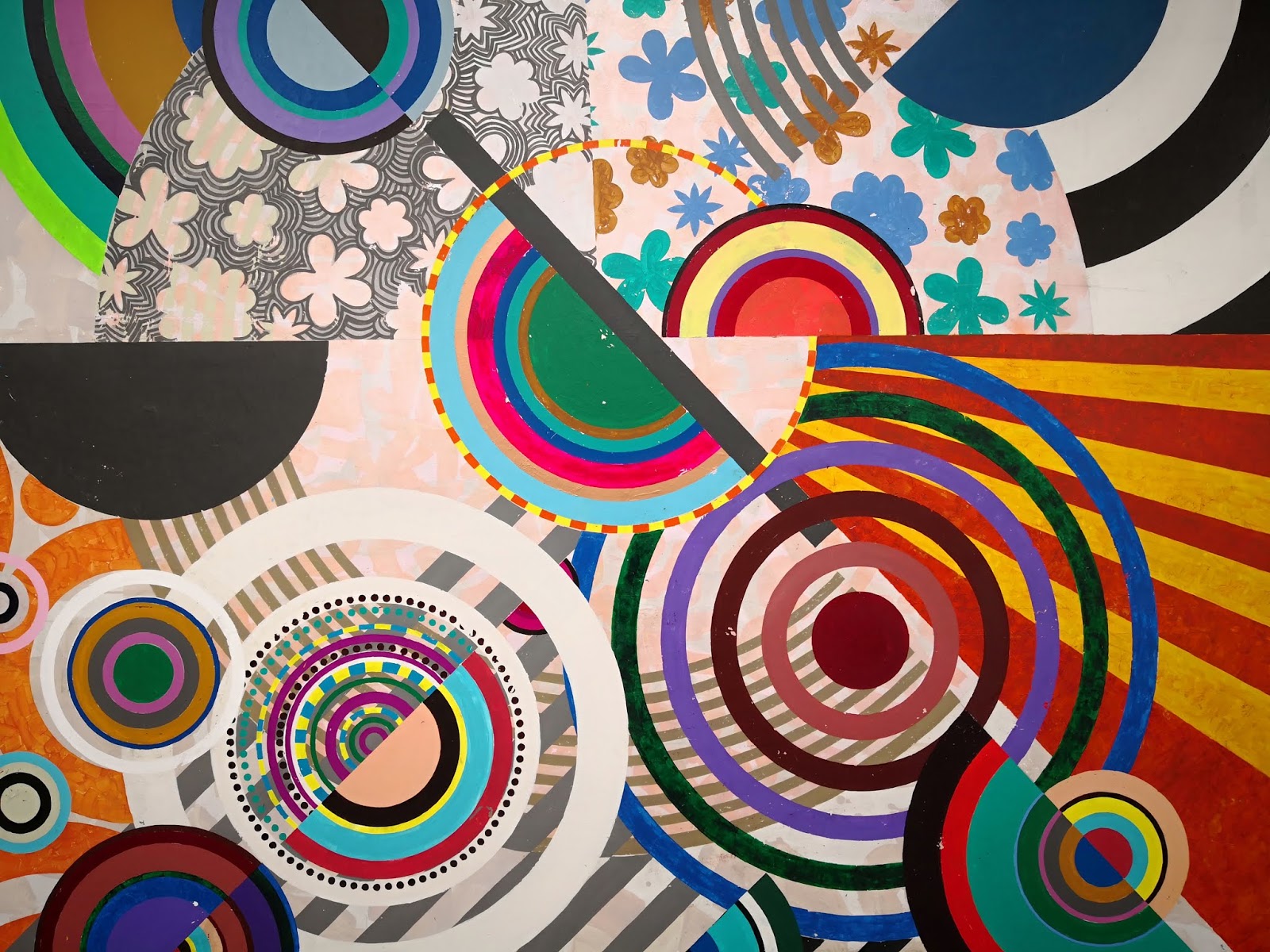
Beatriz Milhazes:Everyone in Brazil.

"I want to have optical movements, disturbing things; such visions that your eyes would be disturbed when you see them" - Beatriz Milhazes.

Art can make important statements about the world we live in, art can tell heartbreaking stories, art can entertain, art can befuddle, and, sometimes, art can frustrate us by being crap and lazy. But when people look at art their first reaction tends to be on a fairly gut level. Do they find it aesthetically pleasing or not.

Does it look nice? If those are the parameters you apply to art (and they're perfectly acceptable ones to apply) then I'd seriously recommend you take a trip to the White Cube in Bermondsey because Brazilian artist Beatriz Milhazes's Rio Azul exhibition is an optical delight, an absolute pleasure to immerse yourself in.

 
O grande dia (2016-2017)
 
It was a glorious sunny day as I wandered down through Burgess Park and along the Old Kent Road to the gallery. It would take quite a show to compare with the majesty that nature was providing and if nothing could ever compete with that then Milhazes's art at least complemented it in the finest fashion.
 
There's a clear influence from the cut-outs of Henri Matisse in the work of this Rio de Janeiro born artist. Unlike Matisse, however, her cut-outs tend to repurpose wrappers and labels, to an almost Kurt Schwitters degree, and she whacks both the contrast and the colour up from French to South American levels.
 
Alongside the collages hung works like Marilola and Mariola. Like glorified curtains leading into more private areas of certain shops they were adorned with paper, wood, flowers, brass, copper, and even what looked like gaily decorated footballs. Well, she is Brazilian.

 
Marilola (2010-2015)

 
Os cisnes com vermelha, rosa e prate (2017)

 
Bibi em ondas laranjas e cinzas (2017)
 
Both the collages and the curtains were sensuous and sexy and not a little enigmatic. It was a delight to simply wander the wide spaces of the White Cube letting the colour soak in. The reflections on some of the Perspex screens that shielded the artworks the only, very minor, complaint.
 
Squiggly lines, straight lines, flowery patterns, images that look like colourful floorboards, fractals even. In some ways this stuff is so basic it should be laughable but done with such a light touch it proved to be an exercise in charm itself.
 
The programme spoke of "the tropical profusion of Brazil's native flora", "the delicate transparency and grid-like features of its modernist architecture", and a "vertiginous visual experience" and though none of that is wrong you don't need a programme to enjoy this show. You just need eyes. Bette Davis would love it. 

 
Papel japones em amarelo e laranja (2017)

 
Bala de leite em roxo a azul ultramar (2017)

 
Mariola (2010-2015)

 
As irmas em azul celeste (2015-2018)

 
Hawai em ondas pretas e brancas (2015-2018)

 
Banho de rio (2017)

 
Sonho Tropical (2017)

 
Goa (2017)
 
Along the far wall is the centrepiece of the show. Rio azul itself is nearly 3 metres tall and 16 metres wide, it was a strain to fit it in one photograph, and, much like Chris Ofili's installation at the National Gallery last year, its a tapestry rather than a painting. A painstaking amount of work goes into these things but it seemed to me, and was confirmed in a short filmed interview with Milhazes herself that you could watch in a side room, that it was as much an investigation into the similarities between painting and weaving as it was a change of direction for the artists.
 
The White Cube, Bermondsey has a room with the oh so artworld name of 9x9x9 and in that room there hung Gamboa II. A carnivalesque draping of chains, flowery things, and eye shaped ornamentation. It was alluring, it transfixed, and, in that, it was no different to much of Beatriz Milhazes's really rather lovely art. Você vai menina

 
Rio Azul (2016-2018)

 
Gamboa II (2015-2016)


Friday, 11 May 2018

Up from the Downs:An evening in the company of Shirley Collins.

As I walked out one day in the month of May in the London Borough of Hackney I came across a church tower, a lichen covered tomb, and a stack of headstones laid up against a church wall.

It seemed quite apt as I was on my way to see Shirley Collins being interviewed and reading from her new book of memoirs 'All in the Downs'. Hackney may seem some way from the rural idylls of the folk world but the themes that permeate folk music, those of love, death, absence, and hardship ring clear and true in both rural and urban environments.


Last March I'd had the good fortune to witness an absolutely wonderful concert by Shirley at the Barbican so when my friend Mark asked me if I'd like to come along to this event I jumped at the chance.

I'd never heard of Sutton House before and I wasn't at all familiar with the Homerton part of Hackney but I realised I could take the Overground to Dalston Junction and walk up there pretty quickly. So quickly, in fact, I had a chance to look round St.John's Churchyard for a good half an hour or so before reaching Sutton House.

If the picturesque churchyard was apt for the evening, then Sutton House was even more so. Built in 1535 (by Sir Ralph Sadler, Principal Secretary of State to Henry VIII), it's the oldest building in Hackney and the second oldest in all of East London (Bromley Hall in Tower Hamlets is half a century older) and although the frontage has been redone in a Georgian style inside it's a Tudor marvel of oak panelled rooms and carved fireplaces. As I couldn't get a good view of Shirley I thought the churchyard, the house, and other assorted sights and sites from the night would make for good pictorial representation of this account.


Past the gypsy caravan and the selection of Matchbox cars we were ushered past a small refectory (I had a green tea, my friends a bottle of Corona - I think my drink was the folksiest) into a slightly larger room laid out with chairs as if for a school assembly.
 
Soon both Shirley Collins and the host Frances Morgan were on stage and Shirley began by reading an excerpt from her book about growing up near Hastings. She painted a vivid picture of the boats being hauled on to shore as Hastings was, and still is, unable to support a port, about being sent by her communist parents down to the memorial to sell copies of Communist Worker, and about hearing her parents and their friends constantly discussing 'dialectical materialism'. A term she said she didn't know the meaning of then and still didn't now.
 
She talked about the influence of elder family figures, about long walks to the beach when they couldn't afford the public transport, and about how she and her sister Dolly fostered an early interest in both folk music as well as boogie woogie and jive. It was wonderfully evocative stuff and, at times, Shirley herself got a little emotional and had to stop. Her mention of never learning to jive lead to a sprightly gentleman two years her senior suggesting he take her to his local jive dance group!


A story that brought a smile to most of our faces was the one about legendary local folk singer and song collector Bob Copper visiting her and Dolly. When they sung for him they chose a Scottish song and, for reasons teenagers everywhere will recognise, decided to sing it in their impersonation of a Scots accent. They hadn't found their own voice yet but Copper had teenage daughters himself and simply laughed it off.
 
Not all off Shirley's encounters with folk word notables were quite so innocent. Shirley Collins, if you've ever heard her either talk or sing, is not a person who badmouths people (even her philandering and proud of it ex-husband Ashley Hutchings wasn't traduced) but Ewan MacColl was a man she clearly could not warm to. Not many could it seems.
 
She felt both his approach to folk music (don't sing songs that aren't from your direct area but do stick your finger in your ear when you sing them) and his take on politics (a left wing Labour supporter but a very well to do one who thought he knew what was best for the proles and wouldn't brook any argument from the lower orders) were signs of a cocksure arrogance but, and Shirley sketched this anecdote lightly, the story of him inviting her back to his house and starting to remove his clothes before she even got through the door is one that history can't look back kindly on. She thought she was going back to talk about music. He obviously thought they'd be making sweet music. The only sour moment of the night occurred at this point when a grumpy audience member who'd been huffing and puffing up under his breath anyway got up from his seat and stormed out. A huge Ewan MacColl fan or as my friend suggested 'just a cunt'? It's hard to imagine anything Shirley Collins saying offending someone that much!


Her encounter with MacColl was far from the only time in her life that she was patronised. Both as a girl (and later a woman) and as a working class person. Cecil Sharp House in Camden, the home of the English Folk, Dance, and Song Society, and a place supposedly open for the betterment of all, wouldn't let her in to scour the books of previous folk collectors and learn new songs.
 
She persevered and eventually, luckily for us, they cracked but she had plenty of other amusing stories about her early days in London. Failing to understand how the Northern Line works (but it breaks in two at Camden?), getting sacked from M&S on Oxford Street, and living on stale buns in Tooting BEC.

 
If the city was, at times, a necessary evil (though I doubt she'd put it like that) it seemed to me that her heart rested very much in the South Downs where she loved, and loves, to go walking. In that landscape she saw not only beauty but history, death, and mystery. She told a story of escaping the downs just as a thunderstorm struck only to reach home in Etchingham as lightning came down her telephone line causing the receiver to explode.
 
If that seemed extraordinary it was nothing next to her visit to a gypsy to have a crystal ball reading not long after she'd initiated divorce proceedings against serial adulterer Hutchings. The 'gypsy' seemed to know everything about Shirley:- her current marital woes, how many children she had, that she loved music, and that she was a keen cyclist. So accurate was the forecast that when the teller warned her that if she cycled home on the same bike she'd have a crash Shirley never rode it again and left it rotting in a hallway where presumably it remains to this day.
 
Alan Lomax, Bob Dylan, Martin Carthy, Davy Graham all popped up in anecdotes as casually as you'd like. There was no element of boastfulness whatsoever. Just a lady telling the story of her life in much the same way as she sings her beloved folk music. Perhaps most tellingly of all she said she believed it was important to sing TO people, not AT them. Perhaps most promisingly of all she also spoke about getting to work on the early stages of a new album. If 2016's Lodestar, her first for thirty-eight years, is anything to go by that's something we should all look forward to.


After the talk we retired to the nearby Chesham Arms. An oaky pub with a fine selection of real ales, a large beer garden, and what looked like William Blake drapes adorning the walls. It could hardly have been a better setting for a folk evening debrief and I should very much like to visit again when I'm in more of a mood for some ale supping. When we were done I almost morris danced back through the graveyard and along Graham Road to Dalston Junction. Ain't folk grand?
 
Thanks to Natalie and both Marks for their company, thanks to Pages of Hackney for compering, thanks to Frances Morgan for asking pertinent questions but also, most importantly, listening and thanks to Shirley Collins once again for a springtime treat. What a lovely, civilised, and utterly splendid evening.


Sunday, 29 April 2018

There's a tear in my beer, it's because of you, my dear. Booze, blues, and rare aul crews.

"I love you and I hate you but I can't live without you, Mr Booze".

Cheers. Slainte. Bottoms up. Get it down yer neck. One for the road. Be rude not to. This one won't touch the sides. Don't neglect your drinking duty if your duty is a drink. A lot of us enjoy a drink, a scoop, a sherbert or two, maybe a sesh or a boozathon. There's no denying that getting drunk, pissed, twatted, wankered, trolleyed, fucked, pasted, cunted, wrecked, or mashed up has an appeal. Judging by the amount of terms we've coined for it it appears it helps with the old creative juices too. Juicing the juice. Chasing the goose. Letting the logic get a bit loose.

Of course alcoholism is a disease and can be a very bad thing. But it (drinking, not alcoholism itself) can also be a very good thing. Almost everyone I know would be a virgin if it didn't exist, possibly humanity would've died out or, worse still, teetotallers like Donald Trump and ISIS would've taken over. In this silly aul blog I don't mean to claim there aren't bad things about Adam's ale or to say it's great but also to understand that life is more complex. I want to celebrate the good side of 'the sauce' as well as recognising musicians also have not been afraid to travel to the dark side of the Spoons.

If you're gonna write a blog about booze'n'music it's gonna be hard not to mention the fearsomely hard drinking poetic folk-punk band The Pogues. I saw Shane MacGowan in a pub, The Boogaloo, in Highgate once and he was a bit pissed. Fair dos, he's an alcoholic. What did I expect? But for a pisshead he did write about drinking, and London, and love, fantastically. Streams of Whiskey (from their 1984 debut album Red Roses For Me) isn't one of his best but it sets the tone nicely and it has a very similar message to Flaco Jimenez's En El Cielo No Hay Cerveza with its refrain "In heaven there is no beer. That's why we drink it here". It's actually a 1956 German drinking song penned by one Ernst Neubach. The Germans seem to be a nation who take drinking seriously as anyone familiar with the reinheitsgebot will know.

 
The Pogues - Streams of Whiskey
 
 
Flaco Jimenez - En El Cielo No Hay Cerveza
 
 
Tom T Hall - I Like Beer
 
Tom T Hall lays out his interests pretty plainly. He likes beer. It helps him unwind. It makes him a jolly good fellow. It's worth watching just for his asides on Muhammad Ali and the Mormon Tabernacle football team.
 
Dr Feelgood were a bunch of oily lapelled hardnuts you'd not want to interrupt having a slash down a dark alley in Canvey Island but, during the prog years, they kept the primal rock flag flying, me and my brother Andy used to skid on the carpet to this one. Interestingly (or perhaps not), both of us now prefer alcohol to milk. Again, worth watching just to see how morally dubious a figure Lee Brilleaux looks. Wilko Johnson had gone by this point but the guitar sound remains. These guys looked like they enjoyed a pint - in a straight glass!
 
 
Dr Feelgood - Milk And Alcohol
 
 
The Housemartins - Happy Hour
 
You couldn't say that about either The Housemartins or Black Flag, two bands rarely lumped in together. Paul Heaton now looks like a fags'n'booze kinda dude but in the eighties he looked like the kinda dude who'd give you a stern look if you returned your copy of Virginia Woolf's Mrs Dalloway to Hull's central library a week late.
 
Henry Rollins looks like the kinda dude who'd smash a dumb-bell into your face in a fit of roid rage if you said John Coltrane was overrated or call you a homo if you liked The Pet Shop Boys but that's irrelevant because he'd yet to join Black Flag when they released Damaged. Their debut album contained this patronisingly sarcastic, yet fucking banging, tune about dumb frat boys getting a beer buzz on. Sheryl Crow liked a good beer buzz early in the morning but her music, sadly, is too shit to include here. You can't blame her for caning it though. Her boyfriend, Lance Armstrong, was injecting erythropoeitin up his bony Texan arse so he could cycle faster up an Alp than Jan Ullrich. Party time central round at Lance'n'Shez's.
 
 
Black Flag - Six Pack
 
 
The Champs - Tequila
 
 
LCD Soundsystem - Drunk Girls
 
At least The Champs knew the wobbly pop was all about getting a party, rather than a morning, started (Black Flag seemed a bit naive about it all, straight edge, eh?). LCD Soundsystem got that too, "drunk girls know that love is an astronaut" (as well as that punked up Bowie rip offs really work well) and Snoop Dogg was also aware that "this type of shit happens all the time" but it didn't stop him getting the Seagrams in and passing the sippy cups around. The Gourds did a great version of it.
 
Josh Homme's party went a bit further. Alcohol was, of course, on the menu but so, too, was "nicotine, valium, Vicodin, marijuana, ecstasy" and, most of all, "c-c-c-c-c-cocaine". It's my third favourite song the Californian stoner rockers ever did. They always looked a scary bunch.
 
 
The Gourds - Gin'n'Juice
 
 
Queen of the Stone Age - Feel Good Hit of the Summer
 
 
Hard Skin - Beer And Fags
 
Hard Skin don't actually look hard at all. Beer and Fags, from 1996's Hard Nuts and Hard Cunts (I kid you not), posits Gipsy Hill's possibly parodic Oi revivalists as evangelists for getting munted and it does it with some panache. The third Loudon Wainwright took a more nuanced approach to pissed up chicanery but still managed to tickle the laughter muscles in a way that'd swell Ken Dodd's heart.
 
Tom Waits is a wonderfully talented song writer and performer who's made good currency of pretending to be a drifter who rolls up in flop houses in Eureka, California,, necks a few jars, and heads off on a Greyhound to Newport, Oregon.. This Littlest Hobo schtick is both incredibly popular and is incredibly good. He gets away with it because he gets inside his characters. He doesn't write ABOUT them. He writes AS them. It's a big distinction.


Loudon Wainwright III - Drinking Song
 
 
Tom Waits - Warm Beer and Cold Women
 
 
Cat Power - Lived in Bars
 
Tom Waits is a man, a very funny man who insults people by saying they have the IQ of a fence post. Men go to bars more than women. That's just a fact. Women get more shit for getting drunk than men do too (although not off LCD Soundsystem clearly). That's another fact. It's rubbish. Cat Power's Lived In Bars is the song that this list pivots on (and if you watch it your heart may break, in fact your heart may break just looking at her - he says rubbing his knees). She absolutely nails the love/hate relationship many of us have with booze. It draws a line under our working day (well, some start earlier), it relaxes, it helps us, it fucks us up. Stupid fucking t-shirts denigrating women say a beer is never jealous of another beer. But a beer always wants a threesome, a foursome, a fivesome, a fucking twenty fivesome. It sends us off to "the next whiskey bar" where we meet arrogant, topless, though admittedly quite talented posers like Jim Morrison. Then we come home and blame it on our mates or, in the case of Tom Waits, his piano. Terrible influence, those Steinways.
 
 
The Doors - Alabama Song
 
 
Tom Waits - The Piano Has Been Drinking
 
 
Johnny Cash - Sunday Morning Coming Down
 
Then we wake up, many coins in the bed, feeling like shit. Horny probably too (what's that all about?) and in danger of texting an ex. Kris Kristofferson nailed the feeling of wandering around with the entire Austrian army marching in your head looking for some solace, craving normality, missing those you left behind in a drunken haze. If you were happy in the haze of a drunken hour I feel bad for you son. I've got 99 problems but that's the main one. And if the beer you had for breakfast wasn't bad, why not have one more for dessert?
 
Men with broken hearts go to pubs to stare into space and talk to other men with broken hearts (again, I know women have it tougher) and hopefully find someone to mend their broken heart. But Rhonda can't help you and football gets boring, quiz nights elicit some warm glow, but eventually you will stare into the cold dark void of misery and accept that the country musicians were right all along. When it comes to heartbreak these Stetson hatted fuckers now you can't drown it - but they know you will try too.
 
 
Hank Williams - There's A Tear In My Beer
 
 
Ernest Tubb - Drivin' Nails in my Coffin
 
Hank Williams, who along with The Fall and Leonard Cohen (oh, and Sam Cooke, Public Enemy, Gil Scott Heron, Can, Aztec Camera, David Bowie, Tom Waits, Sonic Youth, T Rex, and Fela Kuti) is one of my all time favourite recording artists. Man, that guy could do heartbreak like nobody else, even The Big O. Born in Alabama where my mum spent some of her childhood his yodelling voice had a great affect, really reached in and touched. If there's a tear in his beer I'd pick it out. I asked Hank Williams how lonely does it get. Hank Williams hasn't answered yet.
 
He actually sings about keeping "drinking" until he's "petrified". It's a coruscating look into a broken man but he wasn't the only character from those parts who knew how it all panned out. Ernest Tubb, the Texas troubadour, hailed from a place called Crisp (I love crisps, S&V Taytos rule my world) but even his snacky hometown didn't stop him bending his arm to a dangerous degree when he was washing down his Wotsits - and then writing a textbook brilliant song about losing your gal and getting 'on it'.
 
If only JD Wetherspoons operated in Texas back in the day. Tubb and Bob Wills could've met, threw their copies of the Racing Post to one side, ordered up a Tuborg or nine, and got stuck into a meal deal as they talked about how wronged they'd been by their women. It was time we heard some Western Swing.


Bob Wills - Bubbles in my Beer
 
 
Loretta Lynn - Don't Come Home Drinkin' (With Lovin' on your Mind)
 
While the men pissed their money up the wall poor ol' Loretta Lynn had to sit at home waiting for the drunken idiots to return, presumably to paw at her boobs like cavemen. She'd probably have been comforted by Jello Biafra's economical treatise on erectile dysfunction and alcoholism. Who wouldn't?
 
Randy drunks are one thing. Stupid drunks another. Aggressive drunks the worst of all. The Dubliners noted the silliness of being so pie-eyed you don't notice your missus having an affair, Pete Townshend was very frank in his assessment of how the pop couldn't drown his sorrows, and Kunt (from Kunt & the Gang) took a more empirical approach to the problem.
 
 
The Dead Kennedys - Too Drunk To Fuck
 
 
The Dubliners - Seven Drunken Nights
 
 
The Who - However Much I Booze
 
 
Kunt and the Gang - I Was Pissed Out Of My Head
 
Acting like a pissed twat occasionally is one thing. Making a career of it is another. Nigel Blackwell poured vinegar on such characters in A Country Practice, "duff leg Bryn had drunk too much again. Most of Wem was steering clear of him". Kurt Wagner, on Lambchop's wonderful Nixon, spoke of a Grumpus who puts "a bottle up, a bottle down, a bottle white, a bottle brown" whilst suggesting said lush learn not to demonstrate his "asinine and callous traits". Beers before the Barbican it is not.
 
George Jones used to get so mullered he'd perform entire concerts pretending to be a duck and ride the Intertstate on a lawn mower. He'd also knock Tammy Wynette about. Unacceptable obvs, but like Ike Turner he did write a tune. White Lightning (covered by The Fall, oddly absent from the list) tells of city slickers suffering the ill effects of glugging on Carolina hooch.
 
 
Half Man Half Biscuit - A Country Practice
 
 
Lambchop = Grumpus
 
 
George Jones - White Lightning
 
Amy Winehouse was a classic case of denial. Possibly the British artist who mixed critical and popular acclaim more than any other, her story was tragic and the predictability of the endgame the most tragic aspect of it. It's hard to celebrate this song in the circs but yet, it is still absolutely brilliant.
 
Reaching for a schooner in Fonzie's home town, Jerry Lee Lewis knew that booze could be a kick in the balls. Webb Pierce understood each day was a grinding misery enlivened only by lifting a glass of poison to the light and imbibing. That hour came earlier as life got cruddier. Gil Scott-Heron saw people in New York utterly destroyed by their addiction, robbing, mugging, stealing, and losing their family to feed their jabit. He couldn't escape it himself. Getting hooked on crack and doing time on Riker's Island before he reached his salvation by having a chat with me about OutKast in Malmesbury. 
 
 
Amy Winehouse - Rehab
 
 
Jerry Lee Lewis - What Made Milwaukee Famous
 
 
Webb Pierce - There Stands The Glass
 
 
Gil Scott-Heron - The Bottle
 
 
Christy Moore - Delirium Tremens
 
 
The Pogues - The Sick Bed of Cuchullainn
 
That sort of behaviour (the drinking, not talking to me about OutKast in Malmesbury) tends to only have one result and musicians have not been shy of singing about it. Both Christy Moore and The Pogues told tales of those who lie on their deathbeds, hallucinating, spewing, and misremembering their lives on the liquor. Booze makes you feel alive but booze kills you. The music makes me want to drink it. The music makes me not want to drink it. 
 
 
Oasis - Cigarettes and Alcohol
 
 
Sham 69 - Hurry Up Harry